
AI Video Editing - Composition - Rack Frame
Rack frame is a dynamic focus-driven composition technique in AI video generation, framing two subjects at different depths, one in the foreground and one in the background, and rapidly shifting focus between them to change which subject is visually "in frame" at any given moment. This technique mirrors the rack focus pulls used in live-action cinematography, turning a single static shot into a shifting battleground of visual attention. This page explains what the technique is, when to use it, and how it compares to other compositional approaches, along with a ready-to-use example prompt.

What is "Rack Frame" composition?
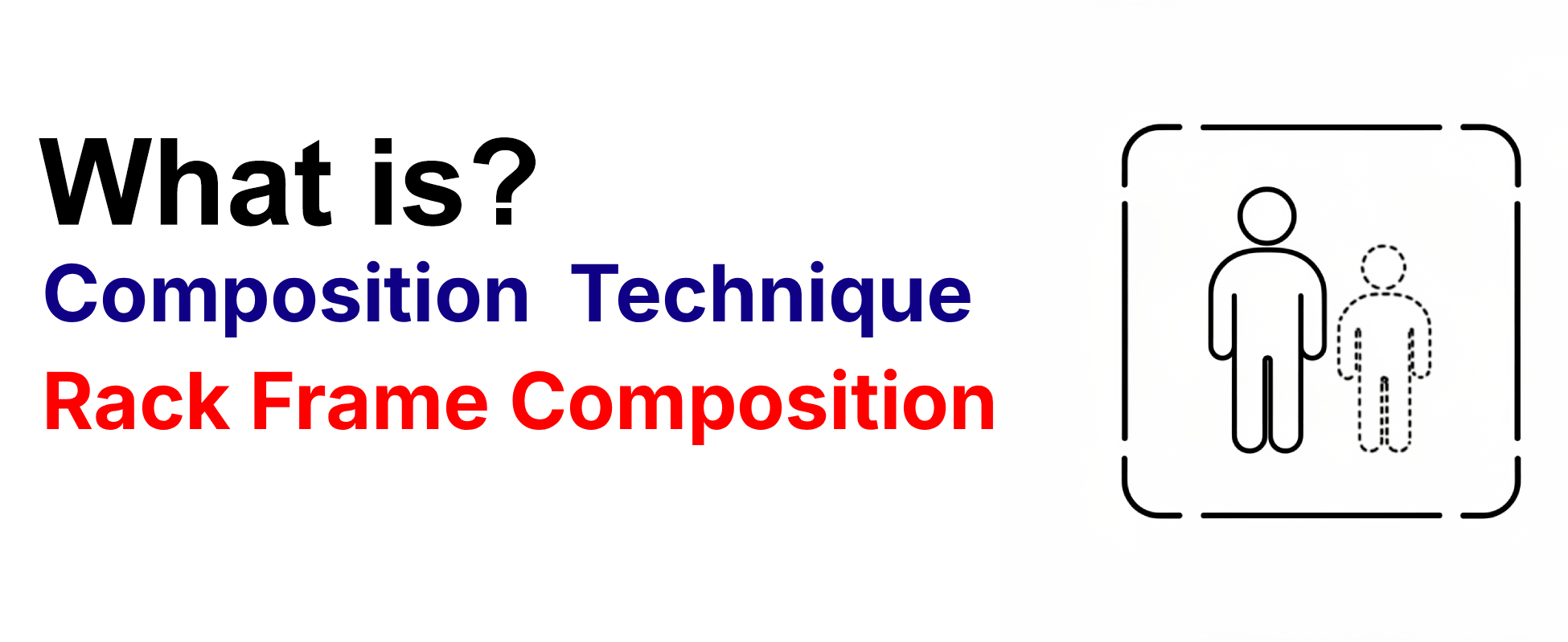
Rack frame is a compositional technique where two subjects are framed within the same shot at different depths, typically one positioned in the foreground and one in the background, with focus shifting rapidly between them over the course of the shot. As focus racks from one subject to the other, whichever subject is sharp becomes the visual and emotional center of the frame, while the other falls into soft blur, even though both remain physically present in the composition the entire time. Directors use rack frame to visualize shifting power dynamics, tension, or attention within a single continuous shot, without needing to cut between separate angles.
Example Prompt
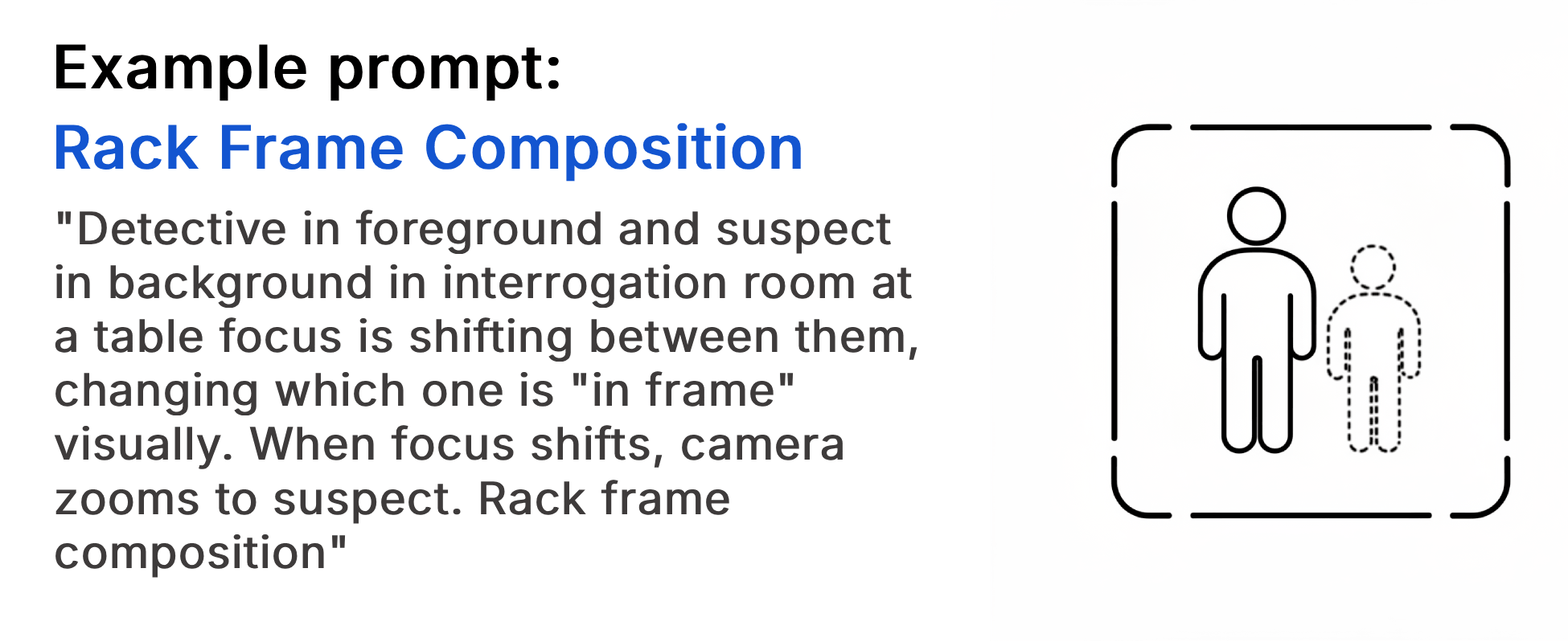
"Detective in foreground and suspect in background in interrogation room at a table focus is shifting between them, changing which one is "in frame" visually. When focus shifts, camera zooms to suspect. Rack frame composition"
Example Video
When to use Rack Frame composition?
Rack frame composition works best when a scene calls for tension that shifts moment to moment, such as interrogations, negotiations, or standoffs where power passes back and forth between two characters. It is especially effective for dialogue-heavy confrontations where cutting between separate shots would break the tension, since keeping both subjects visible within one continuous frame reinforces their shared stakes in the moment. Avoid this technique for scenes involving a single subject or calm, static moments where a shifting focal point would feel unnecessary or distracting.
- Power dynamics shift between two characters
- An interrogation or standoff drives the scene
- Both subjects need to stay visible without cutting away
- Tension should build second by second
- Attention should move between foreground and background
Pros and Cons of Rack Frame composition
| Pros | Cons |
|---|---|
| Visualizes shifting power dynamics without needing to cut between shots | Requires precise focus control, which can be difficult to prompt consistently |
| Keeps both subjects present, reinforcing their shared stakes in the scene | Can feel gimmicky if used in scenes without genuine tension between subjects |
| Builds tension gradually within a single continuous shot | Not suitable for single-subject scenes or calm, static moments |
Recommended book

Learn more about AI video editing
Learn more about AI video editing by reading the book How to Make AI Videos by Gyula Rabai. In this book you can find very important information about: Camera Movement, Lighting, Colors, Composition, Consistency, Character emotion, Character motion, Video style, Action Control and Sound design This information will make your videos more professional, and more engaging.
Get your copy here:
https://videcool.com/p_3707-how-to-make-ai-videos-by-gyula-rabai-book.html
Conclusion
Rack frame composition is a powerful tool for filmmakers and prompt engineers who want to capture shifting tension and power dynamics within a single continuous shot. By framing two subjects at different depths and letting focus shift between them, it turns a static composition into a moving battleground of attention, without ever needing to cut away. It is not the right choice for every scene, but when interrogations, standoffs, or second-by-second power shifts are the goal, few techniques communicate them as effectively. Used thoughtfully alongside other compositional strategies, rack frame becomes a valuable addition to any AI video generation toolkit.