
AI Video Editing - Composition - Triangular
Triangular composition is a framing technique in AI video generation that arranges key visual elements, such as a subject's head and hands, or multiple characters, into an implied triangle within the frame, creating a sense of stability, harmony, and classical visual structure. This technique borrows from centuries of painting and photography, using the triangle's inherent balance to guide the viewer's eye smoothly across the composition while still feeling grounded and intentional. This page explains what the technique is, when to use it, and how it compares to other composition strategies, along with a ready-to-use example prompt.
What is "Triangular Composition"?
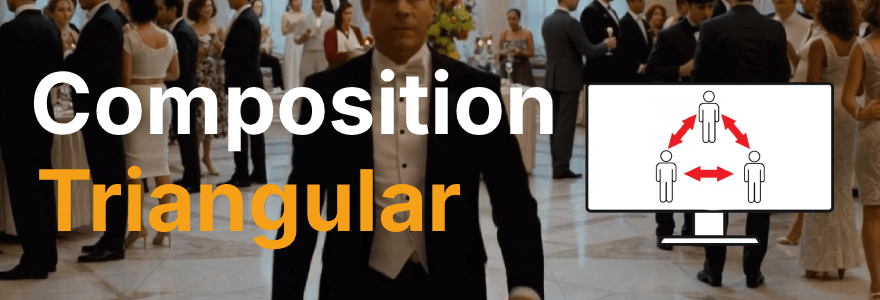
Triangular composition is a framing technique where the visual elements of a scene, such as a subject's head and outstretched hands, or the positioning of several characters, form an implied triangle within the frame. This triangular arrangement creates a sense of stability and visual harmony, since the shape's wide base and converging apex naturally guide the eye smoothly across the composition without abrupt jumps. Directors use triangular composition to convey balance, unity among multiple subjects, or a classical, painterly quality reminiscent of Renaissance art.
Example Prompt
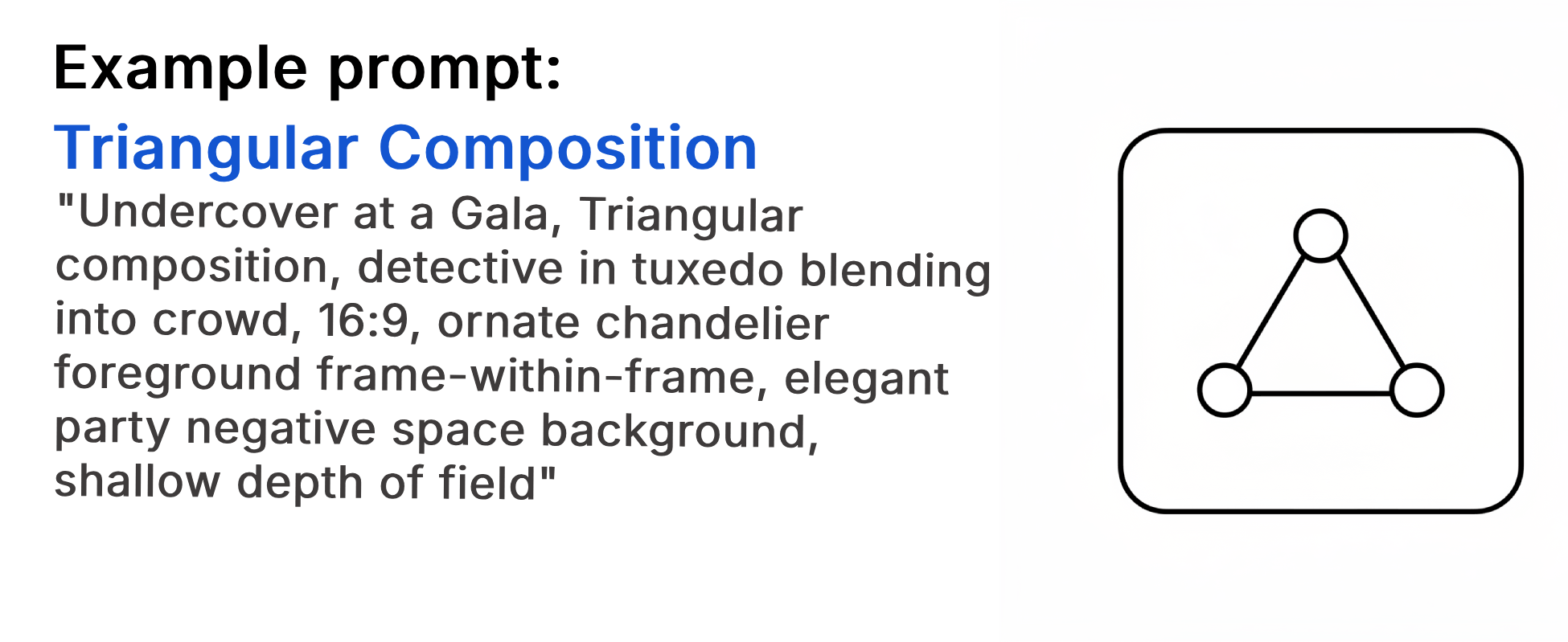
"Undercover at a Gala, Triangular composition, detective in tuxedo blending into crowd, 16:9, ornate chandelier foreground frame-within-frame, elegant party negative space background, shallow depth of field"
Example Video
When to use Triangular Composition?
Triangular composition works best when a scene calls for stability, harmony, or a classical visual structure, such as group shots where multiple characters need to feel unified, or portraits where a sense of calm balance reinforces the mood. It is also effective for establishing a painterly, deliberate quality in a scene, since the implied triangle naturally guides the viewer's eye across the frame. Avoid this technique for scenes that need urgency, imbalance, or raw energy, where asymmetrical or short-side composition will better serve the emotional tone.
- Multiple characters need to feel visually unified
- The scene calls for stability and calm
- A classical, painterly quality fits the mood
- The eye should move smoothly across the frame
- Group shots or ensemble moments define the scene
Pros and Cons of Triangular Composition
| Pros | Cons |
|---|---|
| Creates a strong sense of stability, balance, and visual harmony | Can feel too formal or static for scenes needing energy or urgency |
| Naturally unifies multiple subjects within a single cohesive frame | Requires careful staging to make the implied triangle read clearly |
| Evokes a classical, painterly quality reminiscent of fine art | Overuse can make every shot feel similarly composed, reducing variety |
Recommended book
Learn more about AI video editing
Learn more about AI video editing by reading the book How to Make AI Videos by Gyula Rabai. In this book you can find very important information about: Camera Movement, Lighting, Colors, Composition, Consistency, Character emotion, Character motion, Video style, Action Control and Sound design This information will make your videos more professional, and more engaging.
Get your copy here:
https://videcool.com/p_3707-how-to-make-ai-videos-by-gyula-rabai-book.html
Conclusion
Triangular composition is a versatile and elegant technique for filmmakers and prompt engineers who want to bring classical balance and visual harmony to their AI-generated videos. By arranging key elements into an implied triangle, it guides the viewer's eye smoothly across the frame while grounding the scene in a sense of stability and unity. It is not the right choice for every moment, but when calm, cohesion among multiple subjects, or a painterly structure are the goal, few composition strategies communicate them as effectively. Used thoughtfully alongside more dynamic techniques such as short-side or left-weighted composition, triangular composition becomes a valuable addition to any AI video generation toolkit.