
AI Video Editing - Colors - Amber Dominant
Amber dominant is a primary color palette where warm, golden-orange hues saturate the majority of the frame, evoking nostalgia, warmth, and vintage grain. This rich, honey-toned palette instantly transports viewers to the 1970s or earlier, creating a cozy, lived-in atmosphere that feels both intimate and timeless. This page explains what the technique is, when to use it, and how it compares to other color palettes, along with a ready-to-use example prompt.
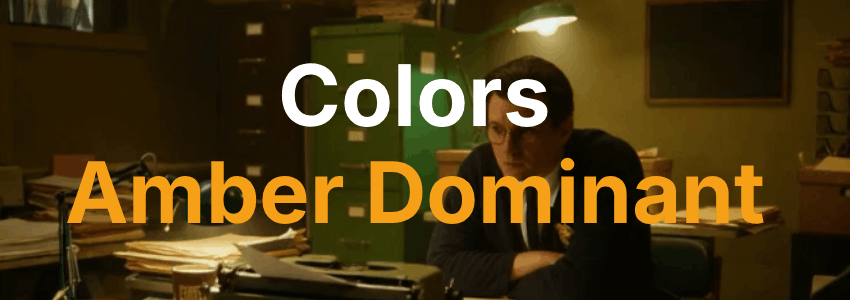
What is the "Amber Dominant" color technique?
Amber dominant is a primary color palette where warm, golden-orange hues saturate the majority of the frame, evoking a sense of nostalgia, warmth, and vintage grain. This rich, honey-toned palette instantly transports viewers to the 1970s or earlier, creating a cozy, lived-in atmosphere that feels both intimate and timeless. Directors choose amber dominant when they want to bathe a scene in the glow of memory, emphasizing comfort, reflection, or the passage of time. In AI video generation, declaring amber as the dominant hue in your prompt locks the entire frame into a warm, sepia-adjacent world that pairs naturally with film grain, tungsten lighting, and Kodak-style color grading. Think of it as the visual equivalent of a faded photograph found in a shoebox: everything feels golden, softened, and touched by the years.

Example Prompt
"Vintage office investigation, 3200 K tungsten lamp, 50 % saturation, amber-dominant cluttered detective office, single jade-green filing cabinet accent, Kodak 2383 grade, slow dust motes in light beams, detective leaning over case files, typewriter keys clacking, warm nostalgic mood."
Example Video
When to use the Amber Dominant technique?
The amber dominant technique works best when a scene calls for warmth, nostalgia, or a sense of bygone eras, such as period pieces set in the mid-20th century, memory sequences, or moments of quiet reflection. It is also effective for establishing a cozy, intimate atmosphere in domestic settings, diners, or offices where tungsten lighting and film grain reinforce the vintage mood. Pair it with low-to-medium saturation and a warm color temperature (2500K–3200K) to maximize the golden glow. Avoid this technique for cold, clinical, or high-tech scenes where cool blues and neutral whites better serve the narrative, or when you need vibrant, saturated colors that amber would muddy.
- Scene needs warmth, nostalgia, or vintage atmosphere
- Story is set in the 1970s or earlier decades
- A memory or reflection sequence calls for a golden glow
- Domestic or intimate settings benefit from cozy tungsten light
- Film grain and Kodak-style grading enhance the mood
Pros and Cons of the Amber Dominant
| Pros | Cons |
|---|---|
| Instantly evokes nostalgia, warmth, and vintage charm | Can make modern or futuristic scenes look dated or out of place |
| Creates a cozy, intimate atmosphere that draws viewers in | Warm tones can muddy skin tones if saturation is too high |
| Pairs naturally with film grain, tungsten light, and Kodak LUTs | Limits contrast with cool colors, reducing visual variety in the frame |
Recommended book

Learn more about AI video editing
Learn more about AI video editing by reading the book How to Make AI Videos by Gyula Rabai. In this book you can find very important information about: Camera Movement, Lighting, Colors, Composition, Consistency, Character emotion, Character motion, Video style, Action Control and Sound design This information will make your videos more professional, and more engaging.
Get your copy here:
https://videcool.com/p_3707-how-to-make-ai-videos-by-gyula-rabai-book.html
Conclusion
Amber dominant is a powerful color palette for filmmakers and prompt engineers who want to wrap their scenes in warmth, nostalgia, and vintage authenticity. By declaring amber as the dominant hue and pairing it with the right temperature, saturation, and color grade, you can transport viewers to a honey-toned world of memory and comfort. It is not the right choice for every scene, but when warmth, reflection, or a bygone era are the goal, few palettes communicate them as effectively. Used thoughtfully alongside cooler or more neutral palettes, it becomes a versatile addition to any AI video generation toolkit.