
AI Video Editing - Colors - Low-Key Grade
Low-key grade is one of the most dramatic color grading styles available in AI video generation, bathing scenes in deep shadow while selectively illuminating key elements to create mystery, tension, and psychological weight. This technique transforms ordinary frames into noir-soaked canvases where every sliver of light tells a story. This page explains what the technique is, when to use it, and how it compares to brighter grading styles, along with a ready-to-use example prompt.
What is Low-Key Grade?
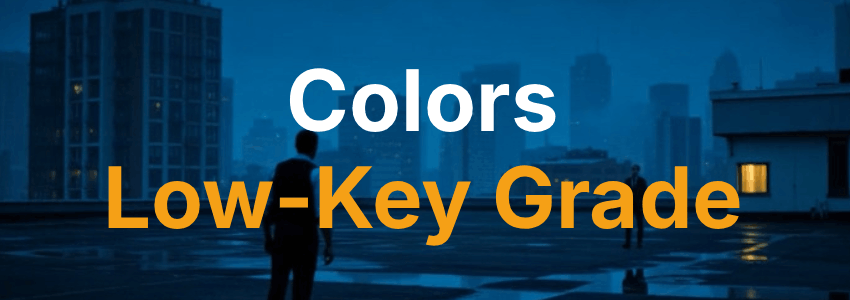
Low-key grade is a color grading style characterized by predominantly dark tones with selective, controlled highlights that draw attention to specific areas of the frame. This dramatic approach creates a moody, shadow-heavy atmosphere where large portions of the image are left in near darkness, emphasizing mystery, tension, and contrast. Directors use low-key grade in noir, thriller, and horror genres to create a sense of danger, secrecy, or psychological unease, allowing the few illuminated elements to carry immense visual weight.
Example Prompt
"Midnight rooftop confrontation, 7000 K overcast, 30 % saturation, cobalt-dominant city skyline, single amber window accent, low-key grade, light drizzle and mist, detective facing silhouetted antagonist, tension palpable, neon reflections on puddles, cinematic wide shot."
Example Video
When to use the Low-Key Grade technique?
The low-key grade technique works best when a scene calls for mystery, tension, or psychological unease, such as noir detective stories, thriller confrontations, or moments of hidden danger lurking in the shadows. It is also highly effective for horror sequences, where the darkness itself becomes a character, and for intimate dramatic moments where a single shaft of light can carry the emotional weight of an entire scene. Avoid this technique for bright, cheerful, or informational content where full visibility and a high-key grade will better serve clarity and optimism.
- Scene needs mystery or suspense
- A confrontation unfolds in darkness
- Psychological tension is the dominant emotion
- Noir, thriller, or horror genre fits the scene
- Selective highlights should guide the viewer's eye
Pros and Cons of the Low-Key Grade
| Pros | Cons |
|---|---|
| Creates a dramatic, moody atmosphere with minimal lighting setup | Can obscure important details if highlights are too sparse |
| Guides the viewer's attention precisely to illuminated elements | May read as too dark or gloomy for upbeat or commercial content |
| Strong choice for noir, thriller, and horror genres | Requires careful balance of light and shadow to avoid muddy, flat results |
Recommended book

Learn more about AI video editing
Learn more about AI video editing by reading the book How to Make AI Videos by Gyula Rabai. In this book you can find very important information about: Camera Movement, Lighting, Colors, Composition, Consistency, Character emotion, Character motion, Video style, Action Control and Sound design This information will make your videos more professional, and more engaging.
Get your copy here:
https://videcool.com/p_3707-how-to-make-ai-videos-by-gyula-rabai-book.html
Conclusion
The low-key grade is a powerful tool for filmmakers and prompt engineers who want to immerse their audience in shadow, mystery, and tension. By deliberately limiting illumination to selective highlights, it turns darkness into a narrative device where every beam of light carries dramatic weight. It is not the right choice for every scene, but when suspense, secrecy, or psychological unease are the goal, few grading styles communicate them as effectively. Used thoughtfully alongside brighter, high-key alternatives, it becomes a versatile addition to any AI video generation toolkit.