
AI Video Editing - Colors - High-Key Grade
High-key grade is a color grading style that floods every corner of the frame with bright, even light, washing away deep shadows and producing a clean, airy, and optimistic look. It is the visual equivalent of turning every lamp on at once, making it a go-to choice for fashion editorials, medical dramas, comedy sketches, and any scene where clarity and transparency matter more than mystery. This page explains what the technique is, when to use it, and how it compares to other grading styles, along with a ready-to-use example prompt.
What is the "High-Key Grade" color technique?
High-key grade is a color grading style characterized by bright, evenly distributed illumination with minimal shadows, creating a clean, clinical, and often optimistic atmosphere. This approach reduces contrast significantly, producing a soft and airy look that feels open, sterile, or fashion-forward depending on the context. Directors choose high-key grade for scenes requiring clarity, transparency, or a sense of safety, such as medical environments, comedies, or product-focused shots where every detail must be visible. In AI video generation, appending a high-key grade keyword to your prompt instructs the model to lift shadow regions, flatten contrast curves, and favor bright, diffuse lighting, resulting in footage that feels polished, neutral, and effortlessly readable.
Example Prompt
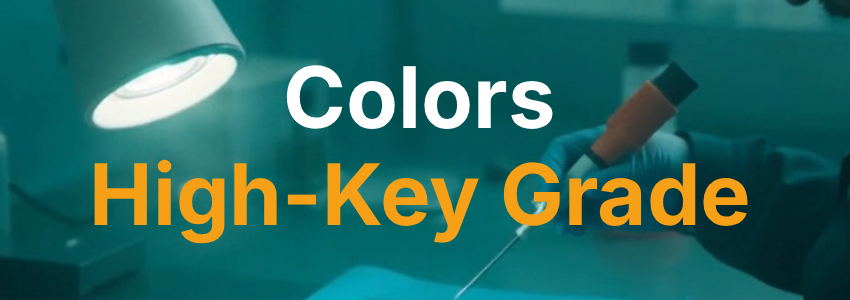
"Forensic lab analysis, 5600 K daylight, 50 % saturation, teal-dominant forensic lab, single orange microscope accent, high-key grade, slight dust haze in air, detective examining fingerprints under harsh lights, clinical precision, sterile and detailed environment."
Example Video
When to use the High-Key Grade technique?
The high-key grade technique works best when a scene calls for clarity, openness, or a sense of safety and transparency. It is ideal for medical and laboratory environments, fashion and product showcases, comedy and lifestyle content, and any moment where the audience needs to see every detail without the distraction of deep shadows. It is also effective for establishing a bright, optimistic tone or a sterile, clinical atmosphere. Avoid this technique for moody, dramatic, or noir-influenced scenes where deep shadows and high contrast carry the emotional weight of the story.
- Scene needs maximum clarity and detail visibility
- A bright, optimistic, or clinical tone is desired
- Product, fashion, or beauty shots require even lighting
- Medical, scientific, or laboratory environments are featured
- Shadows would distract from the subject or message
Pros and Cons of the High-Key Grade
| Pros | Cons |
|---|---|
| Produces a clean, polished look with every detail visible | Can feel flat or sterile without enough texture or color interest |
| Ideal for clinical, medical, and product-focused scenes | Removes dramatic shadows that add depth and mood |
| Creates an optimistic, open atmosphere that feels inviting | May wash out skin tones if not carefully balanced with saturation |
Recommended book

Learn more about AI video editing
Learn more about AI video editing by reading the book How to Make AI Videos by Gyula Rabai. In this book you can find very important information about: Camera Movement, Lighting, Colors, Composition, Consistency, Character emotion, Character motion, Video style, Action Control and Sound design This information will make your videos more professional, and more engaging.
Get your copy here:
https://videcool.com/p_3707-how-to-make-ai-videos-by-gyula-rabai-book.html
Conclusion
The high-key grade is a powerful tool for filmmakers and prompt engineers who want to flood a scene with clarity, brightness, and an open, optimistic atmosphere. By minimizing shadows and flattening contrast, it ensures every detail is visible and every surface feels clean and approachable. It is not the right choice for every scene, but when transparency, clinical precision, or a fashion-forward aesthetic are the goal, few grading styles communicate them as effectively. Used thoughtfully alongside moodier, low-key alternatives, it becomes a versatile addition to any AI video generation toolkit.