
AI Video Editing - Lighting - Hard
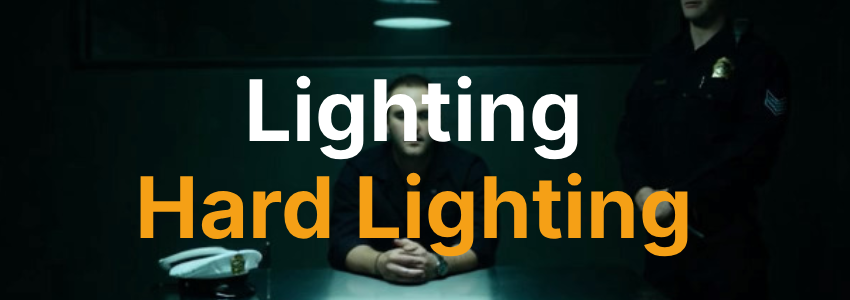
Hard lighting is one of the most dramatic lighting styles available in AI video generation, carving sharp shadows and high contrast into every frame to create tension, mystery, and emotional intensity. This technique transforms ordinary scenes into cinematic powerhouses, from noir interrogations to thriller confrontations. This page explains what hard lighting is, when to use it, and how it compares to softer alternatives, along with a ready-to-use example prompt.
What is "Hard Lighting"?
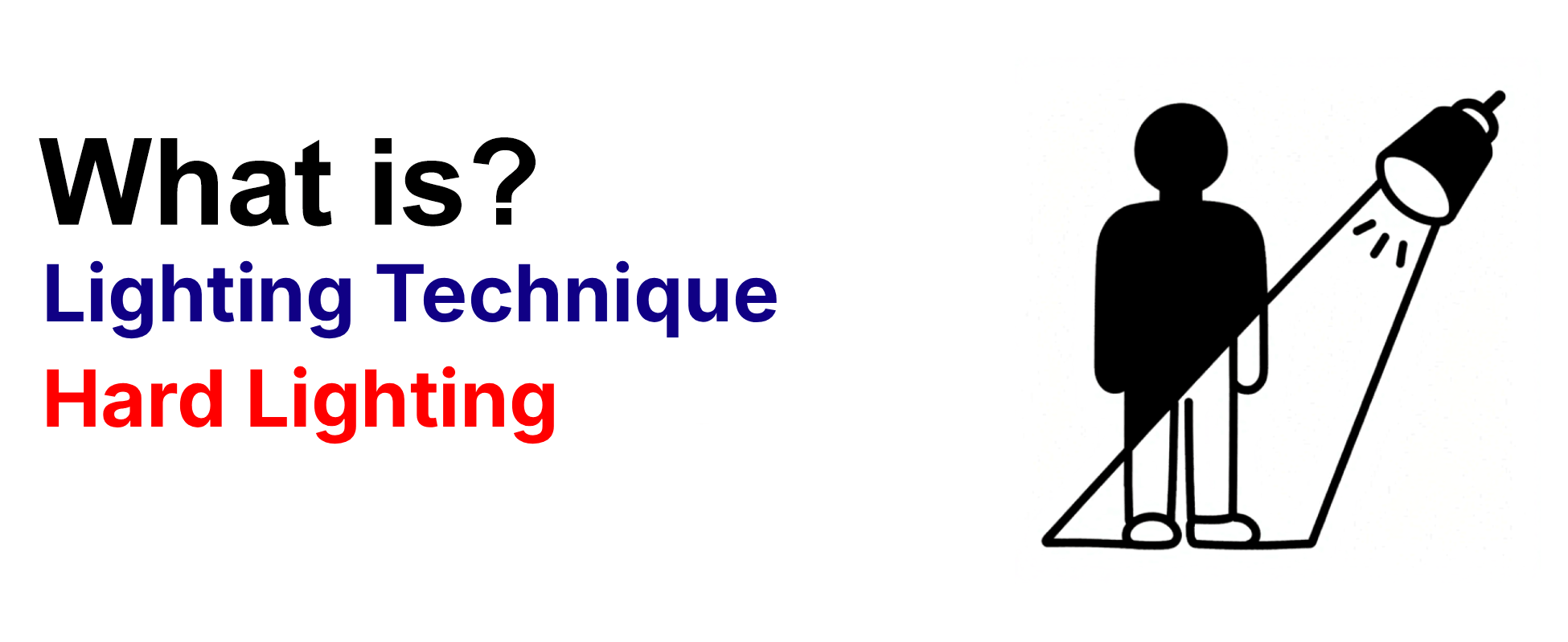
Hard lighting is a lighting style that creates sharp, well-defined shadows with a harsh transition between light and dark areas, typically produced by a small or distant light source. This technique emphasises texture, angles, and facial features by carving out deep shadows that add drama and tension to the frame. Directors choose hard lighting for noir, thriller, or interrogation scenes where they want to heighten conflict, reveal character psychology, or create an unforgiving, high-stakes atmosphere. Unlike soft lighting, which wraps the subject in gentle gradients, hard lighting exposes every detail and forces the viewer to confront the raw emotion in a scene.
Example Prompt
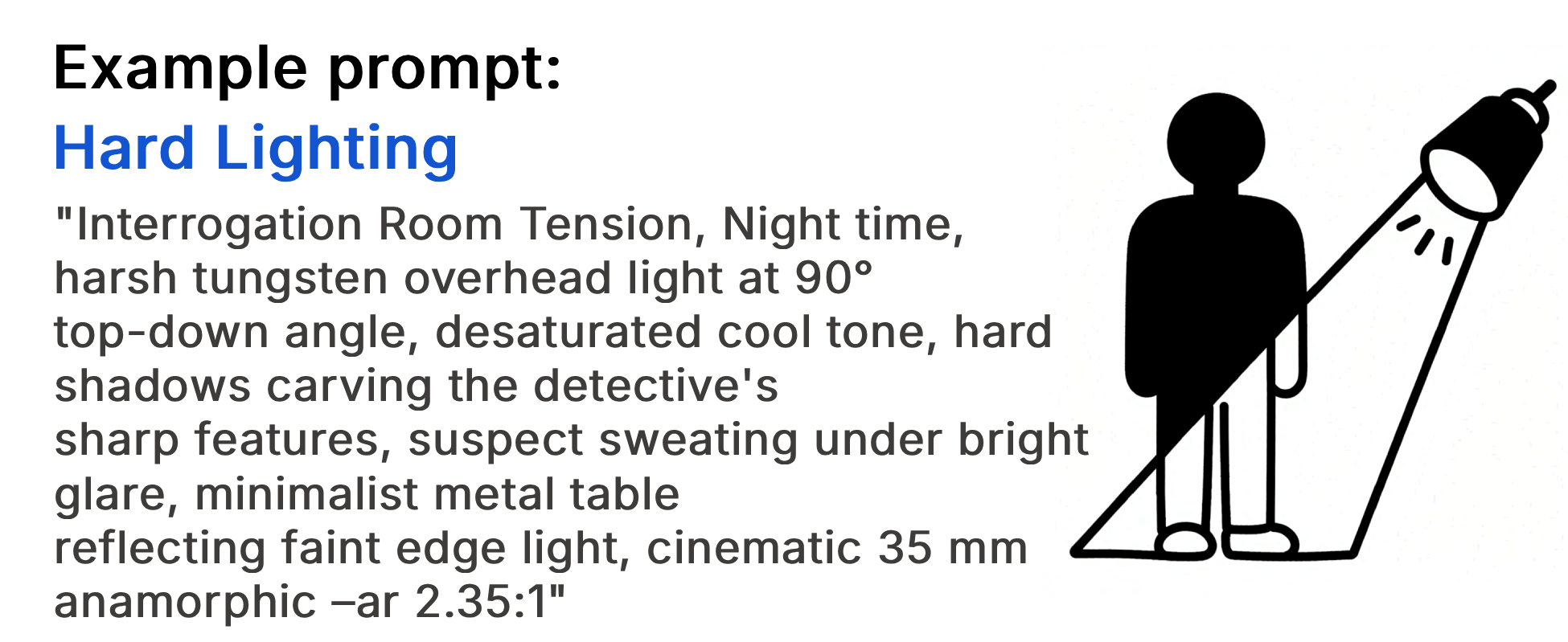
"Interrogation Room Tension, Night time, harsh tungsten overhead light at 90° top-down angle, desaturated cool tone, hard shadows carving the detective's sharp features, suspect sweating under bright glare, minimalist metal table reflecting faint edge light, cinematic 35 mm anamorphic –ar 2.35:1"
Example Video
When to use Hard Lighting?
Hard lighting works best when a scene calls for tension, drama, or emotional intensity, such as interrogation sequences, noir-style confrontations, or moments where a character's inner conflict must be made visible through shadow and light. It is also effective for revealing texture and surface detail, making it a strong choice for gritty urban environments, weathered faces, or any setting where realism and rawness matter. Avoid hard lighting for romantic, dreamy, or gentle scenes, where soft lighting will better preserve warmth and intimacy.
- Scene needs tension, conflict, or danger
- Film noir, thriller, or interrogation style
- Revealing texture, grit, or weathered surfaces
- Character psychology should be visible through shadow
- High contrast and dramatic atmosphere are the goal
Pros and Cons of Hard Lighting
| Pros | Cons |
|---|---|
| Creates dramatic, high-contrast shadows that heighten tension and emotion | Can be unflattering on skin, emphasizing blemishes and imperfections |
| Reveals texture and surface detail with striking clarity | Harsh transitions can feel too aggressive for calm or intimate scenes |
| Strong choice for noir, thriller, and interrogation aesthetics | Requires careful positioning; misplaced hard light creates distracting hotspots |
Recommended book

Learn more about AI video editing
Learn more about AI video editing by reading the book How to Make AI Videos by Gyula Rabai. In this book you can find very important information about: Camera Movement, Lighting, Colors, Composition, Consistency, Character emotion, Character motion, Video style, Action Control and Sound design This information will make your videos more professional, and more engaging.
Get your copy here:
https://videcool.com/p_3707-how-to-make-ai-videos-by-gyula-rabai-book.html
Conclusion
Hard lighting is a powerful tool for filmmakers and prompt engineers who want to inject drama, tension, and emotional intensity into a scene. By deliberately embracing sharp shadows and high contrast instead of soft gradients, it forces the viewer to confront the raw emotion and texture of the moment. It is not the right choice for every scene, but when conflict, mystery, or noir aesthetics are the goal, few lighting styles communicate them as effectively. Used thoughtfully alongside softer lighting approaches, it becomes a versatile addition to any AI video generation toolkit.