
AI Video Editing - Lighting - Night Time
Night time is a foundational lighting condition in AI video generation, setting the overall darkness, color temperature, and mood before any specific light source is even introduced. Establishing "night time" in a prompt shifts the entire baseline of a scene, making shadows deeper, ambient light cooler, and every subsequent light source read as a deliberate point of illumination against the dark. This page explains what night time lighting is, when to use it, and how it compares to other time-of-day choices, along with a ready-to-use example prompt.
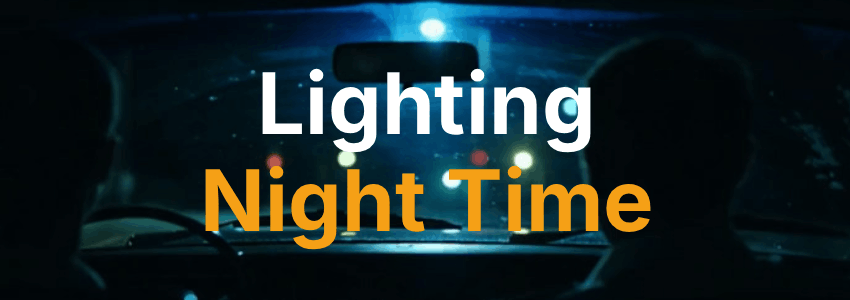
What is "Night Time" Lighting?
Night time is a time-of-day setting in AI video generation that establishes an overall dark, low-ambient environment as the baseline for a scene, before any specific light source shapes the frame. Unlike daytime settings, where ambient sunlight fills most of the composition, night time strips away default illumination, forcing every visible light to stand out as a deliberate, motivated source against darkness. Directors rely on night time to build suspense, intimacy, or isolation, since the absence of ambient light naturally narrows the audience's focus to whatever is lit.

Example Prompt
"Midnight Car Stakeout, Night time, dashboard practical light flickering on detective's face, soft cool tone, reflections of passing streetlights on windshield, subtle backlighting separating silhouette from dark interior, cinematic 50 mm lens –ar 16:9"
Example Video
When to use Night Time Lighting?
Night time works best as a foundational setting when a scene calls for suspense, secrecy, or isolation, such as stakeouts, chases, or private confrontations that unfold after dark. It is especially effective as the base layer beneath practical or artificial light sources, since darkness makes those sources feel motivated and deliberate rather than arbitrary. Night time also naturally supports cool ambient color grading, which contrasts strongly with warm practical lights for added visual depth. Avoid establishing night time when a scene needs bright, open visibility or a cheerful, daylight-driven mood, where a daytime setting will better serve the story.
- Scene needs suspense, secrecy, or isolation
- Practical or artificial sources should feel deliberate
- Cool ambient tones should contrast warm sources
- Stakeout, chase, or after-dark setting fits the story
- Darkness should narrow the audience's focus
Pros and Cons of Night Time Lighting
| Pros | Cons |
|---|---|
| Grounds every light source in the scene as deliberate and motivated | Can limit visibility if no light source is clearly established |
| Builds suspense, secrecy, and emotional isolation naturally | Requires careful pairing with a source to avoid a flat, empty frame |
| Creates strong color contrast between cool ambient and warm practicals | Not suitable for bright, open, or cheerful daytime moods |
Recommended book

Learn more about AI video editing
Learn more about AI video editing by reading the book How to Make AI Videos by Gyula Rabai. In this book you can find very important information about: Camera Movement, Lighting, Colors, Composition, Consistency, Character emotion, Character motion, Video style, Action Control and Sound design This information will make your videos more professional, and more engaging.
Get your copy here:
https://videcool.com/p_3707-how-to-make-ai-videos-by-gyula-rabai-book.html
Conclusion
Night time is a powerful foundation for filmmakers and prompt engineers who want to build suspense, intimacy, or isolation into a scene. By establishing darkness as the baseline before any specific light source is introduced, it gives every subsequent lamp, screen, or streetlight a sense of purpose and motivation. It is not the right choice for every scene, but when secrecy, tension, or moody atmosphere are the goal, few settings shape a scene as effectively. Used thoughtfully alongside practical or artificial light sources, night time becomes an essential foundation for any AI video generation toolkit.