
AI Video Editing - Lighting - Split-Tone
Split-tone lighting is a color grading technique that colors shadows and highlights in different hues, creating a stylized contrast that adds visual interest and emotional depth to AI-generated video. This page explains what split-tone is, when to use it, and how to write effective prompts, along with a ready-to-use example.
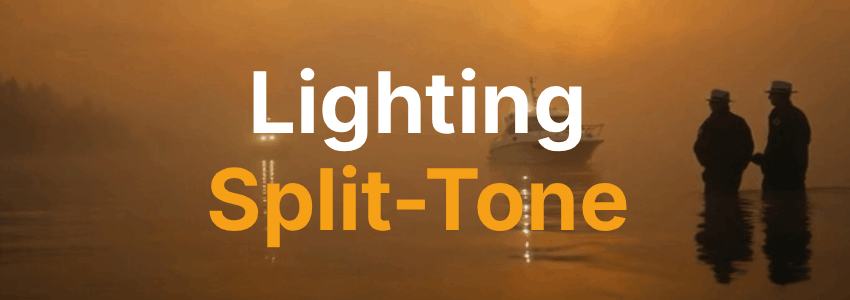
What is Split-Tone lighting?
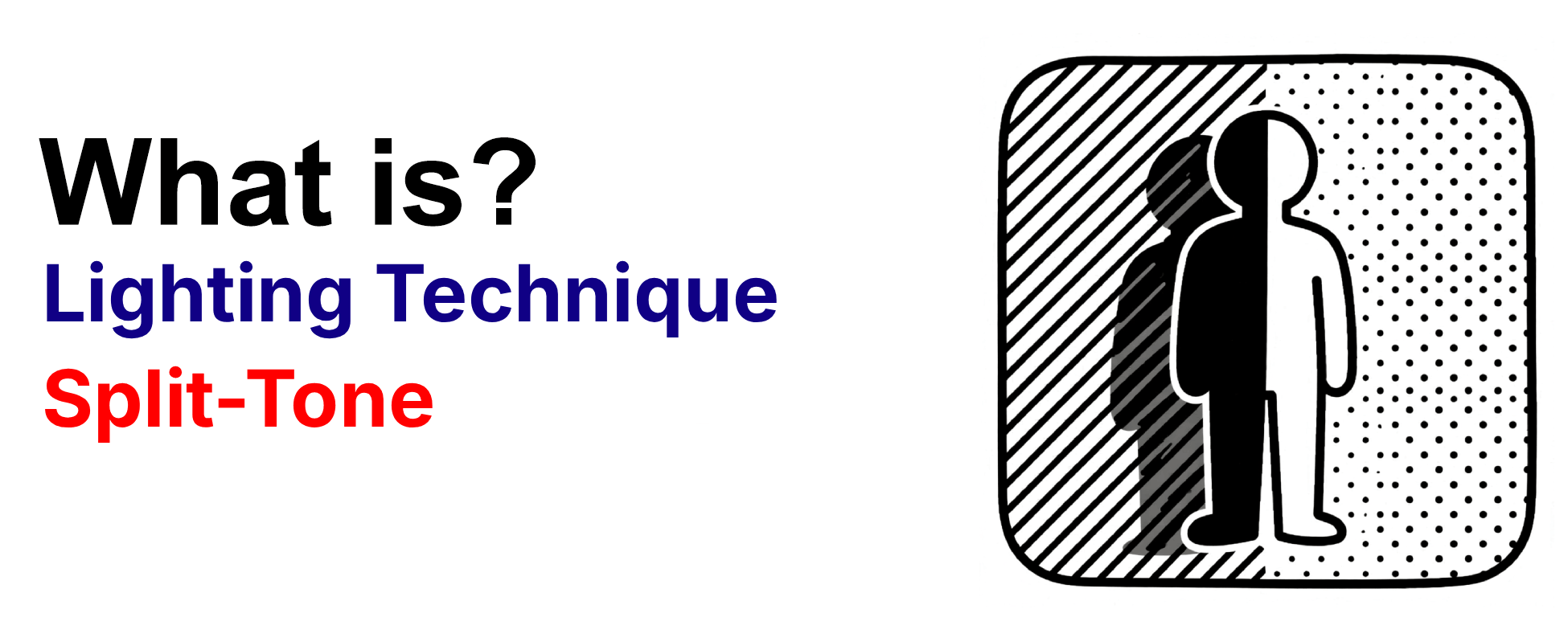
Split-tone is a color grading technique where the shadows and highlights of an image are colored with different hues, creating a stylized contrast that adds visual interest and emotional depth. This approach allows filmmakers to evoke complex moods by assigning one color to the dark areas and a complementary or contrasting color to the bright areas of the frame. Directors use split-tone to give their work a distinctive cinematic signature, often pairing teal shadows with orange highlights to create a look that feels both modern and emotionally charged. In AI video generation, split-tone is one of the most powerful lighting modifiers available, because it simultaneously shapes atmosphere and guides the viewer's emotional response through color contrast alone.
Example Prompt
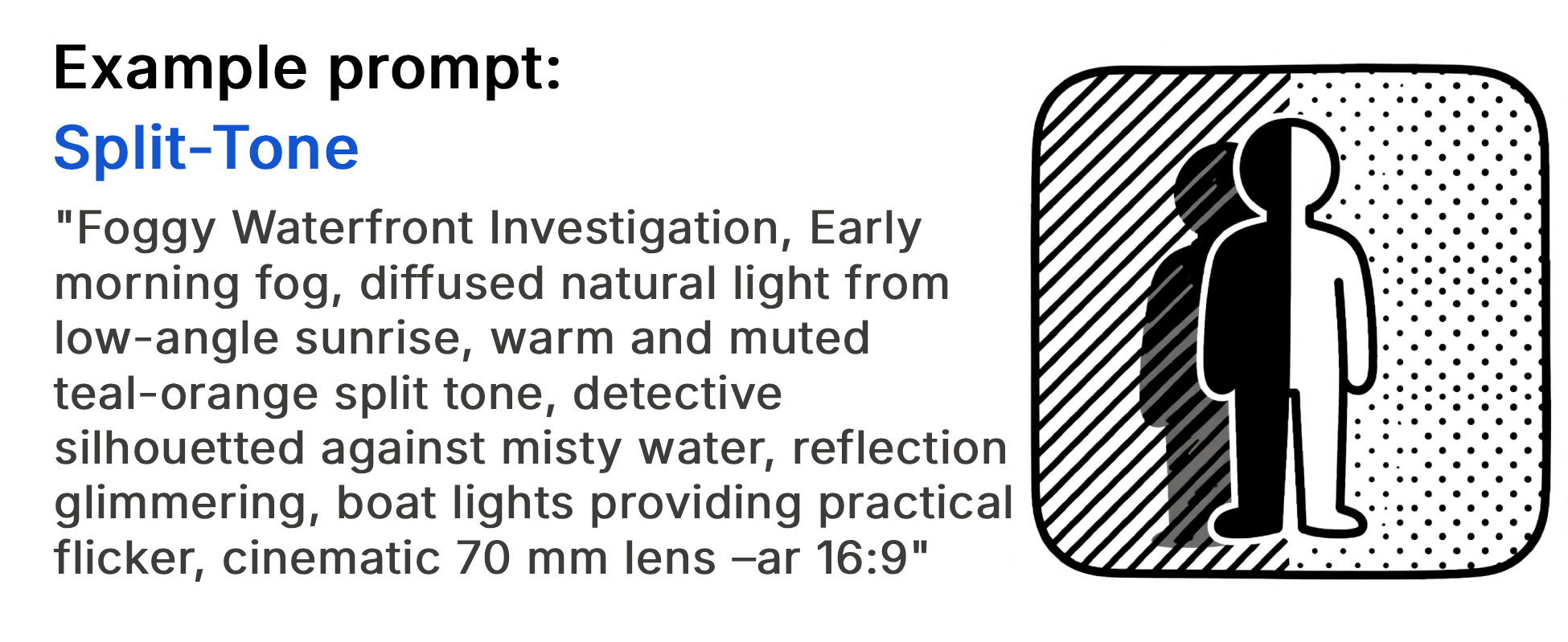
"Foggy Waterfront Investigation, Early morning fog, diffused natural light from low-angle sunrise, warm and muted teal-orange split tone, detective silhouetted against misty water, reflection glimmering, boat lights providing practical flicker, cinematic 70 mm lens –ar 16:9"
Example Video
When to use Split-Tone lighting?
Split-tone lighting works best when a scene calls for a stylized, cinematic look that communicates mood through color contrast rather than realistic lighting. It is ideal for moments where you want the audience to feel tension between two emotional states, such as warmth versus coldness, safety versus danger, or nostalgia versus unease. Pair cool-toned shadows with warm-toned highlights to create the classic teal-and-orange blockbuster look, or experiment with unexpected combinations like green-magenta or blue-amber for a more avant-garde feel. Avoid split-tone in scenes that demand naturalistic or documentary-style lighting, where the audience expects neutral, ungraded colors.
- The scene needs a stylized, cinematic color contrast
- You want to evoke tension between warm and cool emotions
- The story calls for a modern, blockbuster-grade visual signature
- Shadows and highlights should carry separate emotional weight
- The genre supports stylized grading (thriller, sci-fi, noir, action)
Pros and Cons of Split-Tone lighting
| Pros | Cons |
|---|---|
| Creates a distinctive, cinematic look that instantly elevates visual quality | Can look artificial or over-stylized if pushed too far |
| Conveys complex emotions by contrasting shadow and highlight colors | Reduces realism, making it unsuitable for documentary or naturalistic scenes |
| Pairs well with other lighting modifiers like practical sources and volumetric effects | Requires careful balance; mismatched hues can clash rather than complement |
Recommended book

Learn more about AI video editing
Learn more about AI video editing by reading the book How to Make AI Videos by Gyula Rabai. In this book you can find very important information about: Camera Movement, Lighting, Colors, Composition, Consistency, Character emotion, Character motion, Video style, Action Control and Sound design This information will make your videos more professional, and more engaging.
Get your copy here:
https://videcool.com/p_3707-how-to-make-ai-videos-by-gyula-rabai-book.html
Conclusion
Split-tone lighting is a powerful tool for filmmakers and prompt engineers who want to inject cinematic color contrast and emotional complexity into their AI-generated video. By assigning different hues to shadows and highlights, it transforms a flat render into a visually striking scene where color itself tells part of the story. It is not the right choice for every situation, particularly when realism or neutrality is required, but when the goal is stylized mood, tension, or a modern blockbuster aesthetic, few techniques deliver as effectively. Used thoughtfully alongside other lighting controls such as intensity, angle, and practical sources, split-tone becomes a versatile and essential addition to any AI video generation toolkit.