AI Video Editing - Composition - Short-Side Composition
Short-side composition is one of the boldest framing techniques available in AI video generation, pushing the subject to the extreme edge of the frame to create tension, unease, and rule-breaking energy. This deliberate imbalance forces the viewer's eye toward the empty side of the frame, suggesting that something is about to happen or that a character is trapped against the edge of the world. This page explains what short-side composition is, when to use it, and how it compares to other framing approaches, along with a ready-to-use example prompt.
What is Short-Side Composition?
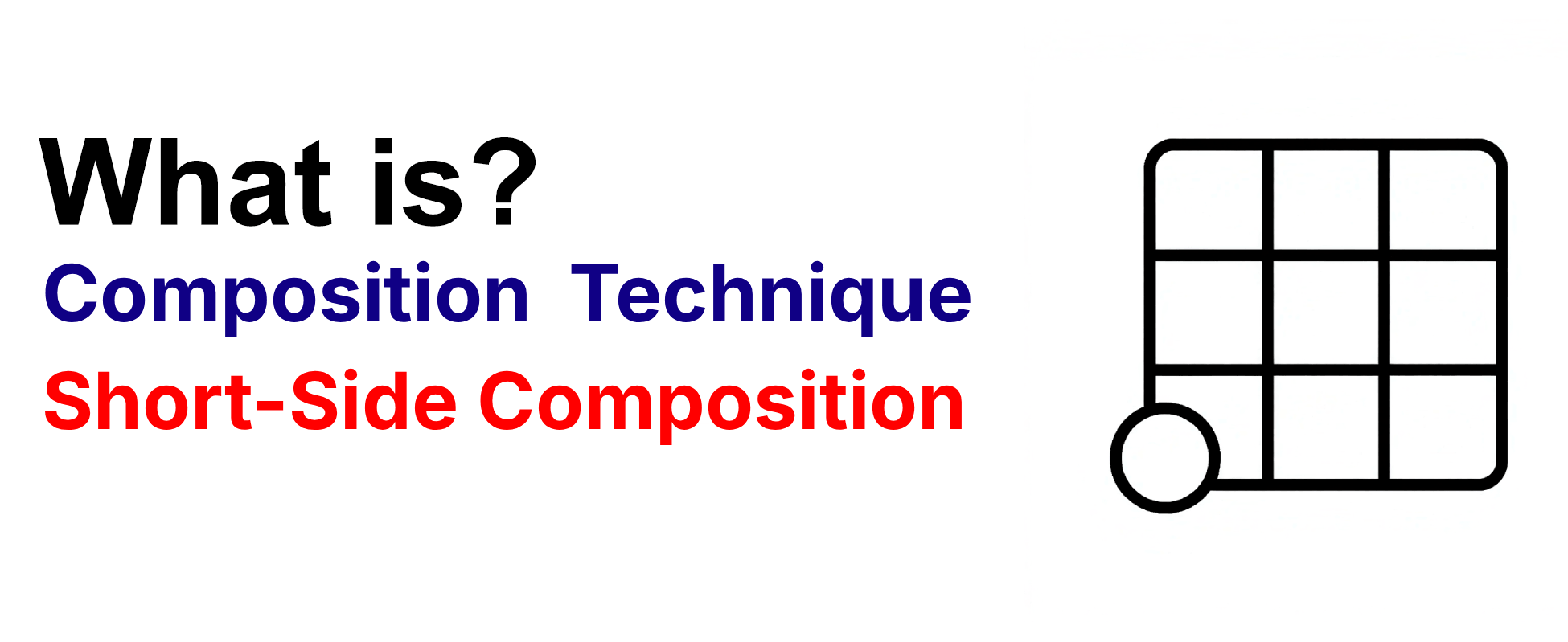
Short-side composition is a framing technique where the subject is pushed to the extreme edge of the frame, the "short" side, leaving minimal space on that side and creating a sense of tension, unease, or rule-breaking energy. Unlike rule-of-thirds placement, which creates comfortable asymmetry, short-side composition breaks the rules entirely, pushing the subject so far to one side that the emptiness on the other side becomes the dominant force in the frame. Directors use this technique to evoke claustrophobia, urgency, or unpredictability, forcing the viewer's eye to the edge and suggesting that something important is about to enter from the negative space.
Example Prompt
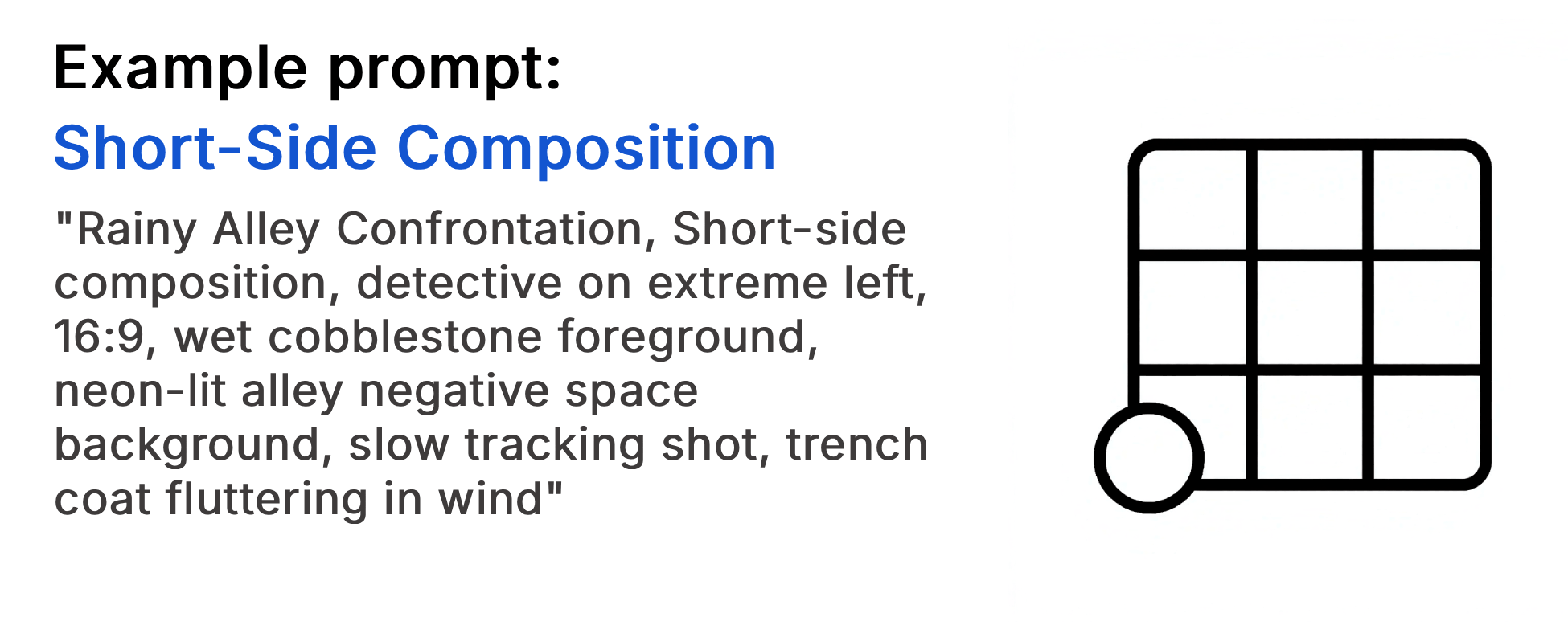
"Rainy Alley Confrontation, Short-side composition, detective on extreme left, 16:9, wet cobblestone foreground, neon-lit alley negative space background, slow tracking shot, trench coat fluttering in wind"
Example Video
When to use Short-Side Composition?
Short-side composition works best when a scene calls for tension, isolation, or anticipation, such as depicting a character who is trapped, cornered, or facing an unknown threat entering from off-frame. It is also effective for chase or pursuit sequences, where pushing the subject to the edge creates a sense of urgency and movement, and pairs especially well with wide aspect ratios like 16:9 or 2.35:1, where the contrast between the subject and the negative space is most effective. Avoid this technique for calm, harmonious, or balanced scenes, where centered or rule-of-thirds framing will better preserve visual comfort.
- Scene needs tension or unease
- Character feels isolated or vulnerable
- The frame should suggest anticipation
- Chase or pursuit sequence fits the story
- A character is trapped, cornered, or constrained
Pros and Cons of Short-Side Composition
| Pros | Cons |
|---|---|
| Creates immediate visual tension and unease that draws the viewer in | Can feel uncomfortable or jarring if overused throughout a project |
| Breaks conventional expectations, making the frame feel dynamic and unpredictable | May appear unbalanced if not paired with strong negative space or a clear narrative purpose |
| Draws the viewer's eye to the edge, creating anticipation for what might enter the frame | Not suitable for calm, harmonious, or balanced scenes |
Recommended book

Learn more about AI video editing
Learn more about AI video editing by reading the book How to Make AI Videos by Gyula Rabai. In this book you can find very important information about: Camera Movement, Lighting, Colors, Composition, Consistency, Character emotion, Character motion, Video style, Action Control and Sound design This information will make your videos more professional, and more engaging.
Conclusion
Short-side composition is a bold, rule-breaking technique that trades comfort for tension, pushing the subject to the extreme edge of the frame to create a visual imbalance the viewer cannot ignore. It is not the right choice for every scene, but when tension, isolation, or anticipation are the goal, few techniques communicate them as effectively. Used thoughtfully alongside more balanced compositions and paired with wide aspect ratios or strong negative space, it becomes a versatile addition to any AI video generation toolkit.