AI Video Editing - Composition - Left-Weighted Composition
Left-weighted composition is one of the most evocative framing techniques available in AI video generation, positioning the subject on the left third of the frame while leaving the right side open as negative space that suggests movement, anticipation, or isolation. This technique draws on the rule of thirds to create visual tension and narrative possibility, making it a favorite for character intros, contemplative moments, and scenes where something is about to enter from the right. This page explains what the technique is, when to use it, and how it compares to other composition strategies, along with a ready-to-use example prompt.
What is Left-Weighted Composition?
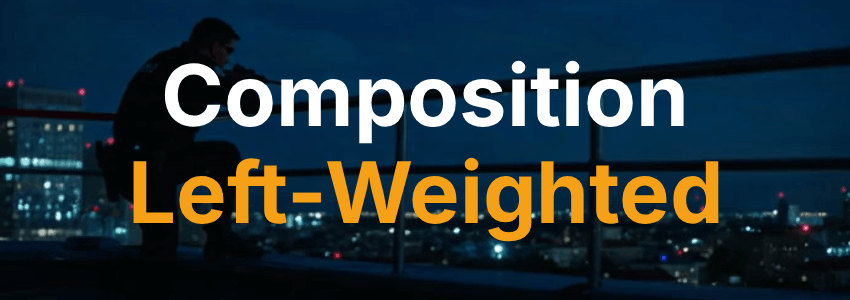
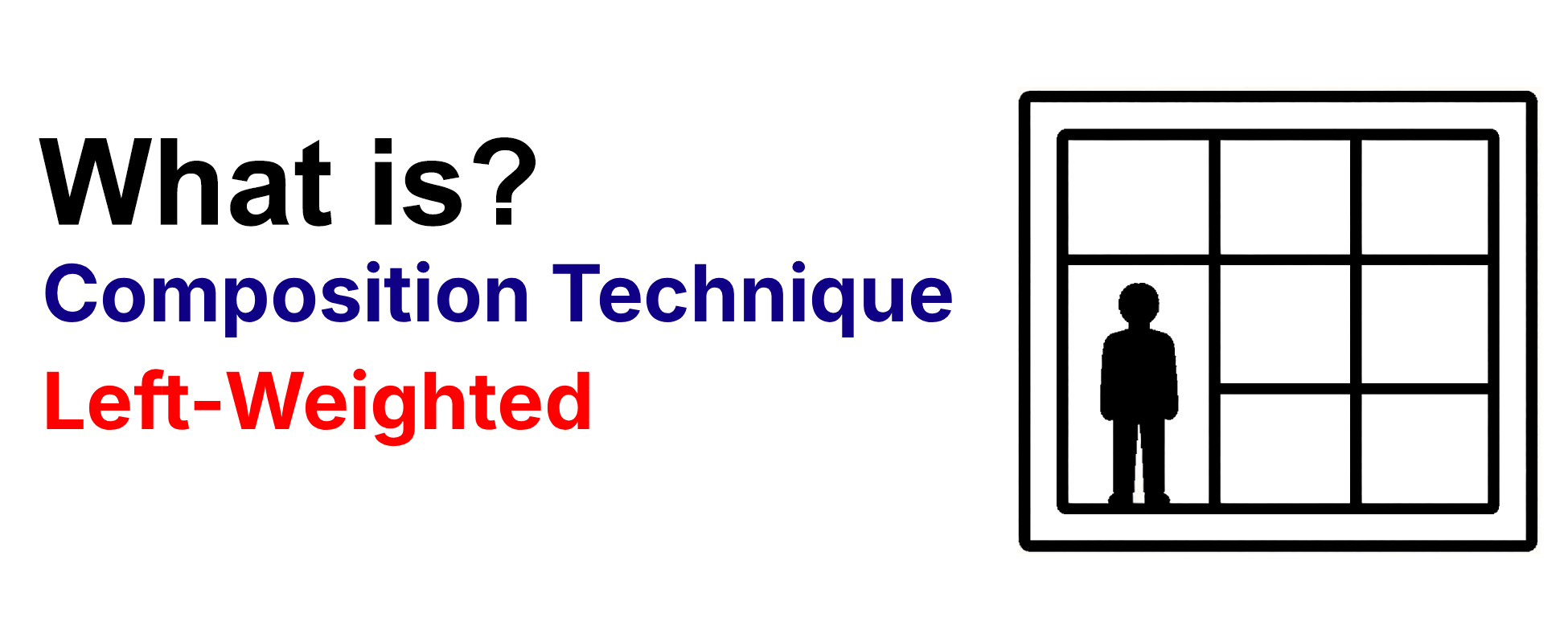
Left-weighted composition is a framing technique where the subject is positioned on the left third of the frame, leaving the right side as negative space that suggests future movement or incoming action. This placement creates a sense of anticipation, isolation, or contemplation, as the character appears to be looking forward into the open space ahead. Directors use left-weighted composition to evoke a character's forward momentum, introspection, or to visually suggest that something important is about to enter from the opposite side.
Example Prompt
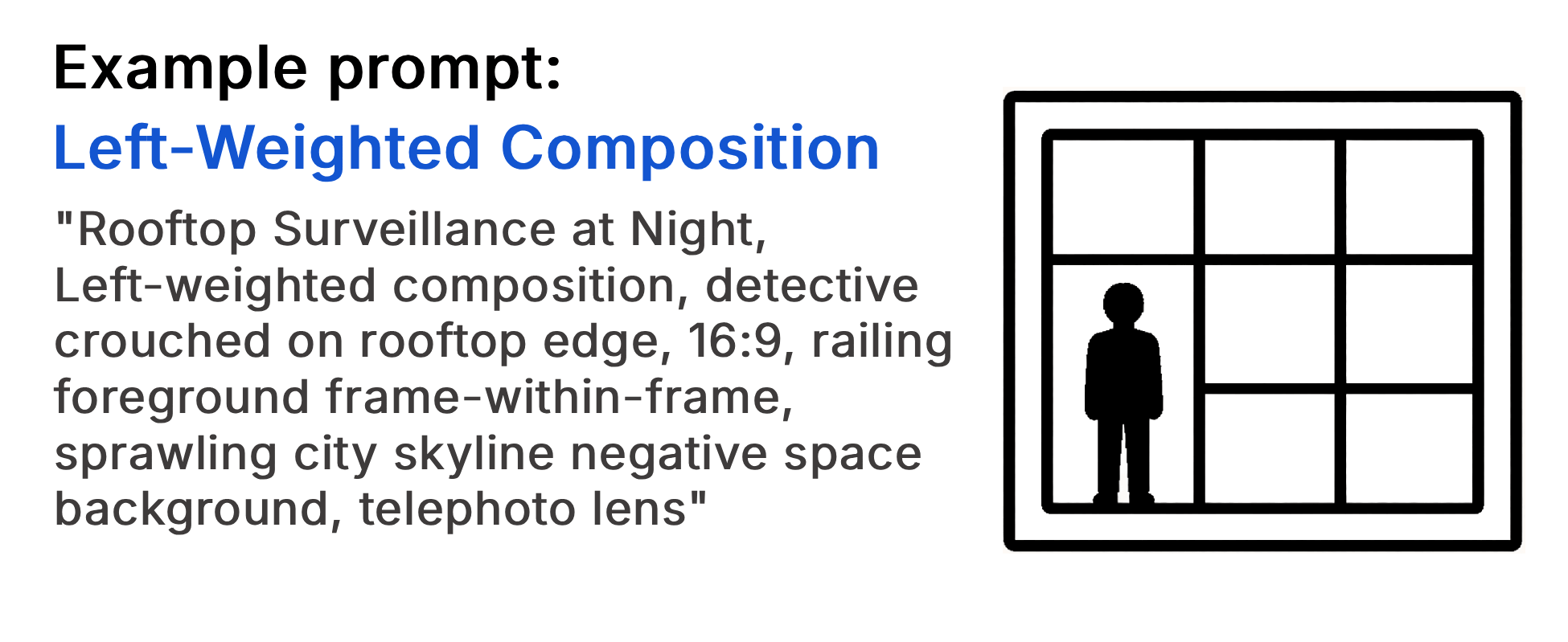
"Rooftop Surveillance at Night, Left-weighted composition, detective crouched on rooftop edge, 16:9, railing foreground frame-within-frame, sprawling city skyline negative space background, telephoto lens"
Example Video
When to use the Left-Weighted Composition technique?
The left-weighted composition technique works best when a scene calls for anticipation, isolation, or a sense of forward momentum, such as a character waiting for something to happen, a lone figure contemplating their next move, or a subject about to embark on a journey. It is also effective for documentary-style storytelling, where the open negative space on the right invites the viewer to imagine what lies ahead. Avoid this technique for scenes that require symmetry or formal balance, where a centered or right-weighted composition will better serve the mood.
- The scene needs anticipation or forward momentum
- The subject is isolated or contemplative
- Something is about to enter from the right side of the frame
- Negative space should convey emptiness or possibility
- The character is looking or moving toward the open space
Pros and Cons of the Left-Weighted Composition
| Pros | Cons |
|---|---|
| Creates a strong sense of anticipation and forward momentum | Can feel unbalanced or empty if the negative space lacks purpose |
| Draws the viewer's eye naturally to the subject using the rule of thirds | Less effective for scenes requiring symmetry or formal balance |
| Open right side invites narrative possibility and visual storytelling | May conflict with text or graphics placement on the right side of the frame |
Recommended book

Learn more about AI video editing
Learn more about AI video editing by reading the book How to Make AI Videos by Gyula Rabai. In this book you can find very important information about: Camera Movement, Lighting, Colors, Composition, Consistency, Character emotion, Character motion, Video style, Action Control and Sound design This information will make your videos more professional, and more engaging.
Conclusion
Left-weighted composition is a powerful tool for filmmakers and prompt engineers who want to create anticipation, isolation, or forward momentum in a scene. By placing the subject on the left third and leaving the right side open, it taps into the viewer's natural reading direction and sense of narrative possibility, making the frame feel alive with potential. It is not the right choice for every scene, but when tension, contemplation, or the suggestion of incoming action are the goal, few composition techniques communicate them as effectively. Used thoughtfully alongside other composition strategies, it becomes a versatile addition to any AI video generation toolkit.