
AI Video Editing - Composition - Right-Weighted Composition
Right-weighted composition is a powerful framing technique in AI video generation that positions the subject on the right third of the frame, using the left side as negative space to suggest departure, resolution, or contemplation. This placement creates a visual flow that pulls the viewer's eye toward the edge, making it ideal for scenes of escape, conclusion, or quiet reflection. This page explains what the technique is, when to use it, and how it compares to other composition approaches, along with a ready-to-use example prompt.

What is the "Right-Weighted Composition" technique?
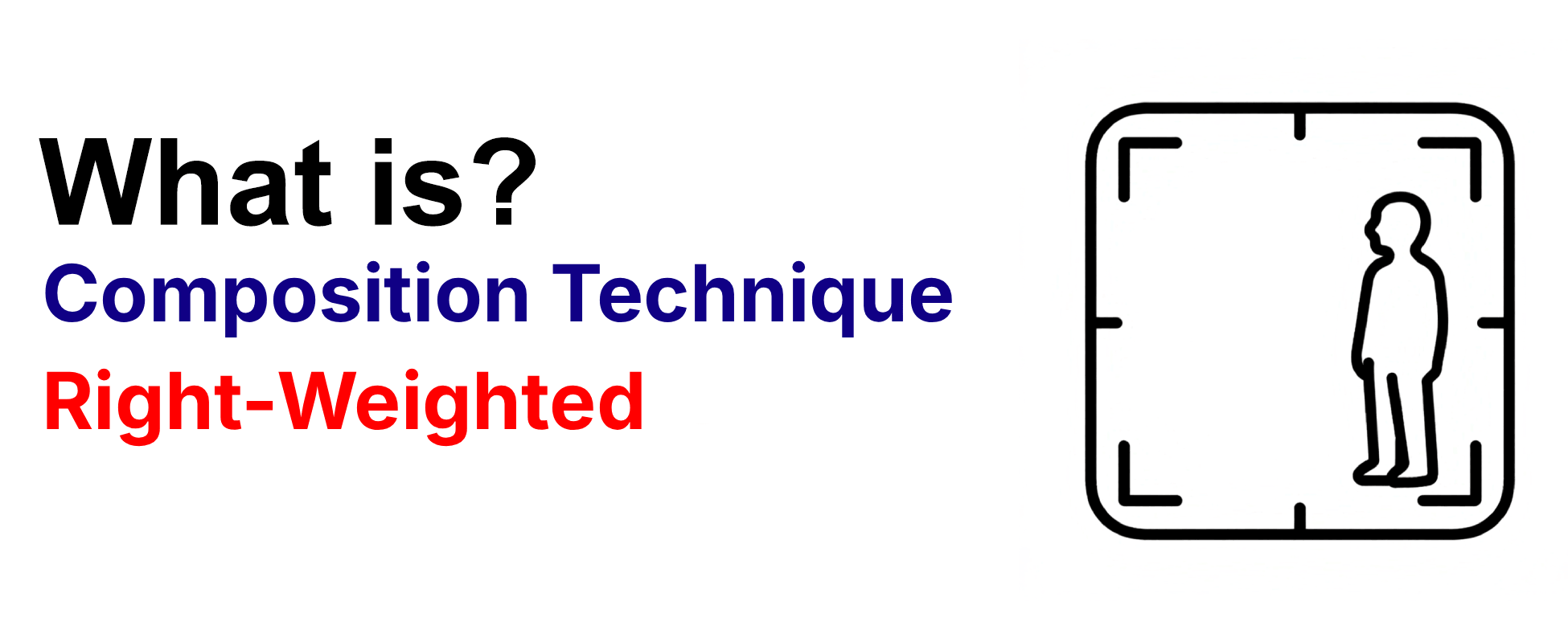
Right-weighted composition is a framing technique where the subject is positioned on the right third of the frame, leaving the left side as negative space that suggests departure, resolution, or text-safe space for graphics. This placement implies movement away from the viewer, evoking a sense of escape, conclusion, or contemplation as the character moves toward the edge. Directors use right-weighted composition to suggest a character is exiting the narrative, leaving behind what came before, or to create visual space for titles and text overlays. Unlike center composition which confronts the viewer head-on, or left-weighted composition which implies incoming action, right-weighted composition carries the emotional weight of aftermath and departure, making it a deliberate choice for closing moments and reflective beats.
Example Prompt
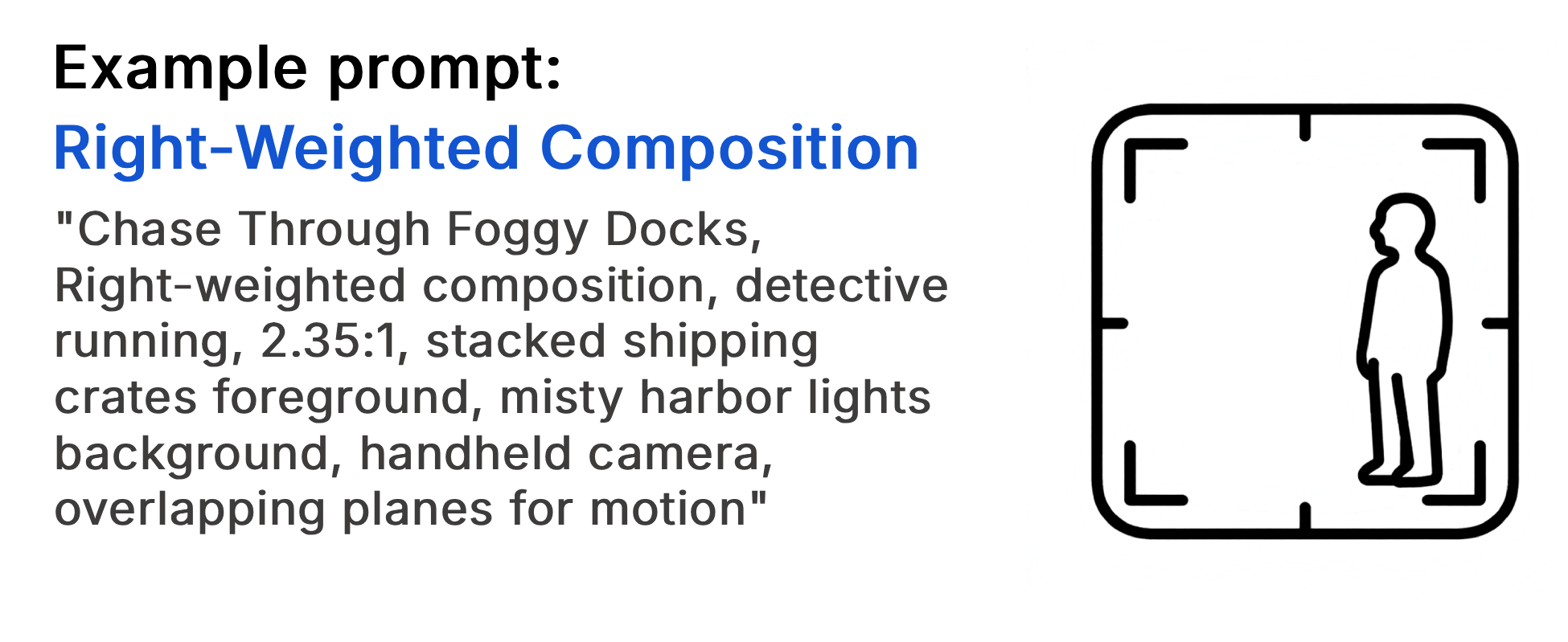
"Chase Through Foggy Docks, Right-weighted composition, detective running, 2.35:1, stacked shipping crates foreground, misty harbor lights background, handheld camera, overlapping planes for motion"
Example Video
When to use the Right-Weighted Composition technique?
Right-weighted composition works best when a scene calls for a sense of departure, resolution, or contemplation, such as a character walking away, a moment of quiet reflection, or a closing shot that signals the end of a sequence. It is also effective when you need text-safe space on the left side of the frame for titles, credits, or graphics. Avoid this technique for scenes that require urgency or incoming action, where left-weighted or center composition will better convey forward momentum and confrontation.
- A character is leaving or moving away from the scene
- The moment calls for resolution or contemplation
- You need text-safe space on the left for titles or graphics
- The scene benefits from negative space suggesting emptiness or aftermath
- A closing shot should signal the end of a narrative beat
Pros and Cons of the Right-Weighted Composition
| Pros | Cons |
|---|---|
| Creates a strong sense of departure, resolution, or contemplative mood | Can feel passive or anticlimactic for scenes that need urgency or confrontation |
| Leaves natural space on the left for titles, credits, or text overlays | May unbalance the frame if the negative space lacks visual interest |
| Guides the viewer's eye toward the edge, reinforcing themes of escape or conclusion | Overuse can make sequences feel monotonous or directionless |
Recommended book

Learn more about AI video editing
Learn more about AI video editing by reading the book How to Make AI Videos by Gyula Rabai. In this book you can find very important information about: Camera Movement, Lighting, Colors, Composition, Consistency, Character emotion, Character motion, Video style, Action Control and Sound design This information will make your videos more professional, and more engaging.
Conclusion
Right-weighted composition is a versatile tool for filmmakers and prompt engineers who want to convey departure, resolution, or quiet contemplation in a scene. By placing the subject on the right third and letting negative space dominate the left, it creates a visual flow that suggests movement away from the action and toward the edge of the narrative. It is not the right choice for every scene, but when escape, conclusion, or reflective mood are the goal, few techniques communicate them as effectively. Used thoughtfully alongside center and left-weighted compositions, it becomes a valuable addition to any AI video generation toolkit.