AI Video Editing - Composition - Symmetrical Composition
Symmetrical composition is one of the most visually striking techniques available in AI video generation, mirroring elements on both sides of the frame to create a sense of order, authority, and ritualistic precision that immediately commands the viewer's attention. Whether staging a tense standoff in a train station or framing the grand aisle of a gothic cathedral, this technique transforms ordinary scenes into iconic, poster-worthy moments. This page explains what symmetrical composition is, when to use it, and how it compares to other composition approaches, along with a ready-to-use example prompt.
What is Symmetrical Composition?
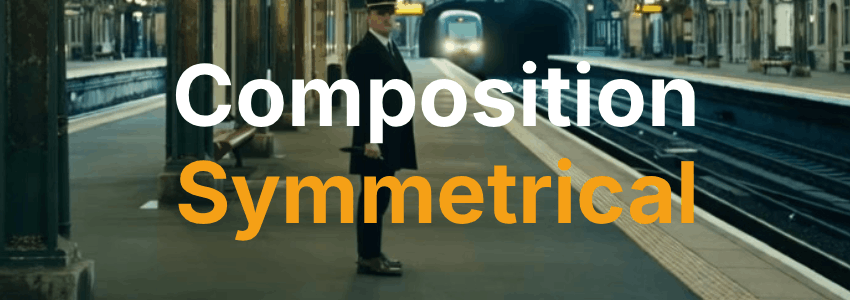
Symmetrical composition is a framing technique where elements on both sides of the frame mirror each other perfectly, creating a formal, hypnotic, and architecturally balanced image. This even distribution of visual weight produces a sense of order, stability, and grandeur that feels both authoritative and slightly ritualistic. Directors choose symmetrical composition for scenes of power, ceremony, or confrontation, where the visual balance reinforces the formality of the moment and the inevitability of what is about to unfold.
Example Prompt
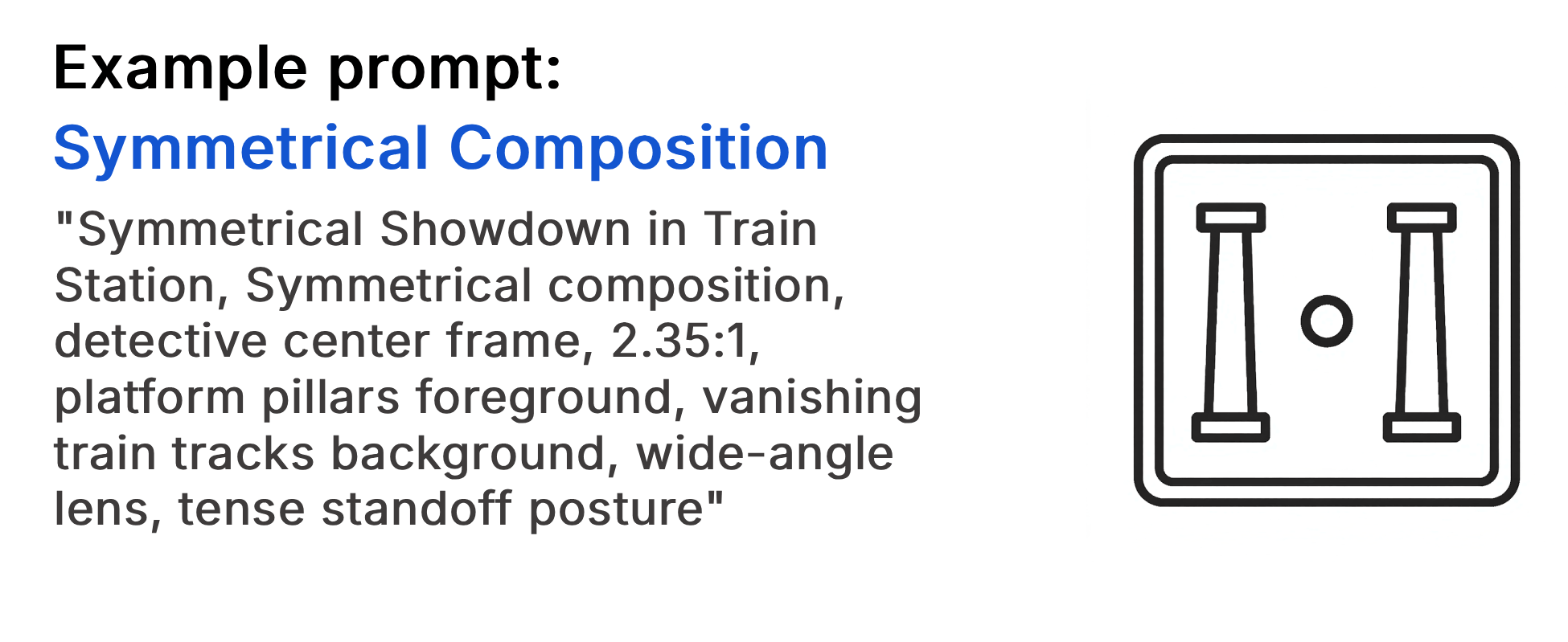
"Symmetrical Showdown in Train Station, Symmetrical composition, detective center frame, 2.35:1, platform pillars foreground, vanishing train tracks background, wide-angle lens, tense standoff posture"
Example Video
When to use Symmetrical Composition?
Symmetrical composition works best when a scene calls for authority, ritual, or inevitability, such as confrontations, ceremonies, or moments of revelation where the balanced frame underscores the weight and significance of the event. It is especially effective in scenes featuring corridors, hallways, throne rooms, or any architectural space with natural mirror lines, and pairs well with a wide aspect ratio such as 2.35:1 to maximize the visual impact of the mirrored layout. Avoid this technique for chaotic or fast-paced action scenes, where asymmetry and imbalance will better serve the emotional energy.
- The scene calls for authority or ritual significance
- A confrontation or ceremony is unfolding
- The setting has natural architectural mirror lines
- The frame should feel formal and inevitable
- A wide aspect ratio can maximize the mirrored layout
Pros and Cons of Symmetrical Composition
| Pros | Cons |
|---|---|
| Creates a powerful, authoritative visual that draws the eye to the center | Can feel overly rigid or sterile if overused, reducing emotional warmth |
| Reinforces themes of order, control, and ceremony in storytelling | Limits dynamic movement; off-center or asymmetrical shots may feel more energetic |
| Works naturally with architectural elements like hallways, aisles, and corridors | Requires a strong vanishing point or central subject to avoid looking flat |
Recommended book

Learn more about AI video editing
Learn more about AI video editing by reading the book How to Make AI Videos by Gyula Rabai. In this book you can find very important information about: Camera Movement, Lighting, Colors, Composition, Consistency, Character emotion, Character motion, Video style, Action Control and Sound design This information will make your videos more professional, and more engaging.
Conclusion
Symmetrical composition is a bold creative choice that transforms AI-generated video frames into powerful, visually commanding statements. By mirroring elements across the central axis, it invokes a sense of order, ceremony, and inevitability that few other techniques can match. It is not the right choice for every scene, but when confrontation, grand architecture, or moments of ritual significance are the goal, few techniques communicate them as effectively. Used thoughtfully alongside asymmetrical composition strategies, it becomes a valuable addition to any AI video generation toolkit.