
AI Video Editing - Consistency - Room Layout Blueprint
A room layout blueprint is one of the most effective scene consistency techniques available in AI video generation, locking the spatial arrangement of a set into every prompt so walls, windows, and furniture stay exactly where they belong. Without it, interior scenes can morph unpredictably, turning a coherent space into a shifting dreamscape between takes. This page explains what the technique is, when to use it, and how it compares to looser scene descriptions, along with a ready-to-use example prompt.
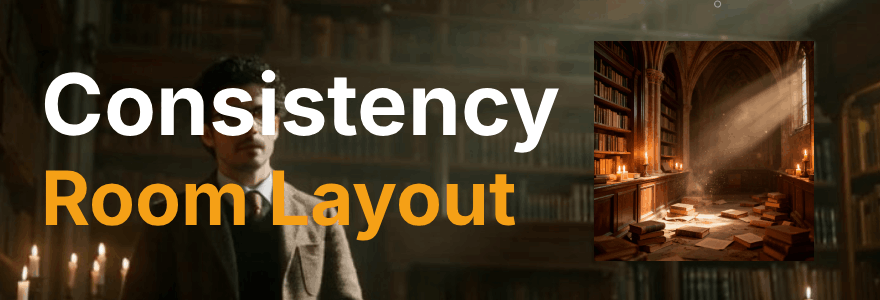
What is the "Room Layout Blueprint" consistency technique?
A room layout blueprint is a scene consistency technique that copies the exact spatial arrangement of a set, including wall positions, window placements, and furniture locations, into every interior prompt. This detailed description anchors the set in a stable reality, preventing the AI from morphing the environment between takes and ensuring the space feels lived-in and believable. Directors use room layout blueprints to maintain geographical and architectural continuity, so that characters move through a consistent world rather than a shifting dreamscape. By specifying elements such as which wall faces which direction, where the windows are positioned, and what props occupy the space, the blueprint gives the AI enough spatial detail to reproduce the same room across multiple shots, even when the camera angle or lighting changes.
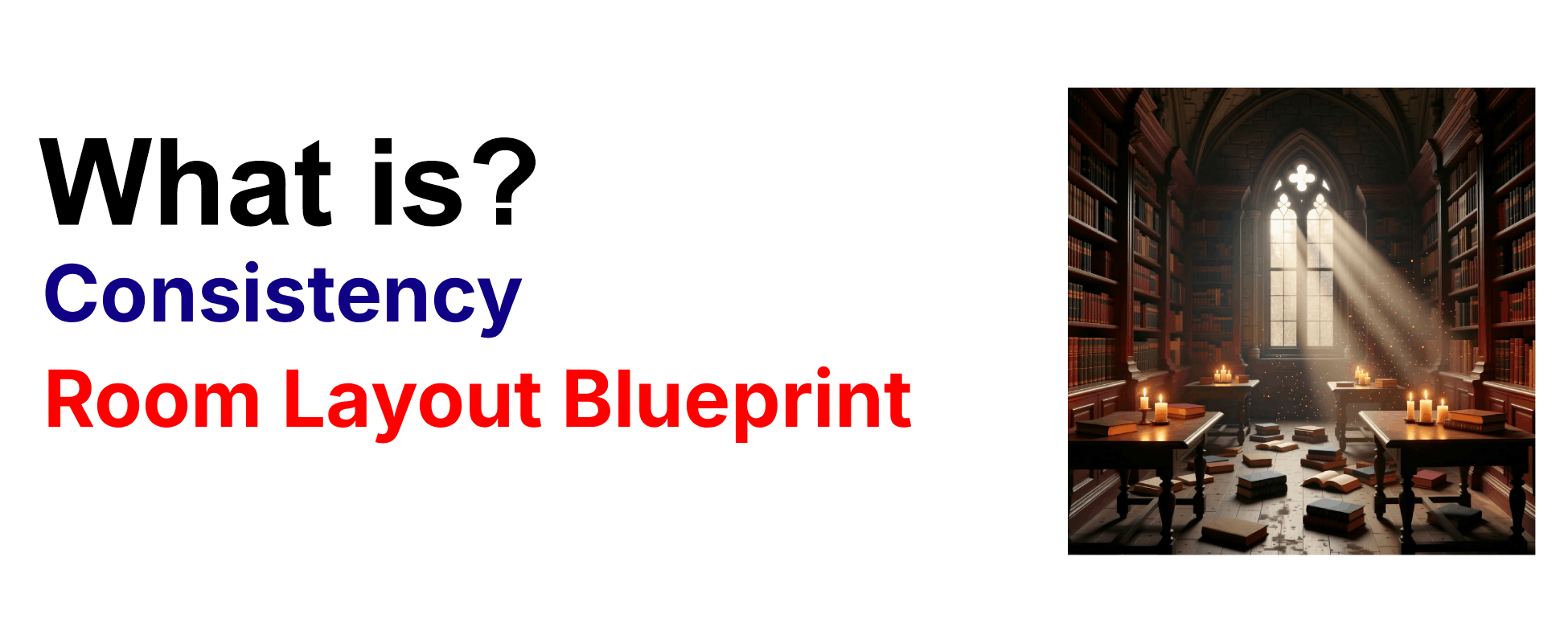
Example Prompt
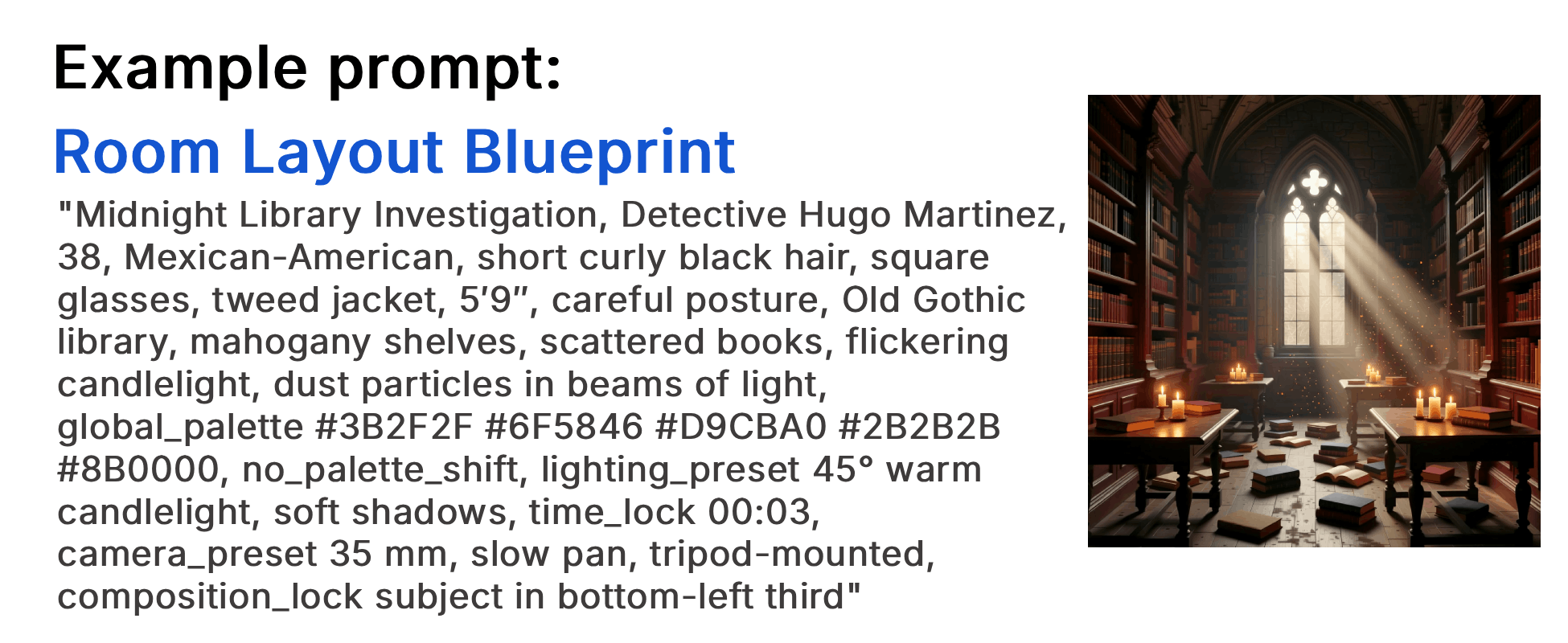
"Midnight Library Investigation, Detective Hugo Martinez, 38, Mexican-American, short curly black hair, square glasses, tweed jacket, 5′9″, careful posture, Old Gothic library, mahogany shelves, scattered books, flickering candlelight, dust particles in beams of light, global_palette #3B2F2F #6F5846 #D9CBA0 #2B2B2B #8B0000, no_palette_shift, lighting_preset 45° warm candlelight, soft shadows, time_lock 00:03, camera_preset 35 mm, slow pan, tripod-mounted, composition_lock subject in bottom-left third"
Prompt Breakdown
| Category | Prompt Text |
|---|---|
| Character consistency | "Detective Hugo Martinez, 38, Mexican-American, short curly black hair, square glasses, tweed jacket, 5′9″, careful posture" |
| Scene consistency | "Old Gothic library, mahogany shelves, scattered books, flickering candlelight, dust particles in beams of light" |
| Palette consistency | "global_palette #3B2F2F #6F5846 #D9CBA0 #2B2B2B #8B0000, no_palette_shift" |
| Lighting consistency | "lighting_preset 45° warm candlelight, soft shadows, time_lock 00:03" |
| Camera consistency | "camera_preset 35 mm, slow pan, tripod-mounted, composition_lock subject in bottom-left third" |
Example Video
When to use the Room Layout Blueprint technique?
The room layout blueprint technique works best when a scene takes place in an interior space that appears across multiple shots or scenes, where the audience would notice if walls, doors, or furniture shifted position. It is essential for any location that serves as a recurring setting, such as a character's home, office, or a key story location. It is also valuable when characters interact with specific props or architectural features, since the blueprint ensures those elements remain in place. Avoid this technique for one-off exterior shots or scenes where the exact layout is not important to the narrative, as over-specifying can waste prompt tokens without meaningful benefit.
- The same interior location appears in multiple shots
- Characters interact with specific furniture or props
- Architectural continuity matters to the story
- The set includes distinctive features like windows, doors, or built-in elements
- Spatial consistency helps the audience track the action
Pros and Cons of the Room Layout Blueprint
| Pros | Cons |
|---|---|
| Locks spatial details so the set stays identical across every shot | Consumes significant prompt tokens with repeated layout descriptions |
| Prevents walls, windows, and furniture from morphing between takes | Over-specification can make prompts rigid and harder to adapt for creative changes |
| Makes the space feel lived-in and believable, strengthening immersion | Requires upfront planning to define the full layout before generating any footage |
Recommended book

Learn more about AI video editing
Learn more about AI video editing by reading the book How to Make AI Videos by Gyula Rabai. In this book you can find very important information about: Camera Movement, Lighting, Colors, Composition, Consistency, Character emotion, Character motion, Video style, Action Control and Sound design This information will make your videos more professional, and more engaging.
Get your copy here:
https://videcool.com/p_3707-how-to-make-ai-videos-by-gyula-rabai-book.html
Conclusion
The room layout blueprint is a powerful tool for filmmakers and prompt engineers who need interior scenes to remain spatially consistent across multiple shots. By anchoring every prompt with the same wall positions, window placements, and furniture locations, it prevents the AI from drifting into a different version of the room with each generation. It is not the right choice for every scene, but when architectural continuity, prop placement, or a recurring location are essential to the story, few techniques keep the world as stable and believable. Used thoughtfully alongside character, color, and lighting consistency techniques, it becomes a versatile addition to any AI video generation toolkit.