AI Video Editing - Action Control - Physics & Environment Hooks
Physics and environment hooks are one of the most grounding action control techniques available in AI video generation, using real-world physics keywords like gravity, friction, and wind speed to make movement feel tied to its surroundings rather than floating in a vacuum. By specifying how long a jump hangs in the air or how far a slide skids, you give the AI a physical rulebook that turns raw action into believable story. This page explains what the technique is, when to use it, and how it compares to unconstrained action prompting, along with a ready-to-use example prompt.
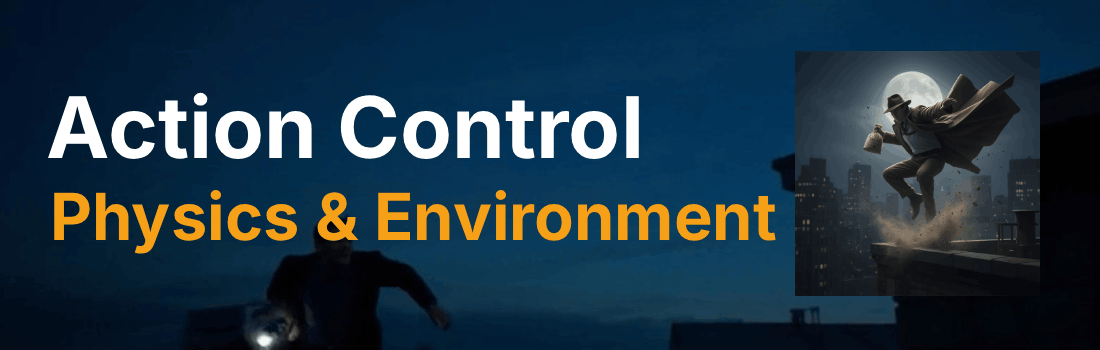
What is the "Physics & Environment Hooks" action control technique?
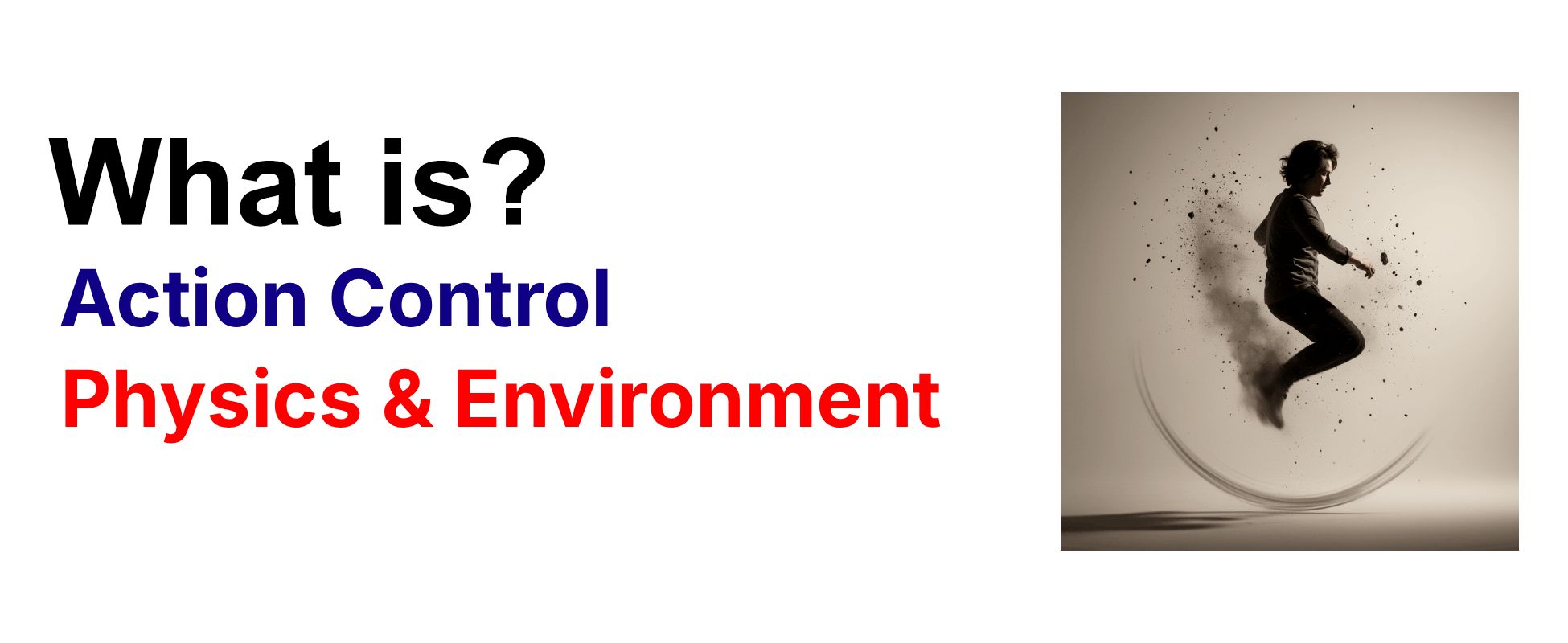
Physics and environment hooks are keyword-driven modifiers that apply real-world physical rules, such as gravity, friction, and wind speed, to control how an action behaves and interacts with its surroundings. Directors use physics hooks to decide whether a rooftop leap should obey Earth's rules or float dreamlike through the air, since action divorced from physics feels like a glitch, while action tied to environment feels like story. Pairing physics keywords with airtime durations and environmental debris, such as dust blooms or shredded material caught in the wind, grounds even stylized, high-stakes action in a believable physical world.
Example Prompt
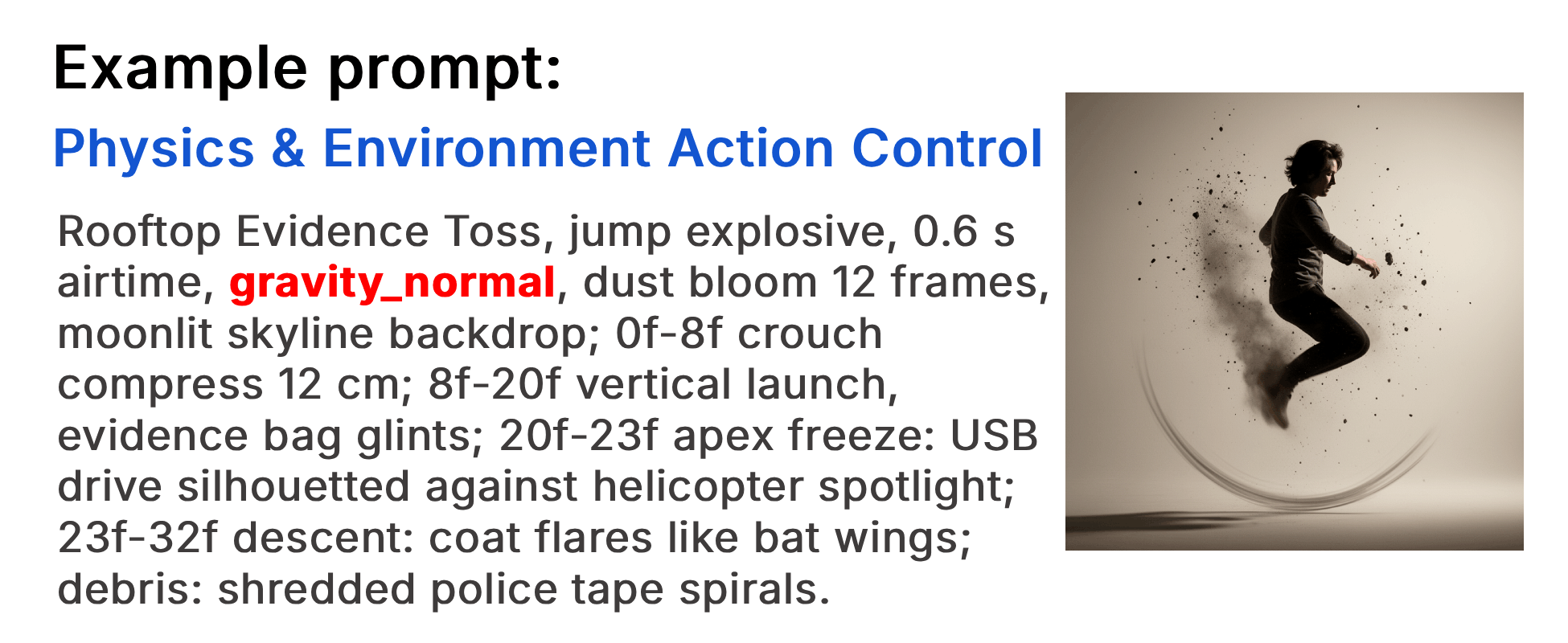
Rooftop Evidence Toss, jump explosive, 0.6 s airtime, gravity_normal, dust bloom 12 frames, moonlit skyline backdrop; 0f-8f crouch compress 12 cm; 8f-20f vertical launch, evidence bag glints; 20f-23f apex freeze: USB drive silhouetted against helicopter spotlight; 23f-32f descent: coat flares like bat wings; debris: shredded police tape spirals.
Example Video
When to use Physics & Environment Hooks?
Physics and environment hooks work best when a scene needs its action to feel physically grounded and believable, such as jumps, falls, slides, or any movement where the audience's intuitive sense of weight and momentum must be respected or deliberately subverted. They are also essential when stylizing action beyond reality, since specifying gravity_low or an exaggerated wind speed lets you push physics into stylized cinema while still feeling intentional rather than broken. Avoid over-specifying physics keywords for simple, low-stakes gestures where the added detail would overcomplicate the prompt without visible benefit.
- An action involves a jump, fall, or slide
- Gravity or weight should feel real or deliberately altered
- Wind or friction should visibly affect debris and clothing
- The scene stylizes physics for dramatic or surreal effect
- Environmental interaction grounds the action in its setting
Pros and Cons of Physics & Environment Hooks
| Pros | Cons |
|---|---|
| Grounds action in believable, physically consistent motion | Requires understanding of physics keywords to use effectively |
| Allows deliberate stylization, like low gravity, for dramatic effect | Overuse on simple gestures can overcomplicate the prompt unnecessarily |
| Ties debris, cloth, and environmental reactions directly to the action | AI models may not always render exact physical values with perfect fidelity |
Recommended book
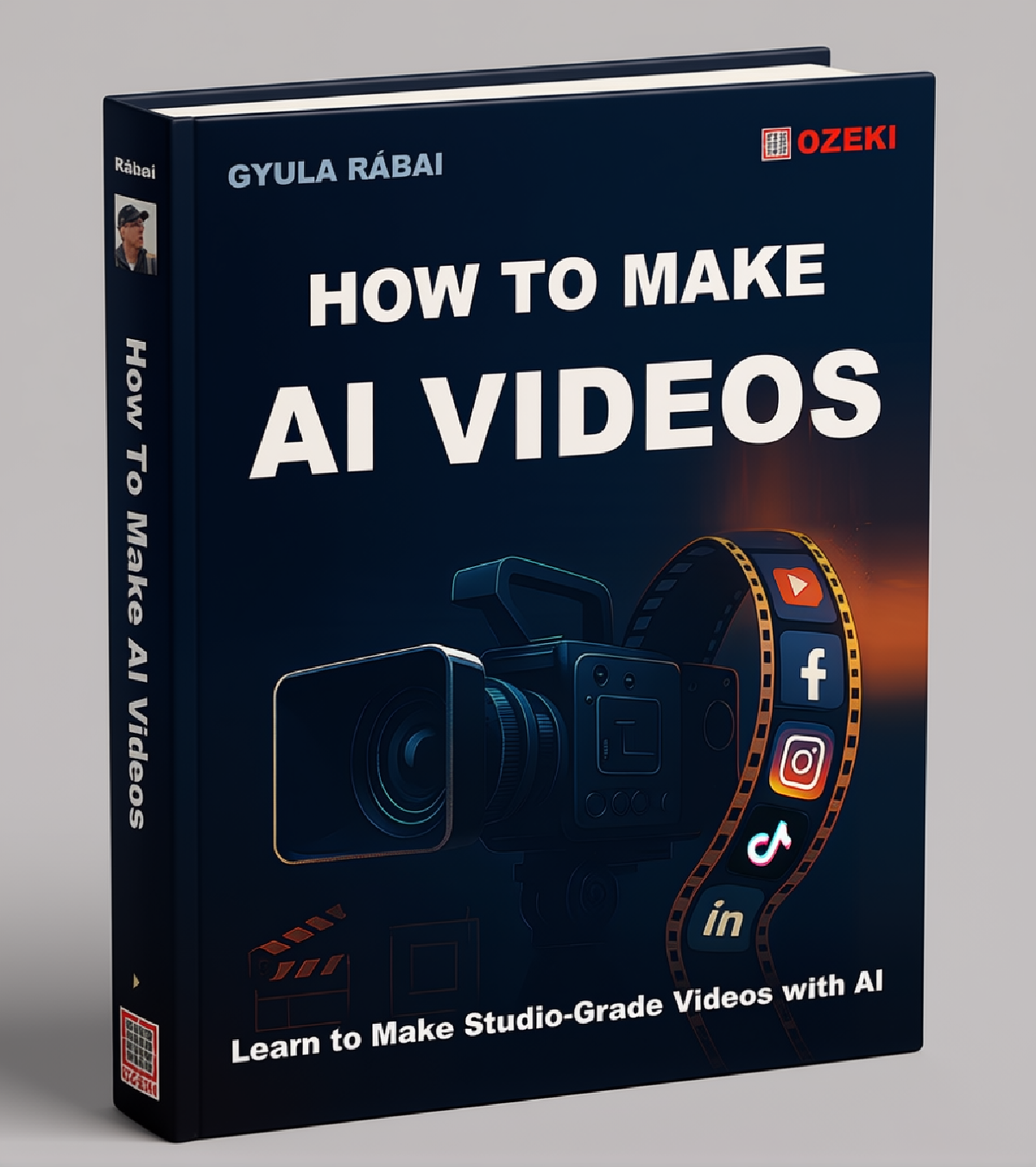
Learn more about AI video editing
Learn more about AI video editing by reading the book How to Make AI Videos by Gyula Rabai. In this book you can find very important information about: Camera Movement, Lighting, Colors, Composition, Consistency, Character emotion, Character motion, Video style, Action Control and Sound design This information will make your videos more professional, and more engaging.
Get your copy here:
https://videcool.com/p_3707-how-to-make-ai-videos-by-gyula-rabai-book.html
Conclusion
Physics and environment hooks are a powerful tool for filmmakers and prompt engineers who want their AI-generated actions to feel tied to a believable physical world. By specifying gravity, friction, wind speed, and airtime, it transforms a vague jump or slide into a precisely governed piece of physics that either mirrors reality or deliberately bends it for stylized effect. It is not the right choice for every scene, but when physical believability or intentional stylization are the goal, few techniques deliver as effectively.