
AI Video Editing - Action Control - Run
Run is one of the most visceral and dynamic action keywords available in AI video generation, turning a simple sprint into a kinetic storytelling device that communicates urgency, danger, or determination with every stride. This technique leverages exaggerated arm pumps, rapid gait cycles, and speed modifiers to inject raw energy into chase sequences, escapes, and high-stakes moments. This page explains what the run action is, when to use it, and how it compares to other movement options, along with a ready-to-use example prompt.
What is the "Run" action technique?
Run is a group action keyword that describes a fast-paced sprint with an exaggerated stride, arms pumping, and a rapid gait cycle that communicates urgency, danger, or determination. This dynamic full-body movement creates kinetic energy that propels the narrative forward, with specific speed and cycle controls to fine-tune the intensity. Directors use run for chase sequences, escapes, or moments of high stakes where speed becomes a storytelling element, making every frame feel charged with adrenaline. In AI video prompting, run can be combined with intensity modifiers like "frantic" or "intense," speed multipliers like "1.5x" or "3x," and physics hooks like "gravity_normal" or "friction_high" to shape the exact feel of the movement, from a desperate escape to a triumphant sprint across the finish line.
Example Prompt
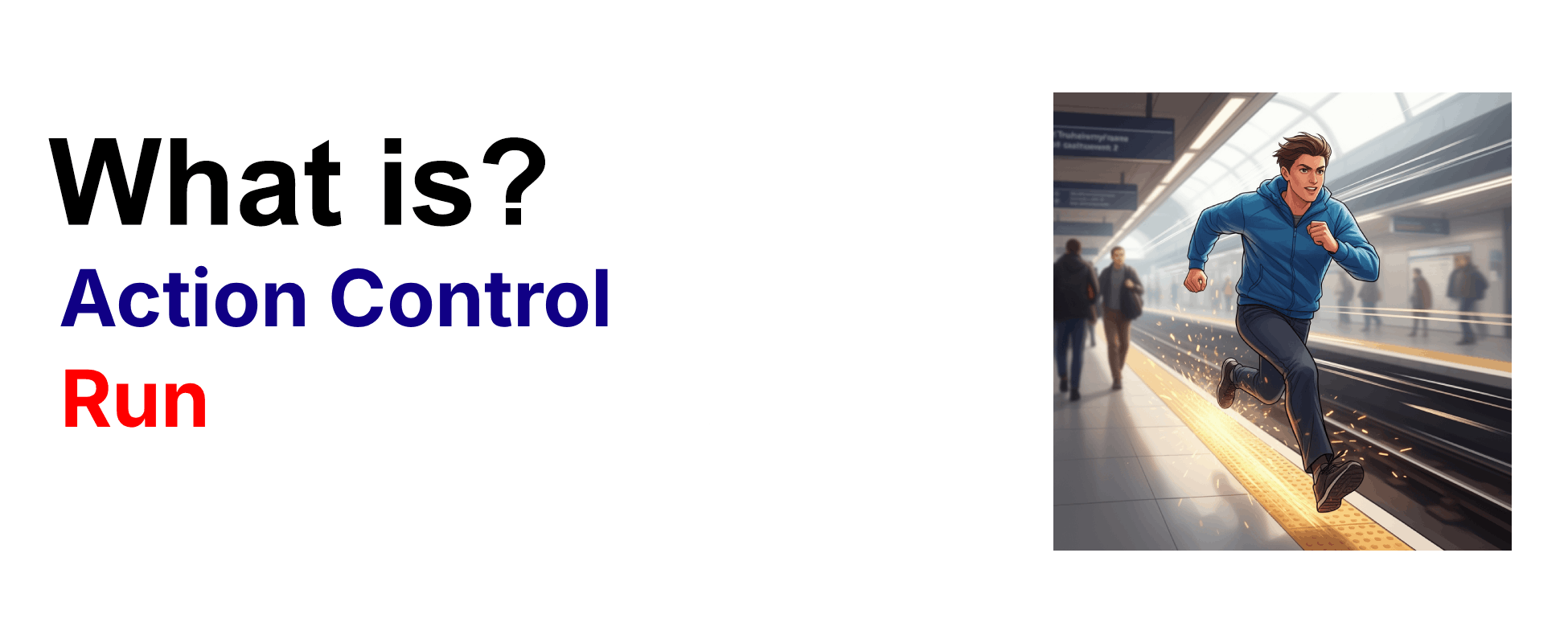
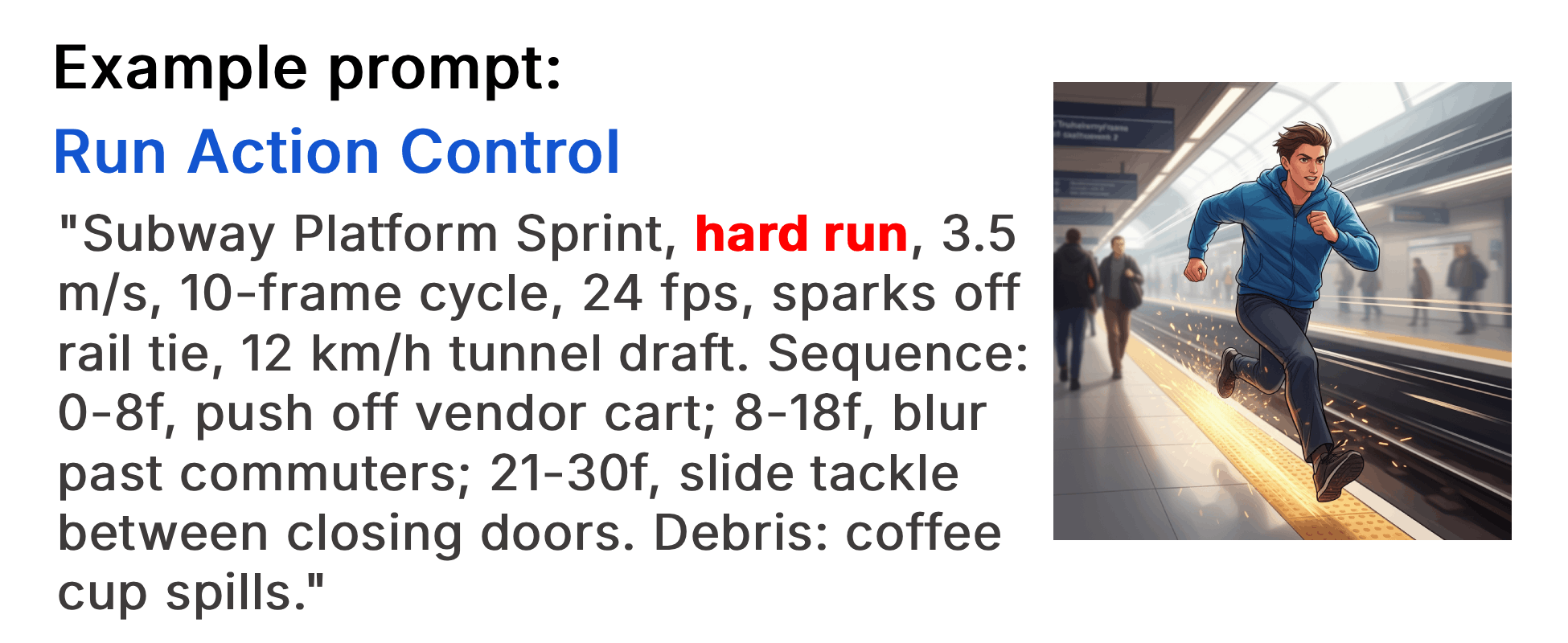
"Subway Platform Sprint, hard run, 3.5 m/s, 10-frame cycle, 24 fps, sparks off rail tie, 12 km/h tunnel draft. Sequence: 0-8f, push off vendor cart; 8-18f, blur past commuters; 21-30f, slide tackle between closing doors. Debris: coffee cup spills."
Example Video
When to use the Run action technique?
The run action technique works best when a scene calls for urgency, pursuit, or escape, such as chase sequences, desperate getaways, or moments where a character must reach something before time runs out. It is also effective for conveying determination or triumph, such as a runner crossing the finish line or a hero rushing to save someone. Avoid this technique for calm, contemplative, or dialogue-heavy scenes where a slower, more measured movement like a walk or steady tracking shot will better serve the mood.
- A character needs to escape or flee from danger
- A chase sequence demands speed and kinetic energy
- The scene requires a sense of urgency or time pressure
- A character's determination should be physically expressed
- Environmental debris and physics can amplify the motion
Pros and Cons of the Run Action
| Pros | Cons |
|---|---|
| Instantly communicates urgency, danger, or determination | Can overwhelm calm or dialogue-driven scenes if used without purpose |
| Pairs naturally with speed modifiers, intensity keywords, and physics hooks for fine control | Rapid gait cycles may cause motion artifacts or loss of detail in AI-generated footage |
| Generates kinetic energy and environmental debris that add realism and visual impact | Sustained running without variation can become visually monotonous over long durations |
Recommended book
Learn more about AI video editing
Learn more about AI video editing by reading the book How to Make AI Videos by Gyula Rabai. In this book you can find very important information about: Camera Movement, Lighting, Colors, Composition, Consistency, Character emotion, Character motion, Video style, Action Control and Sound design This information will make your videos more professional, and more engaging.
Get your copy here:
https://videcool.com/p_3707-how-to-make-ai-videos-by-gyula-rabai-book.html
Conclusion
The run action is a powerful tool for filmmakers and prompt engineers who want to inject raw speed and urgency into a scene. By combining it with intensity modifiers, speed multipliers, timing beats, and physics hooks, you can shape everything from a desperate subway sprint to a triumphant finish-line charge. It is not the right choice for every scene, but when chase, escape, or determination are the goal, few actions communicate them as effectively. Used thoughtfully alongside slower, more measured movements, it becomes a versatile addition to any AI video generation toolkit.