AI Video Editing - Action Control - Gravity Low
Gravity low is a physics modifier that reduces gravitational pull to a fraction of Earth-normal, transforming ordinary jumps and falls into slow, dreamlike arcs that hang in the air. This technique gives scenes a surreal, otherworldly quality reminiscent of lunar landings or stylized action sequences. This page explains what the technique is, when to use it, and how it compares to normal-gravity action, along with a ready-to-use example prompt.
What is the "Gravity Low" technique?
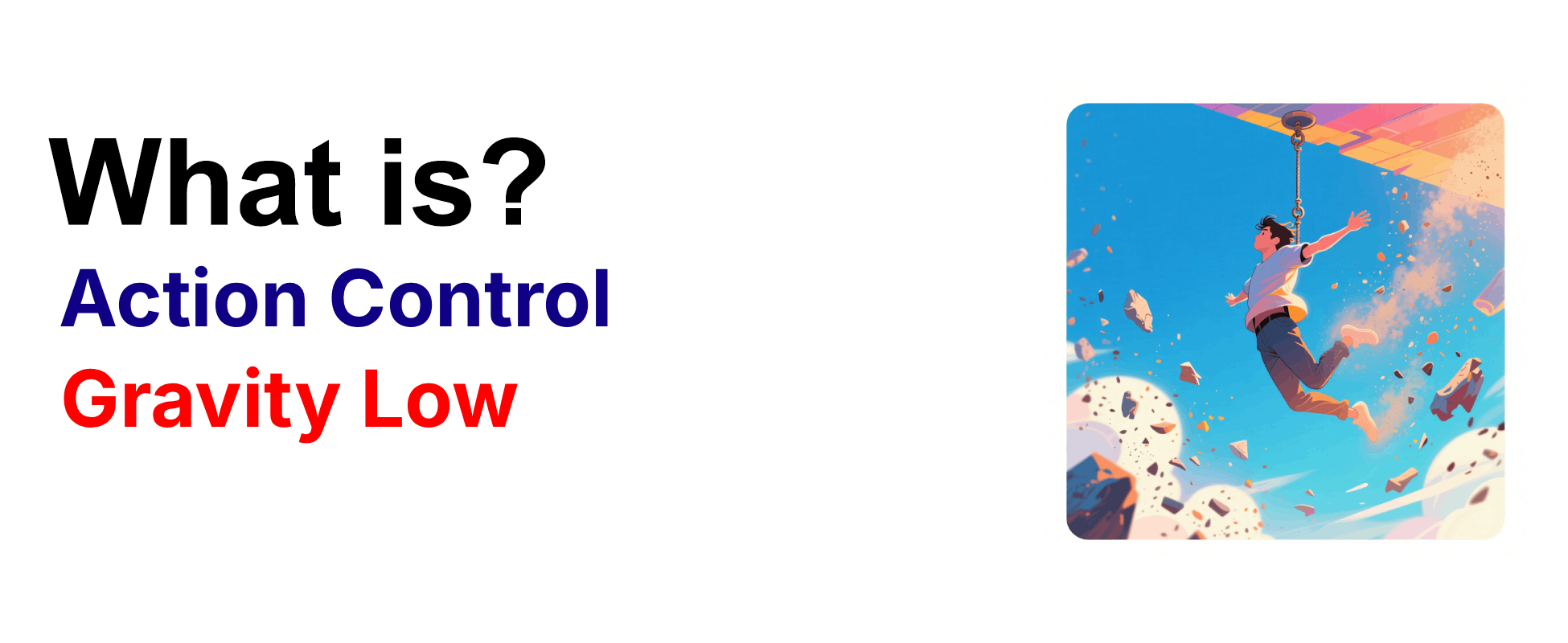
Gravity low is a physics modifier that reduces the gravitational pull to approximately 0.6 times normal Earth gravity, creating a moon-hop feel where jumps hang in the air longer and movements float with a dreamlike quality. This altered physics changes how characters land, how debris falls, and how actions unfold, giving scenes a surreal or stylized cinematic look. Directors use gravity low for sci-fi sequences, stylized action scenes, or moments where they want to emphasize the weightlessness of a character's movement, like the floating leaps in The Matrix.
Example Prompt
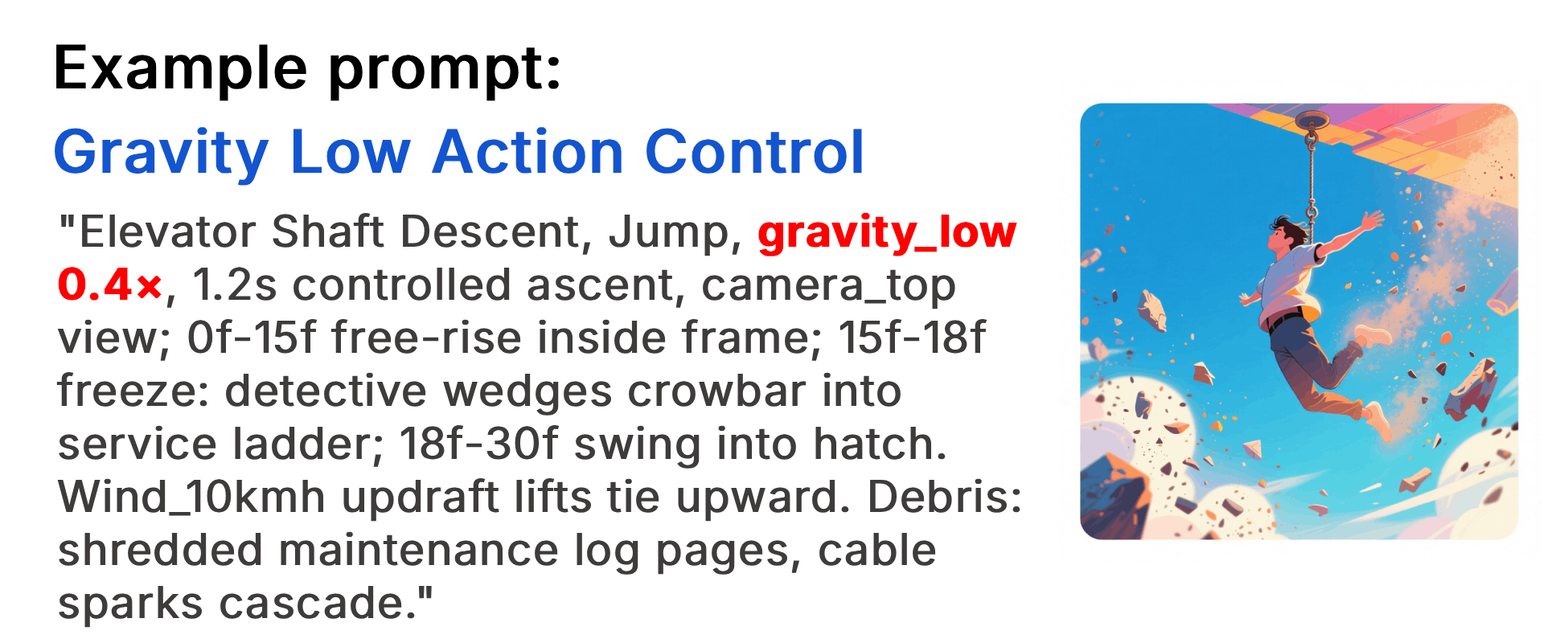
"Elevator Shaft Descent, Jump, gravity_low 0.4×, 1.2s controlled ascent, camera_top view; 0f-15f free-rise inside frame; 15f-18f freeze: detective wedges crowbar into service ladder; 18f-30f swing into hatch. Wind_10kmh updraft lifts tie upward. Debris: shredded maintenance log pages, cable sparks cascade."
Example Video
When to use the Gravity Low technique?
The gravity low technique works best when a scene calls for a surreal, otherworldly, or stylized quality, such as sci-fi sequences set on alien planets, dream sequences, or heightened action moments that defy normal physics. It is also effective for emphasizing weightlessness, vulnerability, or superhuman ability, letting characters float, leap, or descend in ways that feel detached from earthly constraints. Avoid this technique for grounded, realistic scenes where normal physics is essential to believability, or for fast-paced combat where snappy, weighty impacts are the priority.
- Scene is set in a sci-fi or alien environment
- A dream or hallucination sequence requires surreal physics
- A character's leap or fall should feel weightless and dramatic
- The action benefits from extended airtime and slow descent
- Superhuman or stylized movement is the creative goal
Pros and Cons of the Gravity Low
| Pros | Cons |
|---|---|
| Creates a striking, otherworldly visual that immediately signals sci-fi or dream logic | Can undermine realism if used in grounded, contemporary settings |
| Extends airtime for dramatic slow-motion leaps and falls without changing frame rate | May reduce the sense of impact and weight in combat or collision scenes |
| Enhances stylized action sequences with a dreamlike, cinematic quality | Requires careful tuning of debris and physics keywords to avoid floating artifacts |
Recommended book
Learn more about AI video editing
Learn more about AI video editing by reading the book How to Make AI Videos by Gyula Rabai. In this book you can find very important information about: Camera Movement, Lighting, Colors, Composition, Consistency, Character emotion, Character motion, Video style, Action Control and Sound design This information will make your videos more professional, and more engaging.
Get your copy here:
https://videcool.com/p_3707-how-to-make-ai-videos-by-gyula-rabai-book.html
Conclusion
The gravity low modifier is a powerful tool for filmmakers and prompt engineers who want to push action beyond the bounds of Earth-normal physics. By reducing gravitational pull, it transforms jumps, falls, and descents into slow, dreamlike arcs that lend scenes a surreal, otherworldly quality. It is not the right choice for every scene, but when sci-fi aesthetics, dream logic, or stylized weightlessness are the goal, few techniques communicate them as effectively. Used thoughtfully alongside normal-gravity action, it becomes a versatile addition to any AI video generation toolkit.