
AI Video Editing - Video Style - Cinematic Look
The cinematic look is one of the most sought-after style modifiers in AI video generation, transforming raw output into footage that carries the texture, depth, and visual authority of a major motion picture. By layering film grain, widescreen composition, and sophisticated lighting, this technique elevates any scene from casual content to screen-worthy storytelling. This page explains what the cinematic look is, when to use it, and how it compares to cleaner alternatives, along with a ready-to-use example prompt.
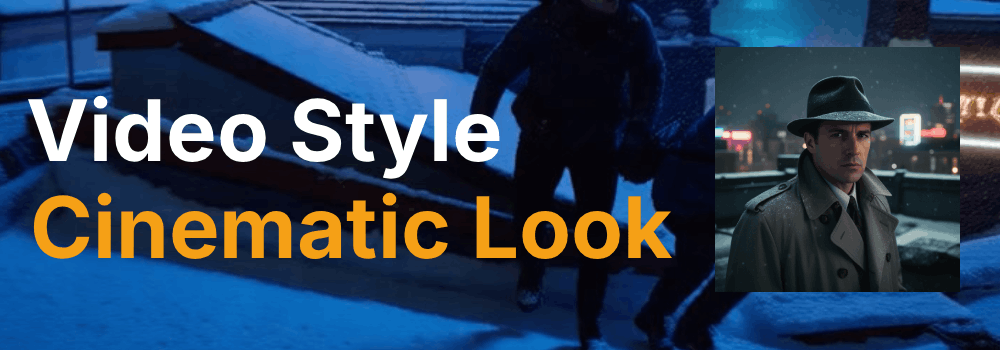
What is the "Cinematic Look" video style?
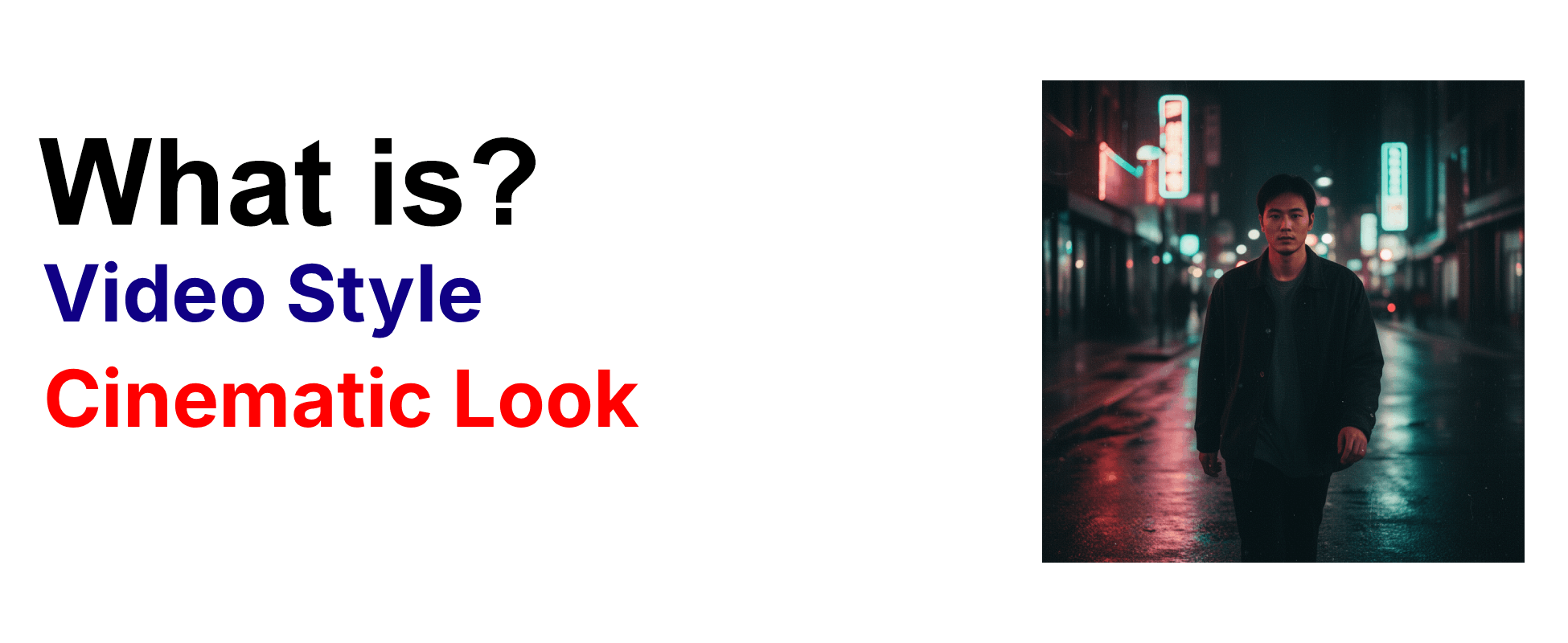
A cinematic look is a style modifier that applies 35mm film grain, widescreen aspect ratios, and sophisticated lighting to emulate the visual quality of a major motion picture. This aesthetic signals to the audience that the video is a professional, high-quality production with intentional artistic choices rather than casual footage. Directors use cinematic look when they want their AI-generated videos to feel like they belong on the big screen, with the texture, depth, and visual richness of traditional film.
Example Prompt
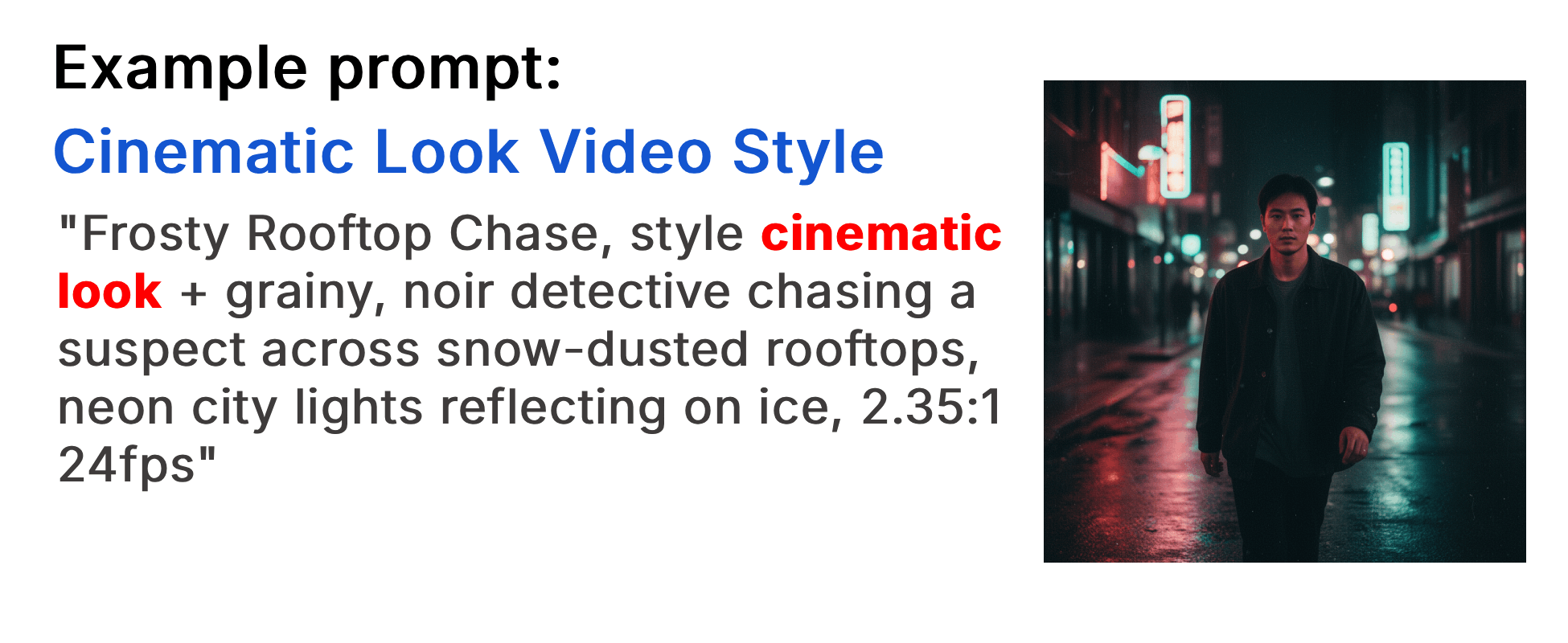
"Frosty Rooftop Chase, style cinematic look + grainy, noir detective chasing a suspect across snow-dusted rooftops, neon city lights reflecting on ice, 2.35:1 24fps"
Example Video
When to use the Cinematic Look?
The cinematic look works best when a scene demands visual authority, emotional weight, or a sense of production value that separates it from ordinary footage. It is ideal for narrative films, dramatic storytelling, and any project where the audience should feel they are watching something crafted rather than captured. Avoid using the cinematic look for casual social media clips, quick tutorials, or content where a clean, modern digital aesthetic is more appropriate, as the added grain and widescreen framing can feel heavy and unnecessary.
- The scene needs a professional, big-screen feel
- Emotional weight and dramatic tension are central
- The project is a narrative film or short story
- Film grain and texture enhance the mood
- Widescreen framing adds compositional power
Pros and Cons of the Cinematic Look
| Pros | Cons |
|---|---|
| Instantly elevates perceived production value and visual authority | Film grain and widescreen cropping reduce clarity and usable frame area |
| Adds emotional depth and atmosphere through texture and lighting cues | Using "cinematic" alone without modifiers often produces inconsistent grain or color grade |
| Signals intentional artistry, setting content apart from casual or amateur footage | Can feel heavy or pretentious for casual, lighthearted, or fast-turnaround content |
Recommended book
Learn more about AI video editing
Learn more about AI video editing by reading the book How to Make AI Videos by Gyula Rabai. In this book you can find very important information about: Camera Movement, Lighting, Colors, Composition, Consistency, Character emotion, Character motion, Video style, Action Control and Sound design This information will make your videos more professional, and more engaging.
Get your copy here:
https://videcool.com/p_3707-how-to-make-ai-videos-by-gyula-rabai-book.html
Conclusion
The cinematic look is a powerful style modifier for filmmakers and prompt engineers who want their AI-generated videos to carry the weight and texture of professional cinema. By combining film grain, widescreen composition, and sophisticated lighting, it transforms clean digital output into something that feels intentional, immersive, and screen-worthy. It is not the right choice for every project, but when dramatic storytelling, visual authority, or emotional depth are the goal, few style modifiers communicate them as effectively. Used thoughtfully alongside complementary modifiers like grainy or vintage fade, it becomes a versatile addition to any AI video generation toolkit.