
AI Video Editing - Video Style - 1940s Noir
1940s noir is one of the most iconic vintage era styles available in AI video generation, evoking the classic film noir movement with high-contrast black-and-white imagery, fedoras, rainy streets, and venetian-blind shadows that carve characters into sharp silhouettes. This page explains what the style is, when to use it, and how it compares to other video styles, along with a ready-to-use example prompt.
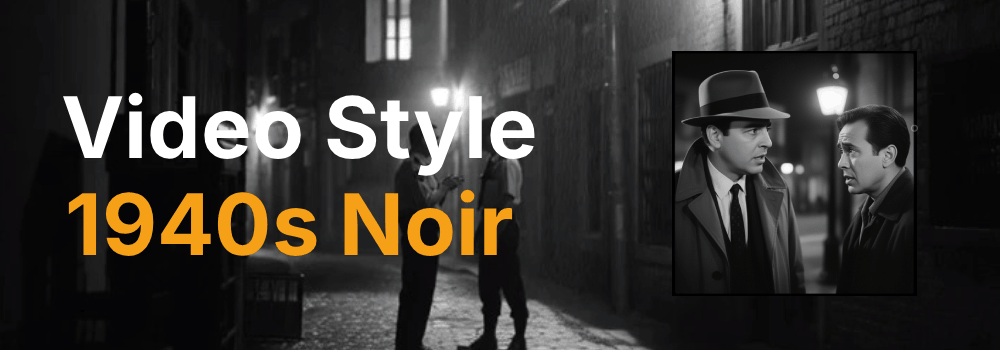
What is the "1940s Noir" video style?
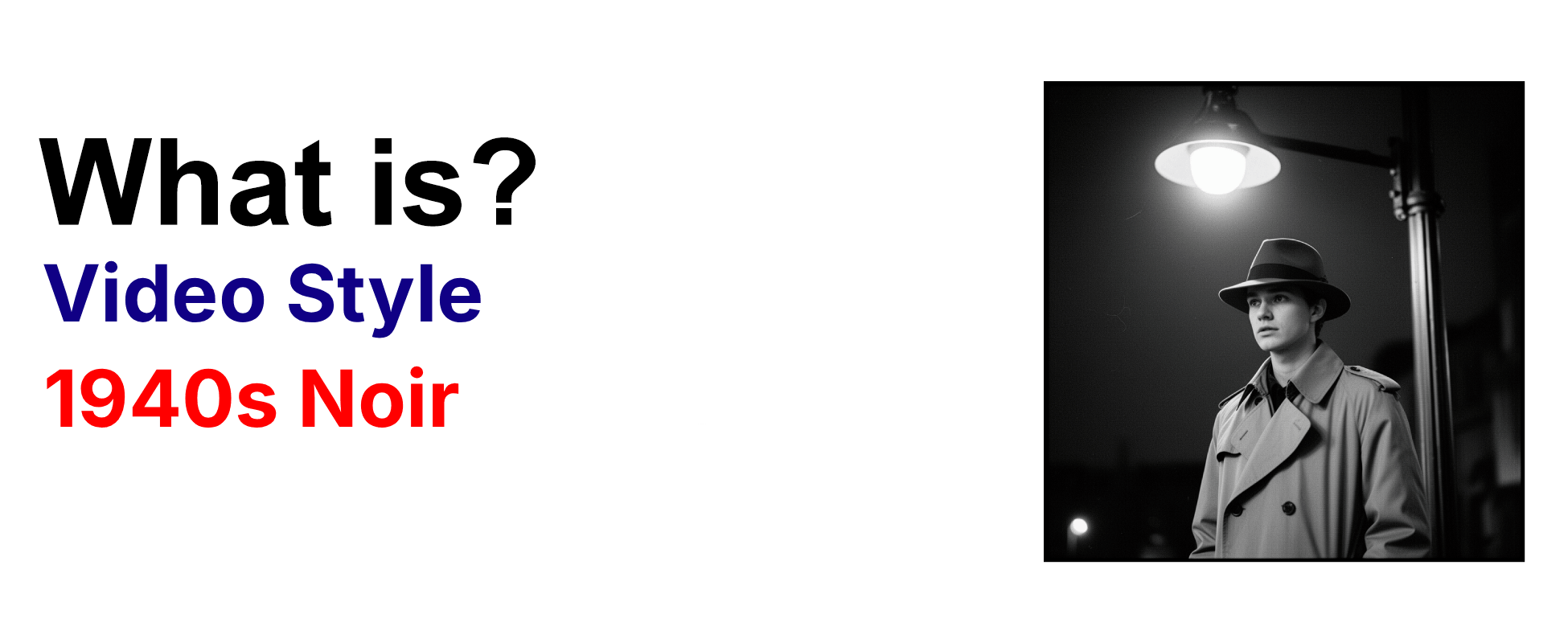
1940s noir is a vintage era style that evokes the classic film noir movement with high-contrast black-and-white imagery, fedoras, rainy streets, and venetian-blind shadows that carve characters into sharp silhouettes. This aesthetic creates a world of moral ambiguity, cynical detectives, and femme fatales, where every shadow suggests danger and every rain-slicked pavement reflects hidden motives. Directors use 1940s noir to transport audiences to a gritty, post-war world of crime and suspicion, where the visual style itself tells a story of corruption and doomed romance.
Example Prompt
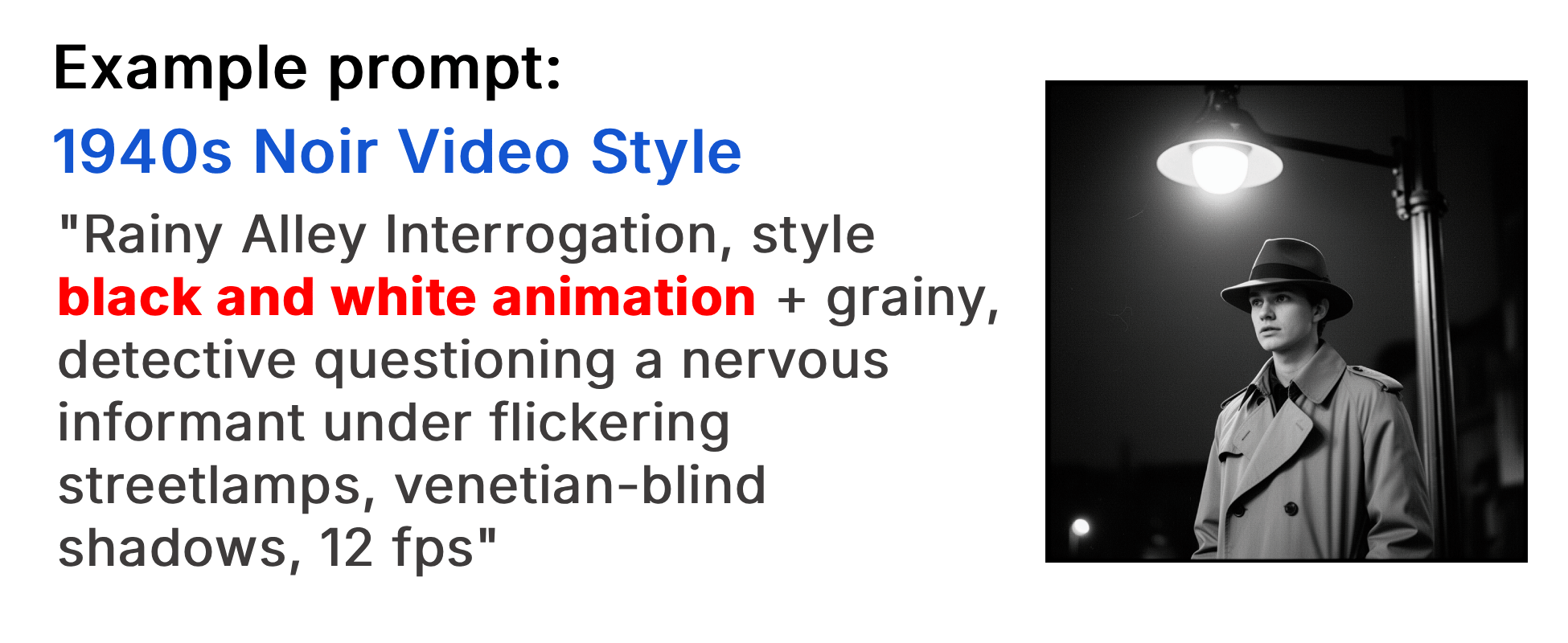
"Rainy Alley Interrogation, style black and white animation + grainy, detective questioning a nervous informant under flickering streetlamps, venetian-blind shadows, 12 fps"
Example Video
When to use the 1940s Noir style?
The 1940s noir style works best when a scene calls for moral ambiguity, suspense, or a gritty atmosphere rooted in post-war urban decay. It is ideal for detective stories, crime thrillers, and any narrative where shadows conceal as much as they reveal. The high-contrast black-and-white palette strips away the comfort of color, forcing the viewer to focus on character, composition, and tension. Avoid this style for lighthearted, colorful, or modern-day scenes where warmth and vibrancy are essential to the mood.
- Scene needs suspense or moral ambiguity
- Story involves crime, detectives, or femme fatales
- High-contrast shadows enhance the narrative
- A gritty, post-war atmosphere fits the setting
- Black-and-white palette strengthens the mood
Pros and Cons of the 1940s Noir
| Pros | Cons |
|---|---|
| Creates an instantly recognizable, atmospheric visual identity | Limited to black-and-white palette, unsuitable for colorful or vibrant scenes |
| High-contrast shadows add dramatic tension and visual depth | Can feel clichéd if overused without fresh narrative twists |
| Evokes nostalgia and cinematic authenticity that builds viewer trust | Grain and low-fps effects may reduce clarity for action-heavy sequences |
Recommended book

Learn more about AI video editing
Learn more about AI video editing by reading the book How to Make AI Videos by Gyula Rabai. In this book you can find very important information about: Camera Movement, Lighting, Colors, Composition, Consistency, Character emotion, Character motion, Video style, Action Control and Sound design This information will make your videos more professional, and more engaging.
Get your copy here:
https://videcool.com/p_3707-how-to-make-ai-videos-by-gyula-rabai-book.html
Conclusion
The 1940s noir is a powerful tool for filmmakers and prompt engineers who want to infuse their AI-generated videos with suspense, moral ambiguity, and cinematic authenticity. By leveraging high-contrast black-and-white imagery, venetian-blind shadows, and gritty urban textures, this style transports viewers to a world where every shadow tells a story. It is not the right choice for every scene, but when crime, tension, or post-war atmosphere are the goal, few styles communicate them as effectively. Used thoughtfully alongside brighter or more modern video styles, it becomes a versatile addition to any AI video generation toolkit.