
AI Video Editing - Video Style - Watercolor
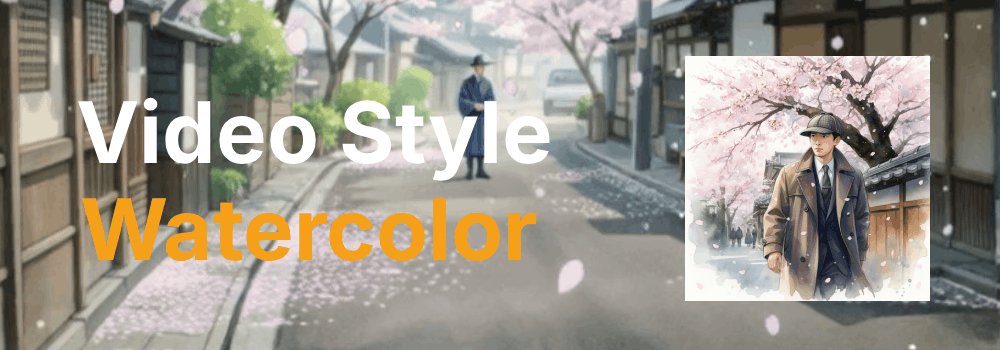
Watercolor is one of the most evocative artistic styles available in AI video generation, transforming digital scenes into living paintings where colors bleed, blend, and breathe across the frame. This technique captures the delicate spontaneity of traditional watercolor, with translucent washes, pigment granulation, and soft edges that make every frame feel hand-painted. This page explains what the watercolor video style is, when to use it, and how it compares to other stylistic choices, along with a ready-to-use example prompt.
What is the "Watercolor" video style?
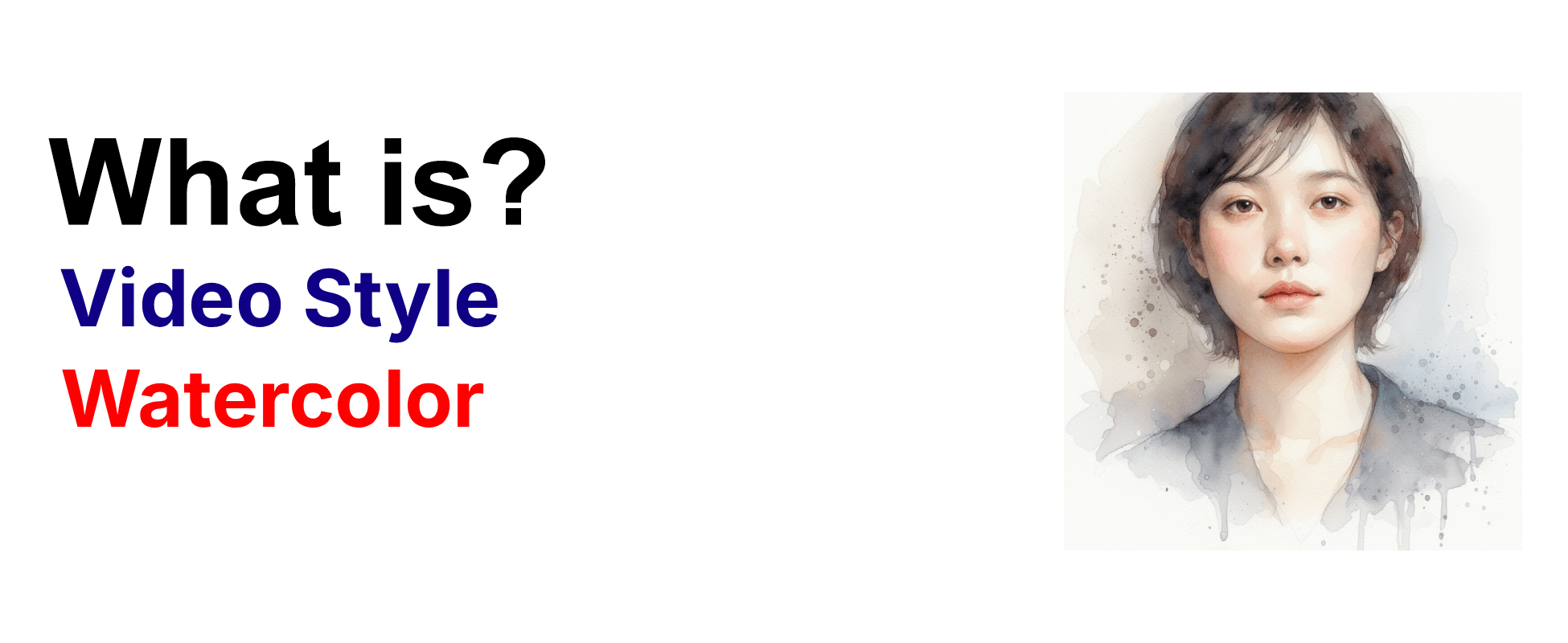
Watercolor is an artistic influence that applies the soft, translucent washes and pigment granulation of traditional watercolor painting to AI video, creating a dreamy, ethereal aesthetic with bleeding edges and delicate color transitions. This style evokes the lightness and spontaneity of the medium, where colors flow and mix organically to capture moments of fleeting beauty. Directors use watercolor for romantic sequences, poetic storytelling, or any project where they want the gentle, ephemeral quality of a painting that seems to breathe on the paper. Unlike sharper digital styles such as 3D CGI or pixel art, watercolor embraces imperfection and fluidity, making each frame feel like a one-of-a-kind artistic moment that can never be exactly replicated.
Example Prompt
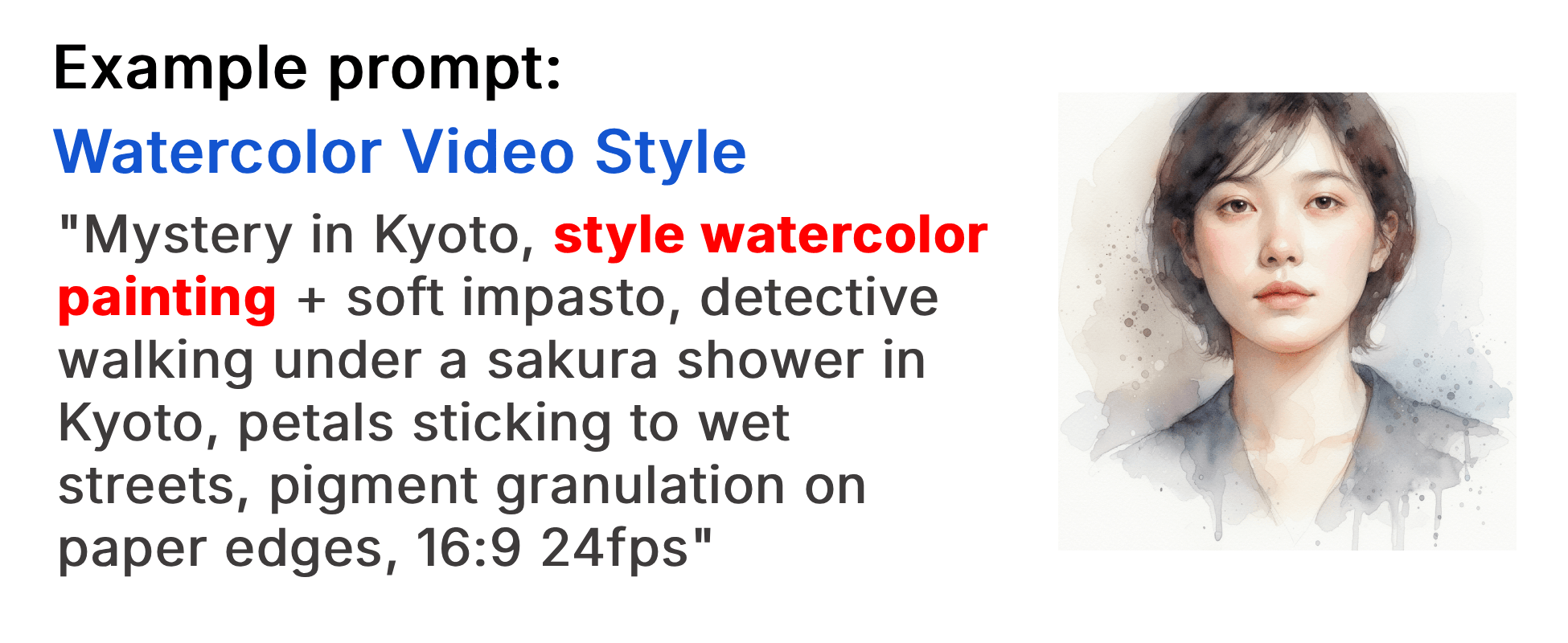
"Mystery in Kyoto, style watercolor painting + soft impasto, detective walking under a sakura shower in Kyoto, petals sticking to wet streets, pigment granulation on paper edges, 16:9 24fps"
Example Video
When to use the Watercolor video style?
The watercolor video style works best when a scene calls for dreaminess, romance, or poetic atmosphere, such as moments of reflection, gentle transitions between sequences, or any storytelling that benefits from a hand-crafted, painterly quality. It is also well suited to fantasy and nature scenes, where the organic flow of pigment mirrors the movement of water, wind, or light. Avoid this style for high-energy action sequences, gritty realism, or scenes that demand sharp detail and precise geometry, where a cleaner digital style will better serve the mood.
- Scene needs a dreamy or poetic atmosphere
- Romance or emotional reflection is central
- Nature and organic movement fit the narrative
- A hand-crafted, artistic aesthetic is desired
- Soft transitions between sequences are needed
Pros and Cons of the Watercolor video style
| Pros | Cons |
|---|---|
| Creates a dreamy, ethereal aesthetic that feels hand-painted and unique | Lacks sharp detail, making it unsuitable for scenes requiring precision |
| Organic color blending adds emotional depth and poetic beauty | Bleeding edges can obscure important visual details or text |
| Evokes nostalgia and artistic authenticity that builds emotional connection | Difficult to maintain consistent character features across frames |
Recommended book

Learn more about AI video editing
Learn more about AI video editing by reading the book How to Make AI Videos by Gyula Rabai. In this book you can find very important information about: Camera Movement, Lighting, Colors, Composition, Consistency, Character emotion, Character motion, Video style, Action Control and Sound design This information will make your videos more professional, and more engaging.
Get your copy here:
https://videcool.com/p_3707-how-to-make-ai-videos-by-gyula-rabai-book.html
Conclusion
The watercolor video style is a powerful tool for filmmakers and prompt engineers who want to infuse their AI-generated videos with painterly beauty and emotional softness. By embracing the fluid, organic qualities of watercolor rather than the precision of digital rendering, it transforms scenes into living canvases where colors breathe and blend with gentle spontaneity. It is not the right choice for every project, but when romance, poetry, or artistic authenticity are the goal, few styles communicate them as effectively. Used thoughtfully alongside sharper or more structured video styles, it becomes a versatile addition to any AI video generation toolkit.