
AI Video Editing - Video Style - Oil Painting
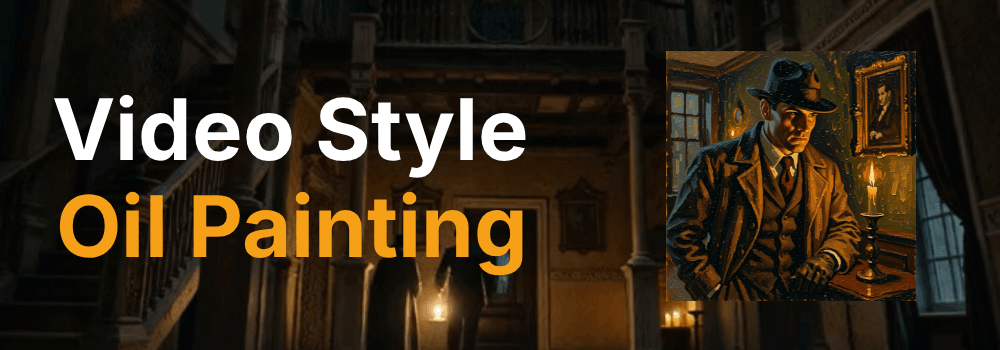
Oil painting is one of the most evocative video styles available in AI video generation, transforming every frame into a living canvas rich with texture, depth, and the timeless drama of chiaroscuro lighting. This page explains what the style is, when to use it, and how it compares to other artistic influences, along with a ready-to-use example prompt.
What is the "Oil Painting" video style?
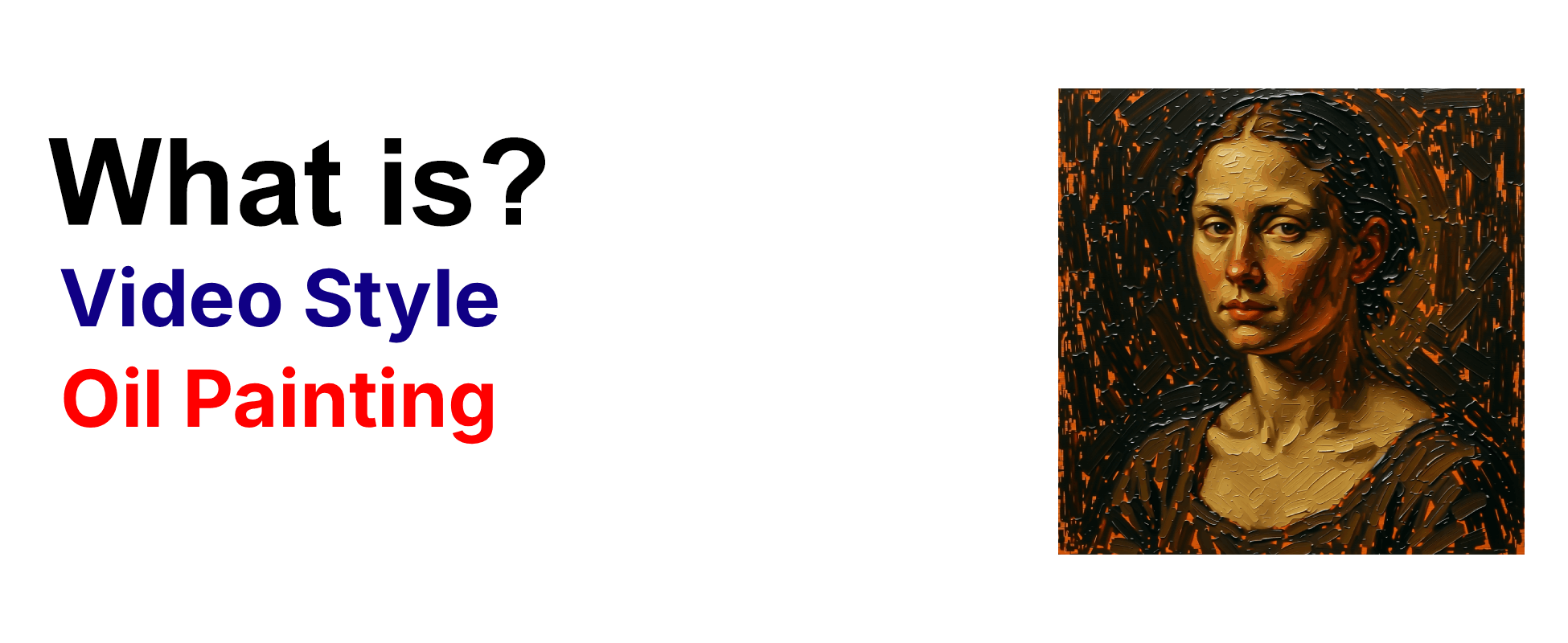
Oil painting is an artistic influence that applies the texture, brushstrokes, and rich color layering of traditional oil on canvas to AI video, creating a painterly aesthetic with visible impasto and dramatic chiaroscuro lighting. This style evokes the grandeur of Renaissance masters or the emotional intensity of Baroque art, where every frame feels like a moving canvas with depth and physicality. Directors use oil painting for historical dramas, fantasy sequences, or any project where they want the visual richness and timeless quality of a fine art masterpiece.
Example Prompt
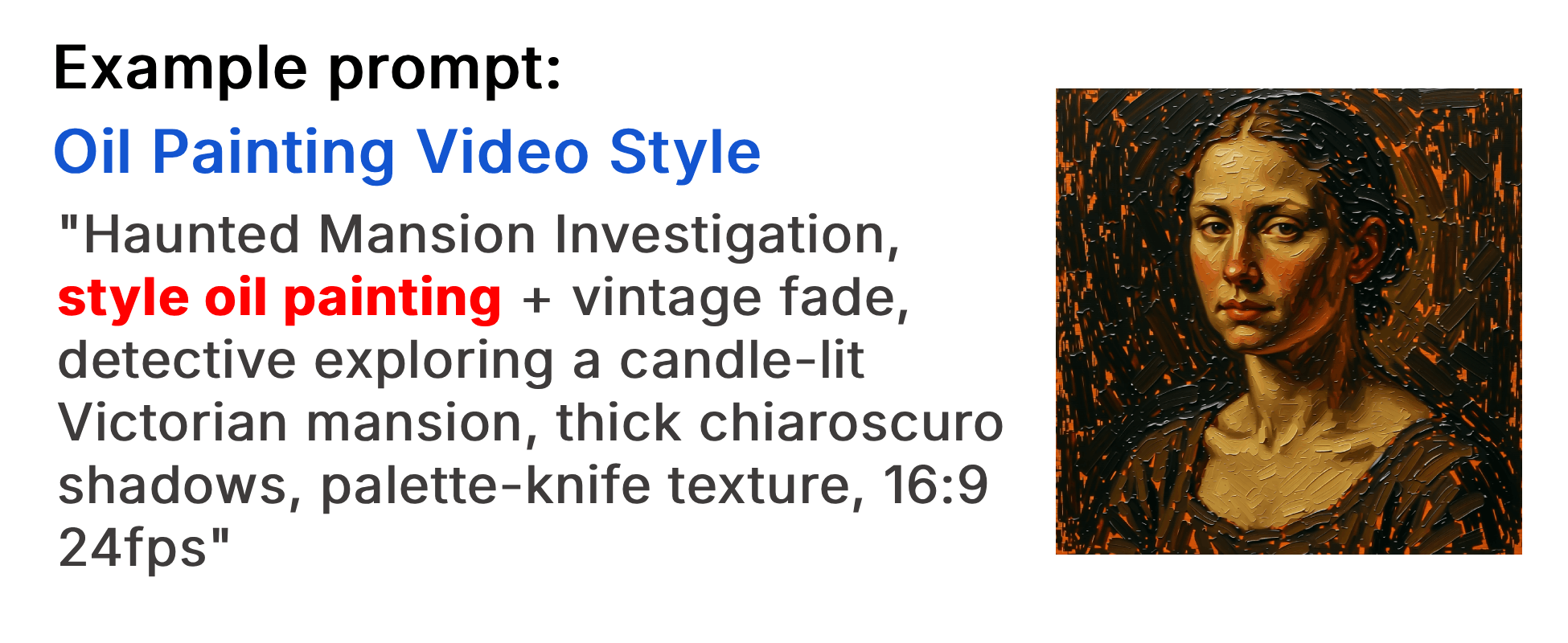
"Haunted Mansion Investigation, style oil painting + vintage fade, detective exploring a candle-lit Victorian mansion, thick chiaroscuro shadows, palette-knife texture, 16:9 24fps"
Example Video
When to use the Oil Painting technique?
The oil painting style works best when a scene calls for visual richness, emotional depth, or a sense of timeless artistry, such as historical dramas, dreamlike fantasy sequences, or moments of quiet contemplation where every frame should feel like a masterpiece. It is also well suited to marketing campaigns and title sequences that need to stand out with a distinctive, hand-crafted aesthetic. Avoid this style for fast-paced action scenes where motion clarity matters more than texture, or for projects requiring photorealistic accuracy, as the painterly brushstrokes can obscure fine detail.
- Scene needs a timeless, fine-art aesthetic
- Historical drama or period piece setting
- Fantasy or dreamlike sequence benefits from painterly texture
- Emotional depth should be conveyed through visual richness
- Title sequence or marketing content needs a distinctive look
Pros and Cons of the Oil Painting Style
| Pros | Cons |
|---|---|
| Transforms every frame into a visually rich, painterly masterpiece | Brushstroke texture can obscure fine details and facial expressions |
| Evokes the emotional depth and grandeur of Renaissance and Baroque art | Not suitable for photorealistic or documentary-style content |
| Creates a distinctive, memorable look that stands out in any context | Can feel heavy or slow for fast-paced action or rapid-cut sequences |
Recommended book

Learn more about AI video editing
Learn more about AI video editing by reading the book How to Make AI Videos by Gyula Rabai. In this book you can find very important information about: Camera Movement, Lighting, Colors, Composition, Consistency, Character emotion, Character motion, Video style, Action Control and Sound design This information will make your videos more professional, and more engaging.
Get your copy here:
https://videcool.com/p_3707-how-to-make-ai-videos-by-gyula-rabai-book.html
Conclusion
The oil painting style is a powerful tool for filmmakers and prompt engineers who want to infuse their AI videos with the timeless beauty and emotional resonance of fine art. By applying the texture, brushstrokes, and chiaroscuro lighting of traditional oil on canvas, it turns ordinary scenes into moving masterpieces that feel both intimate and grand. It is not the right choice for every project, but when visual richness, historical authenticity, or artistic drama are the goal, few styles communicate them as effectively. Used thoughtfully alongside cleaner, more realistic styles, it becomes a versatile addition to any AI video generation toolkit.