
AI Video Editing - Video Style - Pixel Art
Pixel art is one of the most distinctive and beloved animation styles available in AI video generation, transforming scenes into retro 8-bit worlds of blocky sprites and limited color palettes. This technique channels the nostalgic charm of classic video games from the 1980s and 1990s, creating a deliberately low-resolution aesthetic that feels both playful and technically impressive. This page explains what the style is, when to use it, and how it compares to other animation styles, along with a ready-to-use example prompt.
What is the "Pixel Art" video style?
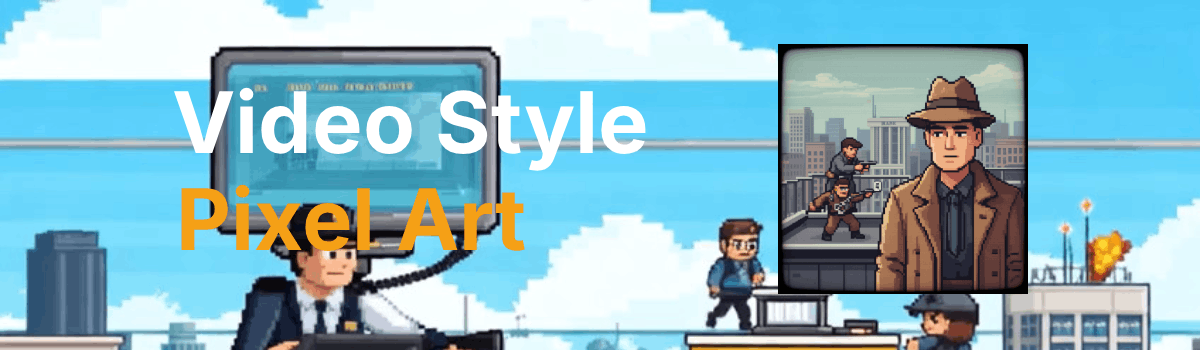
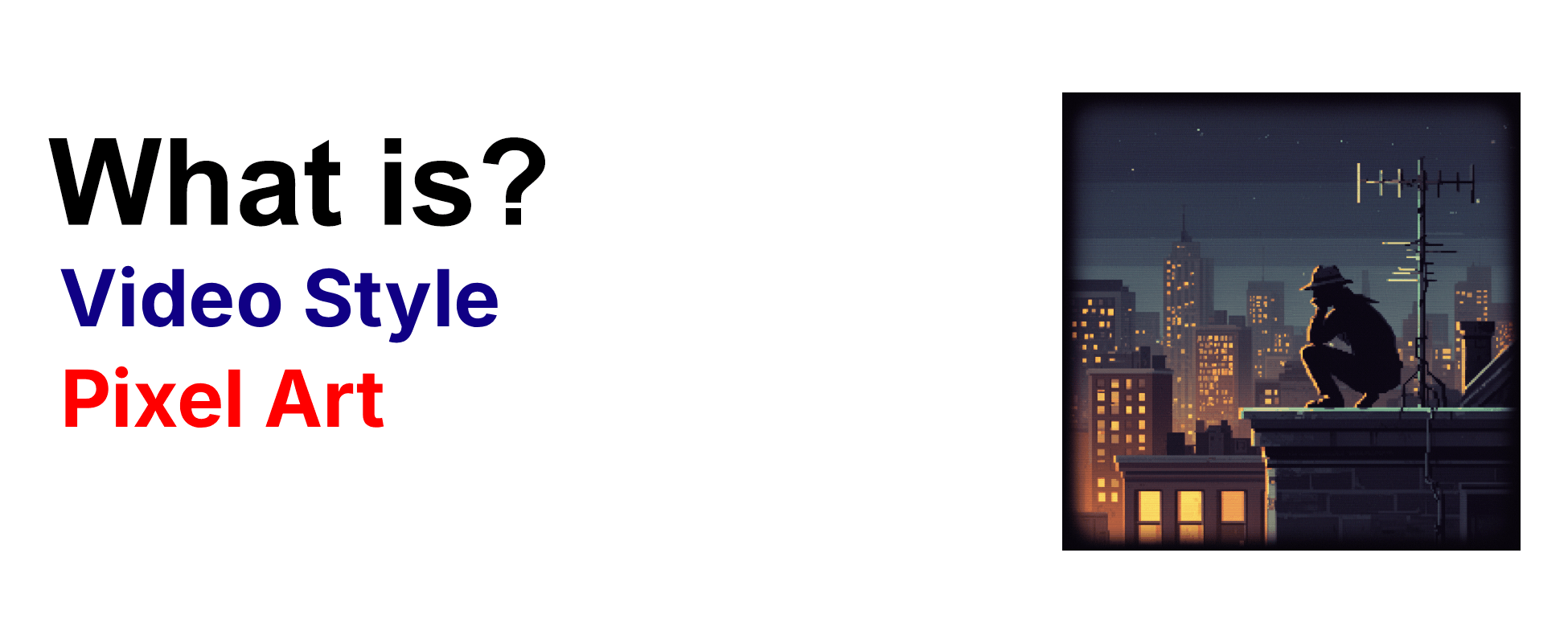
Pixel art is an animation style that uses retro 8-bit graphics with blocky sprites, limited color palettes, and CRT scanlines to evoke the nostalgic feel of classic video games from the 1980s and 1990s. This aesthetic creates a charming, deliberately low-resolution look that feels both playful and technically impressive in its constraints. Directors use pixel art for gaming content, social media hooks, or any project where they want to tap into the nostalgia of early digital culture and the simple joy of blocky, colorful pixels. When used in AI video generation, pixel art prompts should specify the pixel ratio, frame rate, and scanline effects to achieve an authentic retro look. The style pairs especially well with the "looped" modifier, enabling seamless 4-frame or 8-frame animation cycles that are perfect for GIFs and short social media clips.
Example Prompt
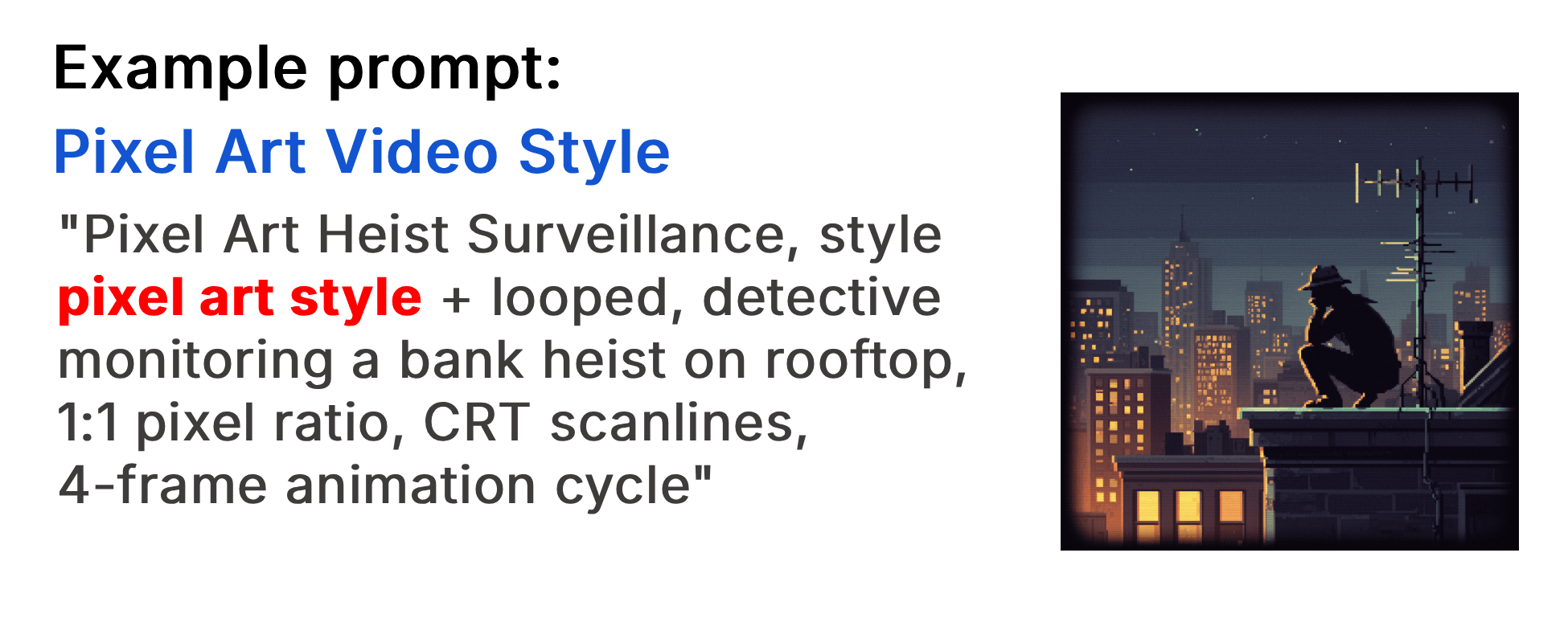
"Pixel Art Heist Surveillance, style pixel art style + looped, detective monitoring a bank heist on rooftop, 1:1 pixel ratio, CRT scanlines, 4-frame animation cycle"
Example Video
When to use the Pixel Art style?
The pixel art style works best when a project calls for retro charm, gaming nostalgia, or a playful, low-fi aesthetic that stands out from photorealistic content. It is ideal for social media hooks, explainer videos, and gaming-related content where the blocky, colorful simplicity grabs attention and evokes warm memories of classic arcade and console games. Pixel art is also well suited to looped animations and short clips, where the 4-frame or 8-frame cycles create mesmerizing, GIF-ready visuals. Avoid this style for projects that require photorealism, smooth gradients, or fine detail, as the deliberate pixelation and limited color palettes will work against those goals.
- The project needs retro gaming nostalgia
- Short looped animations or GIF-ready content is desired
- Social media hooks require a distinctive, eye-catching look
- Gaming or tech-themed content benefits from an 8-bit aesthetic
- A playful, low-fi style fits the creative direction
Pros and Cons of the Pixel Art style
| Pros | Cons |
|---|---|
| Instantly evokes nostalgia and stands out with a distinctive retro aesthetic | Limited color palettes and blocky pixels restrict fine detail and realism |
| Perfect for short, looped animations that perform well on social media | Can feel gimmicky or inappropriate for serious, dramatic, or corporate content |
| Lightweight and fast to render, ideal for quick iterations and experimentation | Requires precise prompt tuning of pixel ratio and frame rate to avoid muddy results |
Recommended book
Learn more about AI video editing
Learn more about AI video editing by reading the book How to Make AI Videos by Gyula Rabai. In this book you can find very important information about: Camera Movement, Lighting, Colors, Composition, Consistency, Character emotion, Character motion, Video style, Action Control and Sound design This information will make your videos more professional, and more engaging.
Get your copy here:
https://videcool.com/p_3707-how-to-make-ai-videos-by-gyula-rabai-book.html
Conclusion
Pixel art is a versatile and eye-catching style for filmmakers and prompt engineers who want to infuse their AI videos with retro charm and playful nostalgia. By embracing deliberate pixelation, limited color palettes, and CRT scanlines, it transforms ordinary scenes into blocky, colorful worlds that resonate with audiences who grew up with classic video games. It is not the right choice for every project, but when gaming nostalgia, social media engagement, or a distinctive low-fi aesthetic are the goal, few styles communicate them as effectively. Used thoughtfully alongside smoother, more realistic styles, it becomes a versatile addition to any AI video generation toolkit.