
AI Video Editing - Video Style - 3D CGI
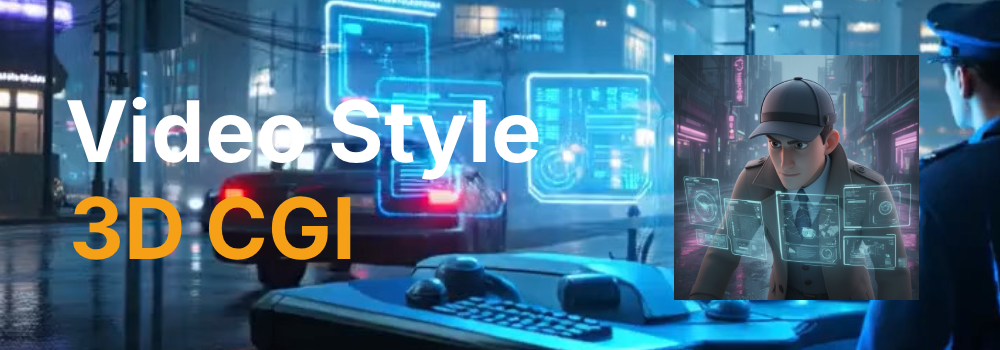
3D CGI is one of the most versatile rendering styles available in AI video generation, transforming scenes into computer-generated worlds built from polygons, textures, and digital lighting rather than live-action footage. From polished modern renders to deliberately retro low-poly aesthetics, 3D CGI gives filmmakers full control over how synthetic the world should feel. This page explains what the style is, when to use it, and how it compares to other video styles, along with a ready-to-use example prompt.
What is the "3D CGI" video style?
3D CGI is a rendering style that builds scenes out of computer-generated geometry, textures, and lighting rather than photographed live-action or hand-drawn animation. This style spans a wide range of looks, from high-fidelity modern renders to deliberately low-poly, retro aesthetics that evoke early 3D video games. Directors use 3D CGI when they want precise control over camera movement, lighting, and geometry that would be difficult or impossible to achieve with live-action, or when a stylized, synthetic look better serves the narrative than photorealism.
Example Prompt
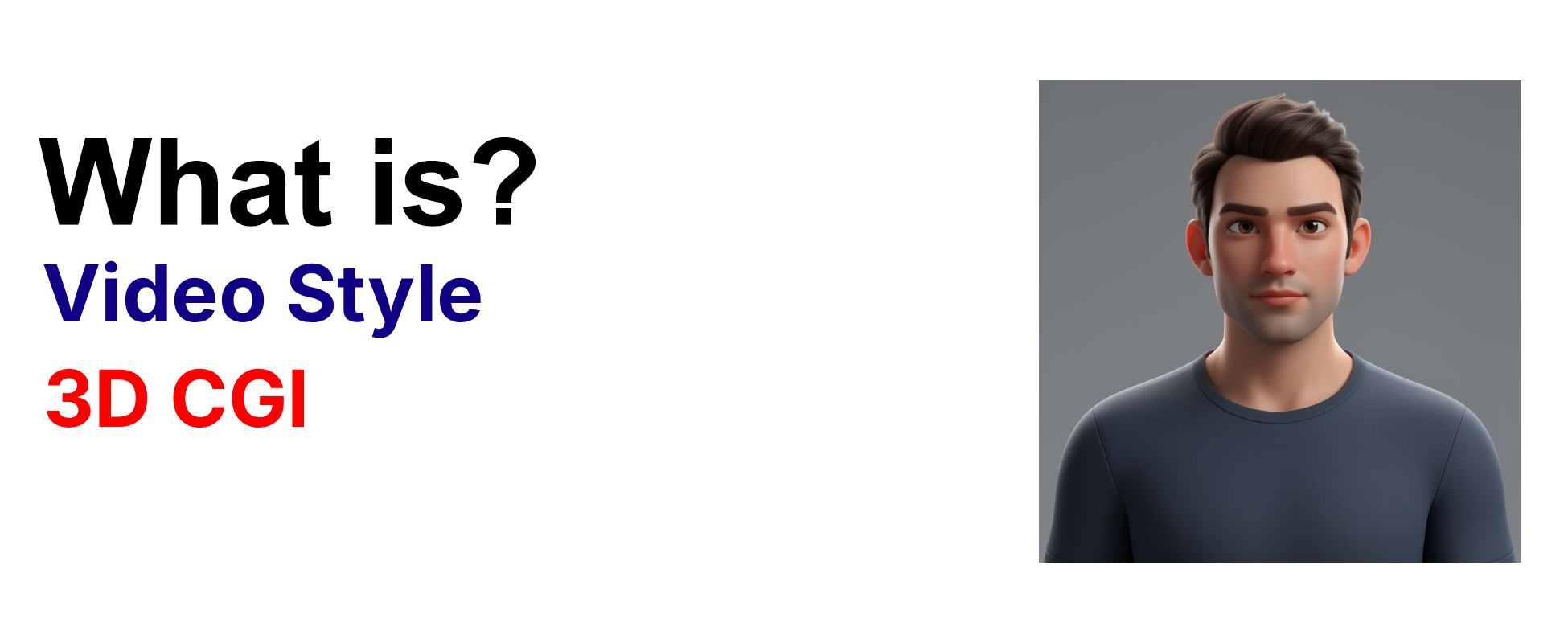
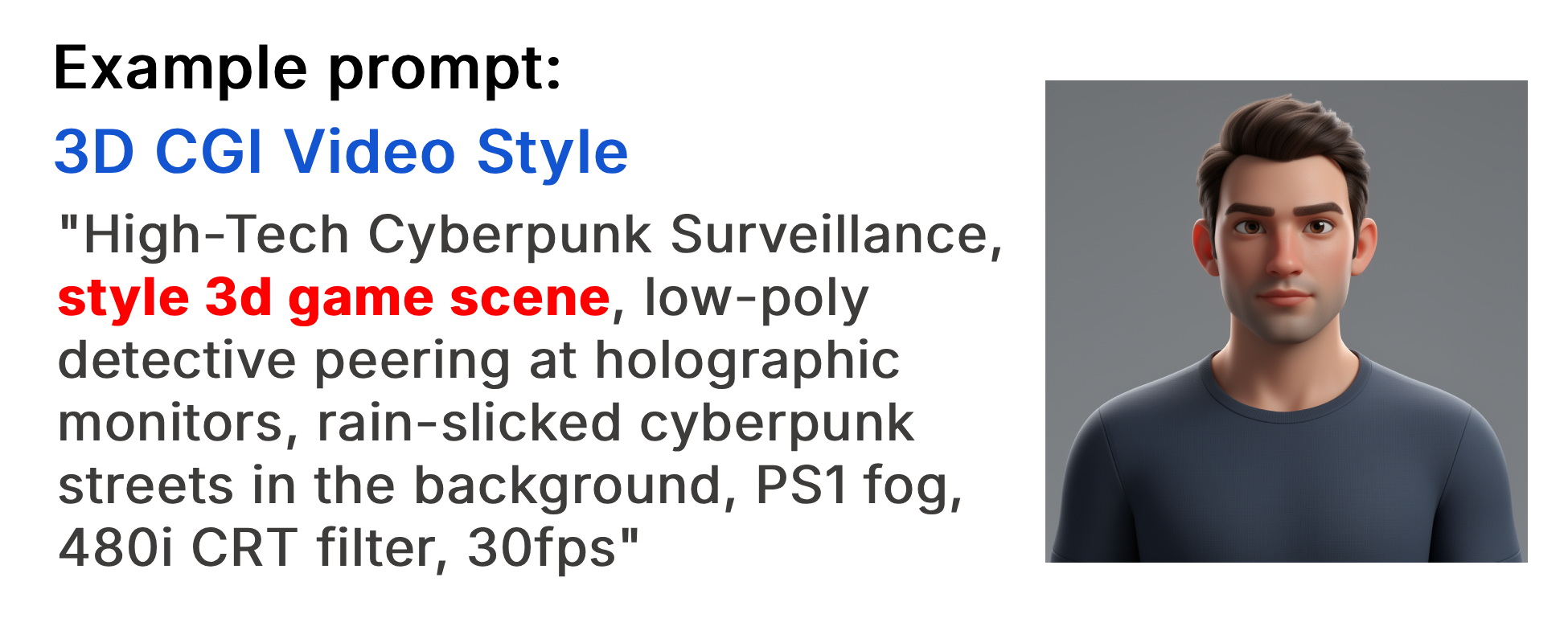
"High-Tech Cyberpunk Surveillance, style 3d game scene, low-poly detective peering at holographic monitors, rain-slicked cyberpunk streets in the background, PS1 fog, 480i CRT filter, 30fps"
Example Video
When to use the 3D CGI style?
The 3D CGI style works best when a scene calls for a synthetic, computer-generated look rather than live-action realism, such as retro low-poly game aesthetics, stylized futuristic environments, or scenes that benefit from precise digital camera and lighting control. It is also effective when leaning into nostalgic technology filters, like PS1-era fog or CRT scanlines, to evoke a specific retro-gaming period. Avoid this style for grounded, naturalistic scenes where photorealistic or live-action footage would better preserve immersion and believability.
- The scene benefits from a computer-generated, synthetic look
- A retro or low-poly game aesthetic fits the mood
- Precise digital camera and lighting control matters
- Nostalgic filters like CRT scanlines enhance the style
- A stylized, non-photorealistic world fits the narrative
Pros and Cons of the 3D CGI Style
| Pros | Cons |
|---|---|
| Offers precise control over geometry, lighting, and camera movement | Can look synthetic or artificial when photorealism is the goal |
| Highly flexible, from modern high-poly renders to nostalgic low-poly looks | Retro filters like CRT or PS1 fog may feel gimmicky if overused |
| Strong fit for stylized, futuristic, or game-inspired storytelling | Requires clear style modifiers to avoid an inconsistent or generic render |
Recommended book

Learn more about AI video editing
Learn more about AI video editing by reading the book How to Make AI Videos by Gyula Rabai. In this book you can find very important information about: Camera Movement, Lighting, Colors, Composition, Consistency, Character emotion, Character motion, Video style, Action Control and Sound design This information will make your videos more professional, and more engaging.
Get your copy here:
https://videcool.com/p_3707-how-to-make-ai-videos-by-gyula-rabai-book.html
Conclusion
3D CGI is a versatile style for filmmakers and prompt engineers who want full control over a computer-generated look, whether that means a polished modern render or a deliberately nostalgic low-poly aesthetic. By specifying the right style and era modifiers, it lets you dial in exactly how synthetic or retro the final scene should feel. It is not the right choice for every scene, but when a digital, game-inspired, or stylized world is the goal, few styles offer as much precise control. Used thoughtfully alongside live-action-inspired styles, 3D CGI becomes a versatile addition to any AI video generation toolkit.