
AI Video Editing - Character Emotion - Subtle Sad
Subtle Sad is one of the most emotionally powerful character expressions available in AI video generation, conveying grief and compassion at a restrained intensity that resonates more deeply than overt melodrama. This technique uses gentle cues like drooping eyelids, slow blinks, and a slight slump to create a quiet emotional connection with the audience. This page explains what the technique is, when to use it, and how it compares to more intense expressions, along with a ready-to-use example prompt.
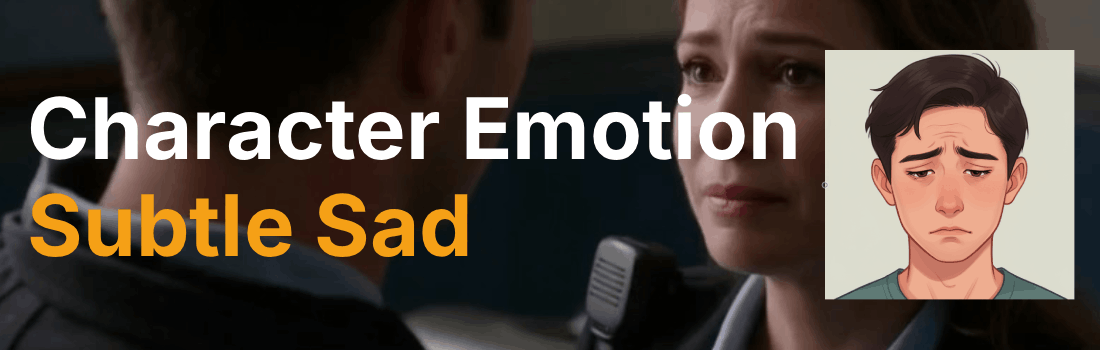
What is the "Subtle Sad" character emotion?
Subtle Sad is a restrained emotional expression where the character displays grief at approximately 10 percent intensity, revealed through gentle cues like drooping eyelids, slow blinks, downturned lips, and a slumped posture. This understated performance conveys empathy and compassion without melodrama, creating a quiet emotional connection with the audience. Directors use subtle sad for moments of consolation, quiet reflection, or when a character processes loss internally while maintaining professional composure in front of others. Unlike full-blown sadness that dominates a scene with tears and visible anguish, subtle sad whispers its emotion through micro-expressions, making the viewer lean in rather than pull away.
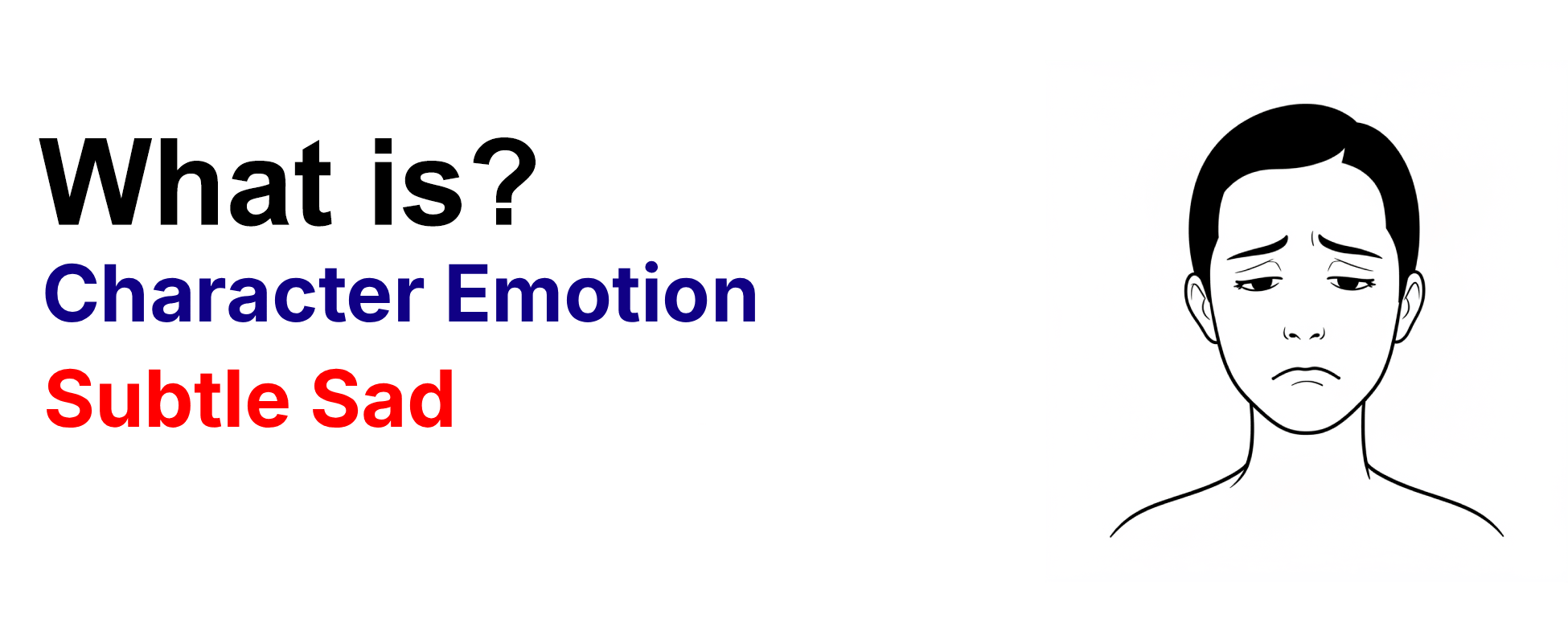
Example Prompt
"Detective Starr, subtle Sad, drooping eyelids, slow blink, 0-36f,
35 mm, gentle dolly-in, empathetic tilt of head"
Scenario: Detective Starr comforts a shaken witness. Her sadness is
understated but visible, showing genuine compassion without overacting.
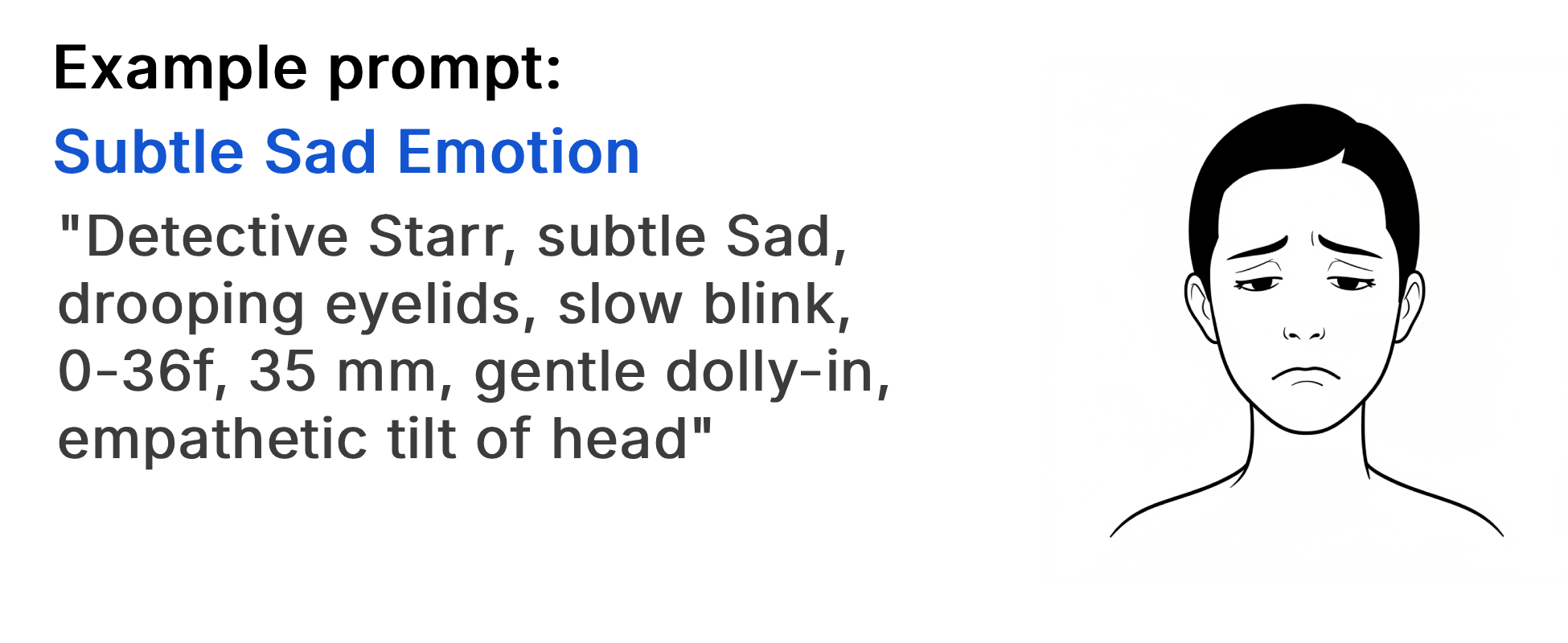
Example Video
When to use the Subtle Sad emotion?
The subtle sad emotion works best when a scene calls for quiet empathy, restrained grief, or a character who must maintain composure while feeling deep emotion, such as a detective comforting a witness, a doctor delivering difficult news, or a friend offering silent support. It is also effective for moments of introspective reflection, where the character processes loss internally rather than expressing it outwardly. Avoid this technique for scenes requiring dramatic emotional outbursts, where intense sadness or building sadness would better serve the narrative.
- A character must show empathy without overacting
- The scene calls for quiet, internal grief
- Professional composure masks personal sadness
- Introspective reflection or contemplative moments
- Authenticity and restraint matter more than drama
Pros and Cons of the Subtle Sad
| Pros | Cons |
|---|---|
| Creates authentic, believable emotional connection through restraint | May appear too understated if the scene demands visible emotional weight |
| Conveys depth and complexity without overwhelming the viewer | Requires precise micro-expression keywords; vague prompts may produce neutral expressions |
| Builds viewer empathy by inviting them to read between the lines | Can be misread as neutrality if intensity cues are not specified clearly |
Recommended book

Learn more about AI video editing
Learn more about AI video editing by reading the book How to Make AI Videos by Gyula Rabai. In this book you can find very important information about: Camera Movement, Lighting, Colors, Composition, Consistency, Character emotion, Character motion, Video style, Action Control and Sound design This information will make your videos more professional, and more engaging.
Get your copy here:
https://videcool.com/p_3707-how-to-make-ai-videos-by-gyula-rabai-book.html
Conclusion
The subtle sad is a powerful tool for filmmakers and prompt engineers who want to convey deep emotion through restraint rather than spectacle. By dialing sadness to its quietest register, it invites the viewer to lean in and feel the character's grief on a personal level, making the moment more authentic and lasting. It is not the right choice for every scene, but when empathy, composure, or quiet reflection are the goal, few techniques communicate them as effectively. Used thoughtfully alongside more intense emotional expressions, it becomes a versatile addition to any AI video generation toolkit.