
AI Video Editing - Character Emotion - Intense Angry
Intense Angry is a full-throttle emotion keyword that pushes a character's fury to its absolute peak, transforming a controlled performance into a raw, explosive display of rage. It is one of the most powerful tools in the character emotion toolkit, capable of anchoring climactic confrontations, betrayals, and breaking points with a single, unmistakable expression. This page explains what the technique is, when to use it, and how it compares to subtler alternatives, along with a ready-to-use example prompt.
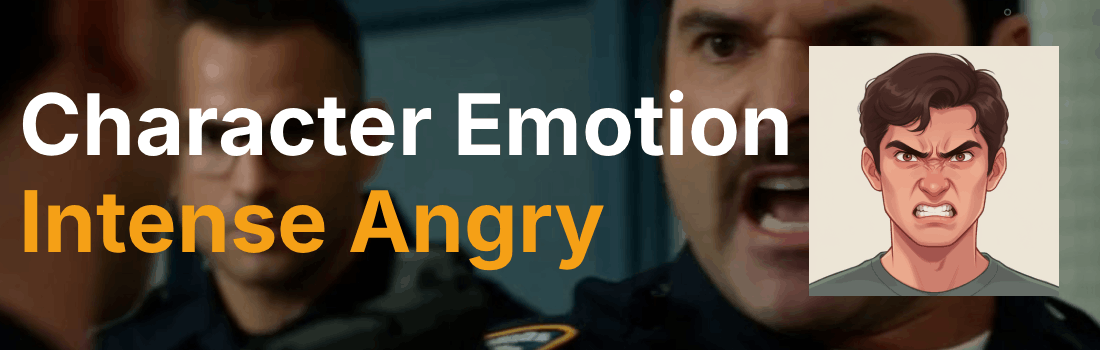
What is the "Intense Angry" emotion?
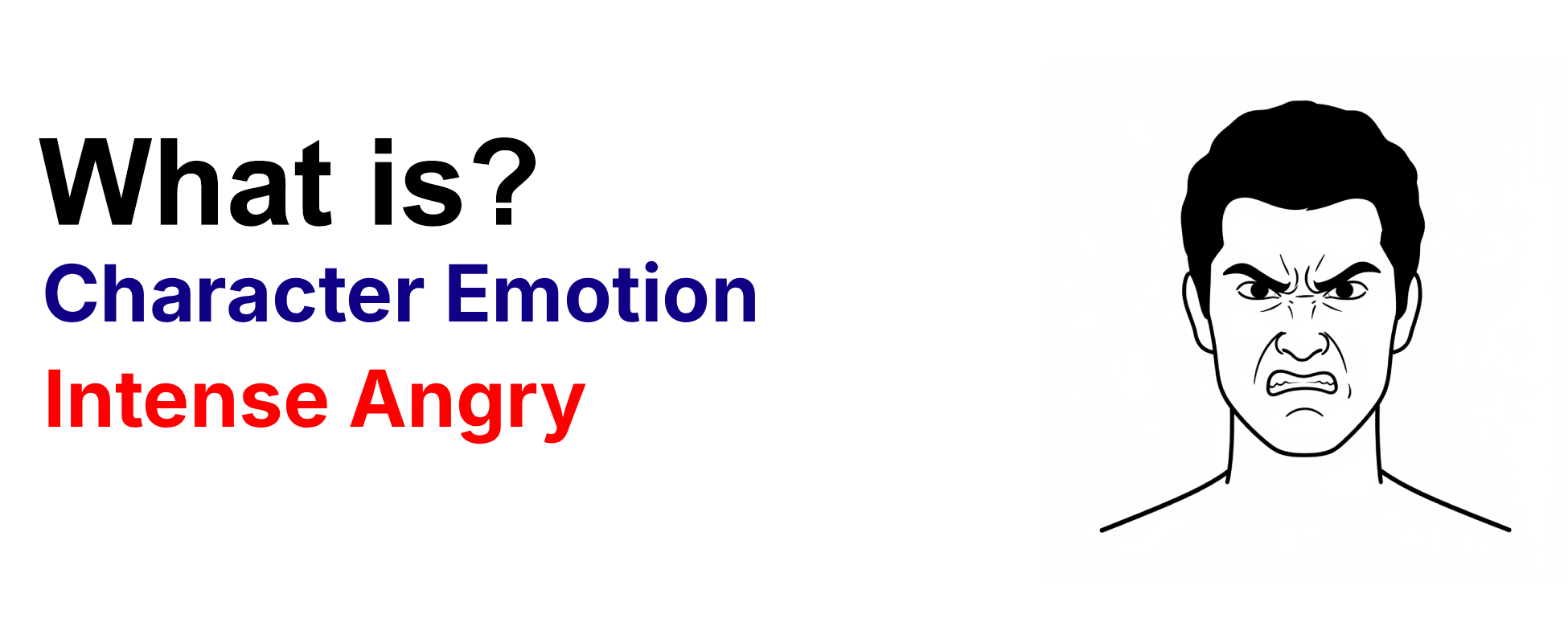
Intense Angry is a full-blown expression of fury at 100 percent intensity, characterized by furrowed brows, flared nostrils, a curled upper lip, clenched jaw, tight fists, and a forward-leaning body posture that signals imminent confrontation. This amplified emotion communicates raw power and barely contained aggression, making the character feel dangerous and unpredictable. Directors use intense angry for climactic confrontations, moments of betrayal, or scenes where a character has reached their breaking point and can no longer suppress their rage. When paired with the right lens and camera movement, such as a tight 35 mm handheld, the effect becomes visceral, placing the viewer inside the character's fury rather than merely observing it.
Example Prompt
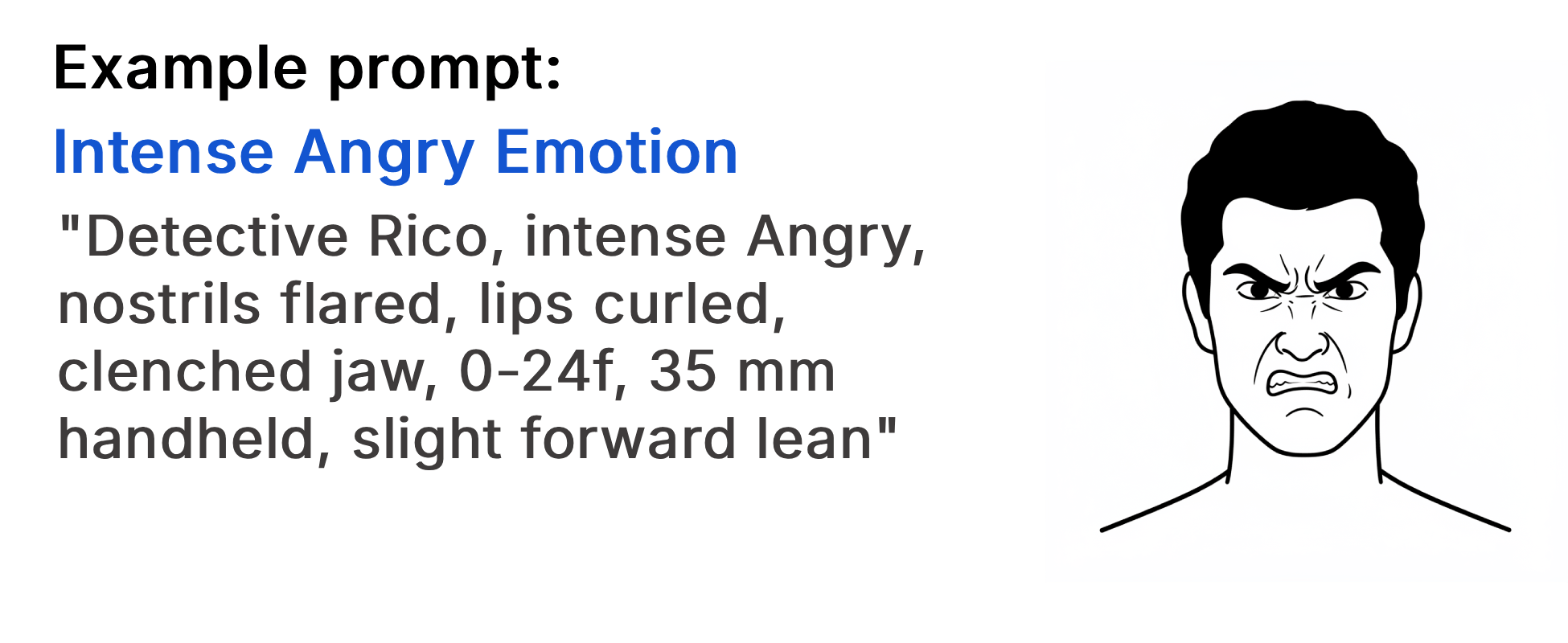
Emotion prompt: Detective Rico, intense Angry, nostrils flared,
lips curled, clenched jaw, 0-24f, 35 mm handheld, slight forward lean
Scenario prompt: Detective Rico corners a suspect who has been
lying, his fury barely contained, threatening to explode in the
middle of the interrogation room.
Example Video
When to use the Intense Angry emotion?
The intense angry emotion works best when a scene calls for explosive confrontation, betrayal, or a character reaching their breaking point. It is ideal for climactic moments where suppressed rage finally erupts, such as interrogations, arguments that boil over, or revelations of deceit. Pair it with tight lenses and handheld camera movement to amplify the instability and danger. Avoid this technique for scenes where the character should remain composed, or when a subtler, simmering anger would create more tension, sometimes the threat of explosion is more powerful than the explosion itself.
- A character reaches their breaking point
- A confrontation escalates to its climax
- Betrayal or deceit is revealed
- The scene demands raw, dangerous energy
- Suppressed rage finally erupts
Pros and Cons of the Intense Angry
| Pros | Cons |
|---|---|
| Delivers an unmistakable, high-impact emotional punch that grabs the viewer | Can feel over-the-top or cartoonish if not grounded with realistic micro-expressions |
| Perfect for climactic confrontations and breaking-point moments | Difficult to sustain over long durations without causing viewer fatigue |
| Pairs powerfully with tight lenses and handheld movement for visceral intensity | Leaves little room for emotional nuance or subtle layering within the same beat |
Recommended book

Learn more about AI video editing
Learn more about AI video editing by reading the book How to Make AI Videos by Gyula Rabai. In this book you can find very important information about: Camera Movement, Lighting, Colors, Composition, Consistency, Character emotion, Character motion, Video style, Action Control and Sound design This information will make your videos more professional, and more engaging.
Get your copy here:
https://videcool.com/p_3707-how-to-make-ai-videos-by-gyula-rabai-book.html
Conclusion
Intense Angry is a potent emotion keyword for filmmakers and prompt engineers who need to push a character's fury to its absolute limit. By combining full-blown facial cues, furrowed brows, flared nostrils, clenched jaw, with the right lens and camera choices, it creates a visceral, unforgettable moment of raw power. It is not the right choice for every scene, but when confrontation, betrayal, or a breaking point is the goal, few emotions communicate it as effectively. Used thoughtfully alongside subtler intensity levels like "subtle" or "building," it becomes a versatile addition to any AI video generation toolkit.