
AI Video Editing - Character Emotion - Subtle Happy
Subtle Happy is one of the most delicate emotional expressions available in AI video generation, conveying a quiet sense of joy at roughly ten percent intensity through barely perceptible cues like a dimple fade-in, a gentle eye crinkle, or a slight nod. This technique trades the broad grin of full happiness for a restrained micro-expression that signals recognition, satisfaction, or a private breakthrough. This page explains what the technique is, when to use it, and how it compares to more overt emotional cues, along with a ready-to-use example prompt.
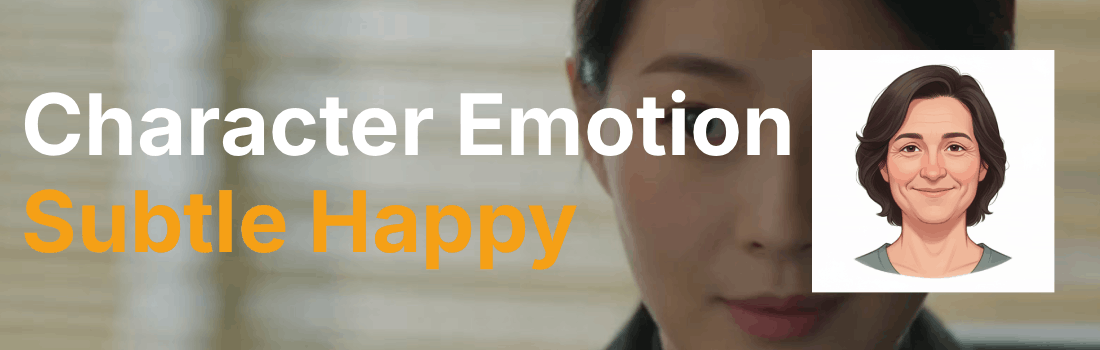
What is the "Subtle Happy" emotion technique?
Subtle Happy is a restrained expression of joy at approximately 10 percent intensity, revealed through delicate cues like a slight dimple fade-in, a gentle crinkle at the corners of the eyes, or a barely perceptible nod or smile. This understated performance conveys quiet satisfaction, recognition, or a personal breakthrough without overwhelming the character's composure. Directors use subtle happy for moments of intellectual discovery, quiet triumph, or when a character connects the dots privately, allowing the audience to share in the tiny victory without fanfare. In AI prompting, the "subtle" intensity modifier paired with the "happy" emotion keyword tells the model to render only the faintest signs of joy, keeping the performance grounded and believable.
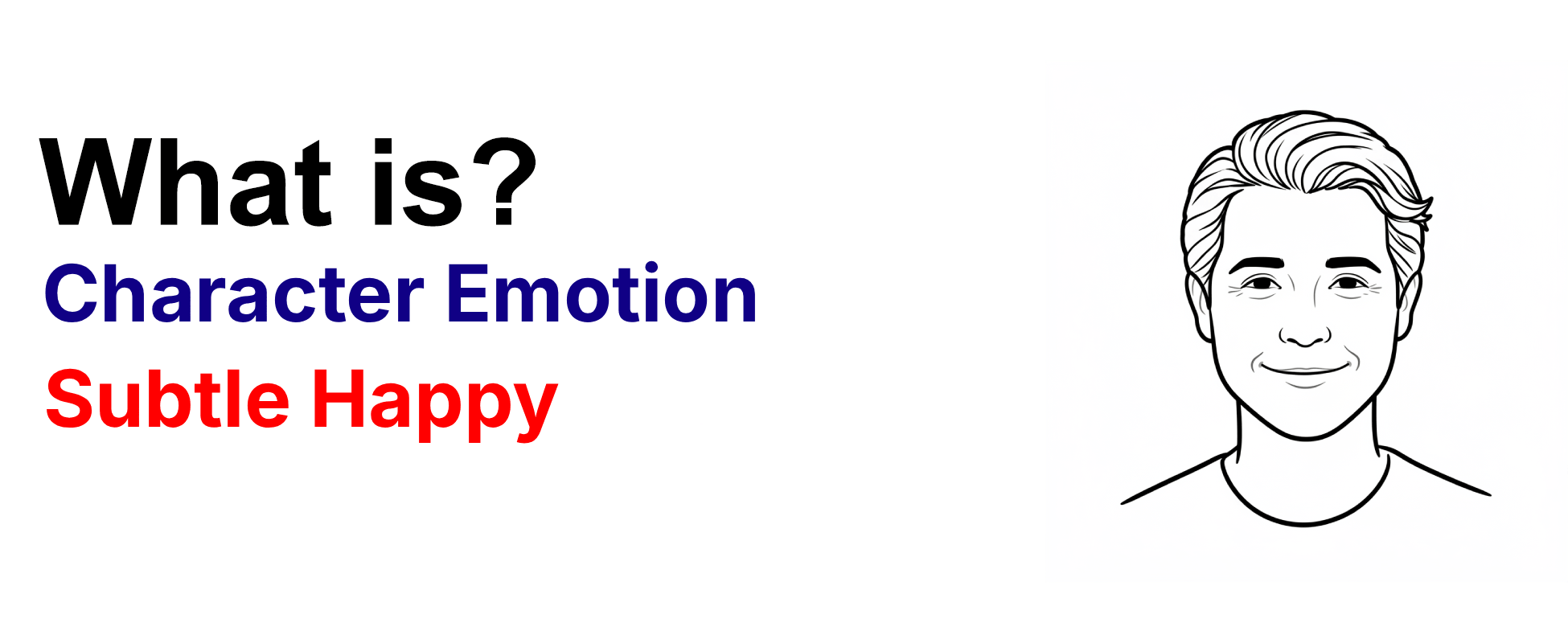
Example Prompt
Emotion prompt: Detective Lin, subtle Happy, dimple fade-in, slight
head nod, 0-24f, 50 mm, soft backlight, slow cross-dissolve
Scenario prompt: Detective Lin realizes a critical connection between
two cases. The micro-smile is tiny but full of revelation.
Example Video
When to use the Subtle Happy technique?
The subtle happy technique works best when a scene calls for quiet satisfaction, private recognition, or an understated moment of personal triumph, such as a detective connecting the dots, a scientist confirming a hypothesis, or a character receiving good news they cannot yet share. It is also well suited to scenes where the character must maintain composure while experiencing an internal shift, letting the audience in on the secret without breaking the surface calm. Avoid this technique for moments that demand visible celebration, overt joy, or high-energy emotion, where a full "happy" or "intense happy" expression will better serve the scene.
- A character has a private moment of recognition or discovery
- The scene requires composure with an internal emotional shift
- A quiet triumph or satisfaction should be conveyed without fanfare
- The audience should feel let in on a secret the character keeps hidden
- A gentle, believable micro-expression matters more than a broad smile
Pros and Cons of the Subtle Happy
| Pros | Cons |
|---|---|
| Conveys authentic, believable emotion through restrained micro-expressions | Can be too faint for the audience to notice, especially on small screens |
| Preserves character composure while signaling an internal shift | Requires precise timing cues (frame-based) to land correctly in the render |
| Creates a shared secret between character and viewer, deepening engagement | May be overshadowed by stronger emotions or busy visual elements in the scene |
Recommended book

Learn more about AI video editing
Learn more about AI video editing by reading the book How to Make AI Videos by Gyula Rabai. In this book you can find very important information about: Camera Movement, Lighting, Colors, Composition, Consistency, Character emotion, Character motion, Video style, Action Control and Sound design This information will make your videos more professional, and more engaging.
Get your copy here:
https://videcool.com/p_3707-how-to-make-ai-videos-by-gyula-rabai-book.html
Conclusion
The subtle happy is a powerful tool for filmmakers and prompt engineers who want to convey quiet joy, recognition, or personal triumph without overwhelming a scene. By dialing happiness to roughly ten percent intensity, it lets the audience share in a character's private victory through the faintest flicker of a smile or the slightest crinkle of the eyes. It is not the right choice for every moment, but when restraint, authenticity, and a sense of shared discovery are the goal, few emotional cues communicate them as effectively. Used thoughtfully alongside more expressive emotions, it becomes a versatile addition to any AI video generation toolkit.