
AI Video Editing - Camera Movement - Handheld Tracking Forward
Handheld tracking forward is one of the most immersive camera movements available in AI video generation, placing the viewer directly inside the scene as the camera advances toward its subject. This technique trades the polish of a stabilized shot for raw, kinetic energy, making it a favorite for chase sequences, tense confrontations, and documentary-style storytelling. This page explains what the technique is, when to use it, and how it compares to smoother alternatives, along with a ready-to-use example prompt.
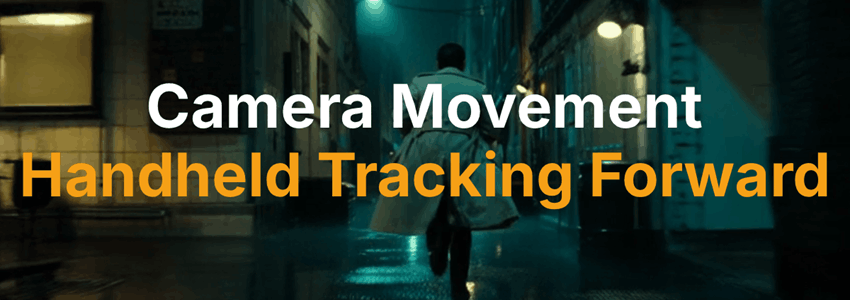
What is the "Handheld Tracking Forward" camera technique?
A handheld tracking forward is a camera technique where the operator physically walks with the rig toward the subject, creating a raw, unsteady motion that makes the viewer feel like an active participant rather than a detached observer. Unlike a smooth dolly or a steady push-in, this approach injects a palpable sense of urgency, vulnerability, or documentary realism because every slight bounce and shift in frame translates directly to the audience's gut. You would choose this tactic when you want to blur the line between the character's experience and the viewer's own body, using that deliberate instability to heighten tension or immerse us in a moment of chaotic discovery.
Example Prompt
“Noir Alley Pursuit, handheld tracking forward wide shot with ultra-wide 24mm lens, gimbal smooth stabilizer, fast pace through rain-soaked alley, neon reflections on pavement, detective’s trench coat flaring, shallow DOF rack focus from gun in hand to suspect running ahead.”
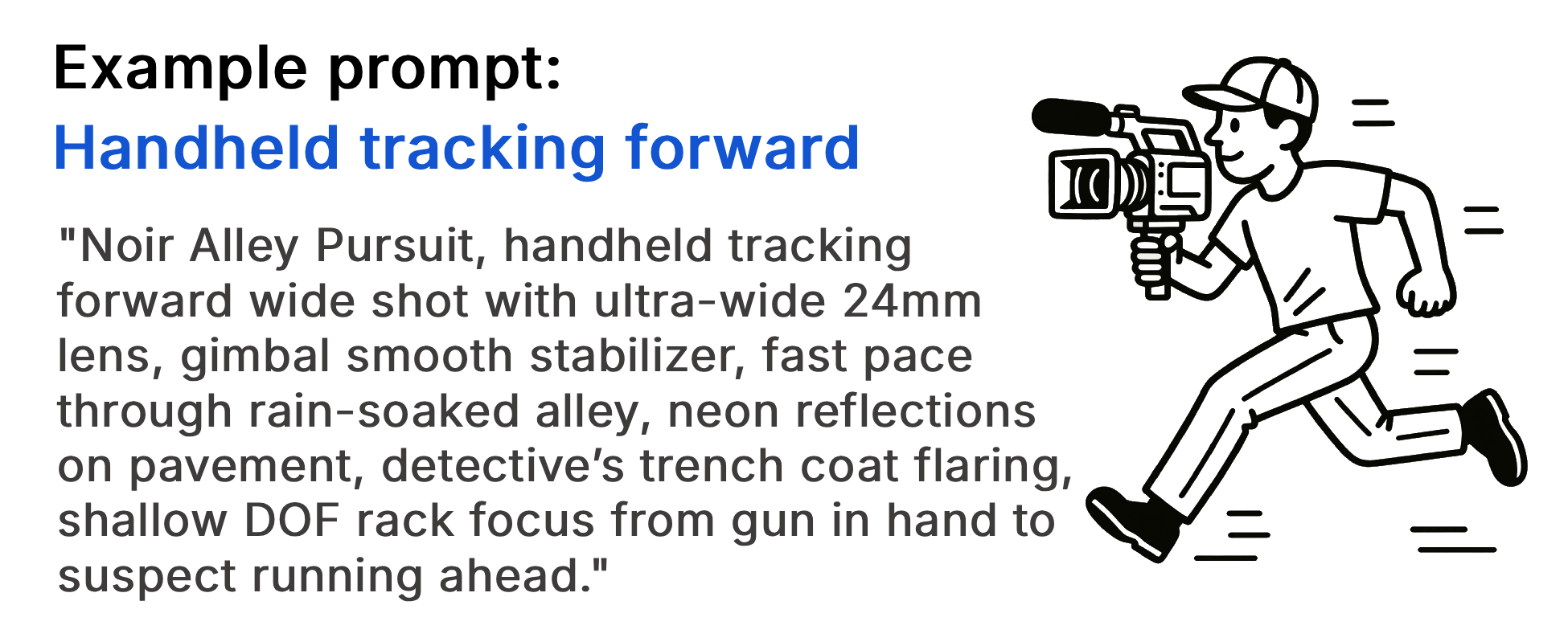
Example Video
When to use the Handheld tracking forward technique?
The handheld tracking forward technique works best when a scene calls for tension, urgency, or a first-person sense of danger, such as chase sequences, confrontations, or moments of pursuit. It is also well suited to documentary-style storytelling, where the imperfection of the motion signals authenticity and draws the viewer into the immediacy of the moment. Avoid this technique for calm, contemplative, or formal scenes, where a smoother movement like a dolly or steady push-in will better preserve the mood.
- Scene needs urgency or danger
- Scene follows a character in pursuit
- Conflict between characters is escalating
- Documentary-style realism fits the scene
- Immersion matters more than stability
Pros and Cons of the Handheld Tracking Forward
| Pros | Cons |
|---|---|
| Creates an immersive, first-person sense of immediacy | Can feel too chaotic or distracting for calm, formal scenes |
| Adds authentic urgency and tension, ideal for chase or conflict scenes | Harder to keep the subject consistently framed compared to stabilized shots |
| Gives footage a raw, documentary-style realism that builds trust with the viewer | Excessive shake may cause viewer fatigue or discomfort over long durations |
Recommended book

Learn more about AI video editing
Learn more about AI video editing by reading the book How to Make AI Videos by Gyula Rabai. In this book you can find very important information about: Camera Movement, Lighting, Colors, Composition, Consistency, Character emotion, Character motion, Video style, Action Control and Sound design This information will make your videos more professional, and more engaging.
Get your copy here:
https://videcool.com/p_3707-how-to-make-ai-videos-by-gyula-rabai-book.html
Conclusion
The handheld tracking forward is a powerful tool for filmmakers and prompt engineers who want to inject raw energy and urgency into a scene. By deliberately embracing instability instead of smoothness, it closes the distance between the viewer and the subject, making the action feel immediate and personal. It is not the right choice for every scene, but when tension, pursuit, or documentary authenticity are the goal, few techniques communicate them as effectively. Used thoughtfully alongside smoother camera movements, it becomes a versatile addition to any AI video generation toolkit.