
AI Video Editing - Camera Movement - Slow Zoom-In
A slow zoom-in is one of the most unobtrusive camera techniques available in AI video generation, magnifying the frame gradually while the camera itself never moves. This page explains what the technique is, when to use it, and how it compares to other camera movements, along with a ready-to-use example prompt.
What is the "Slow Zoom-In" camera technique?
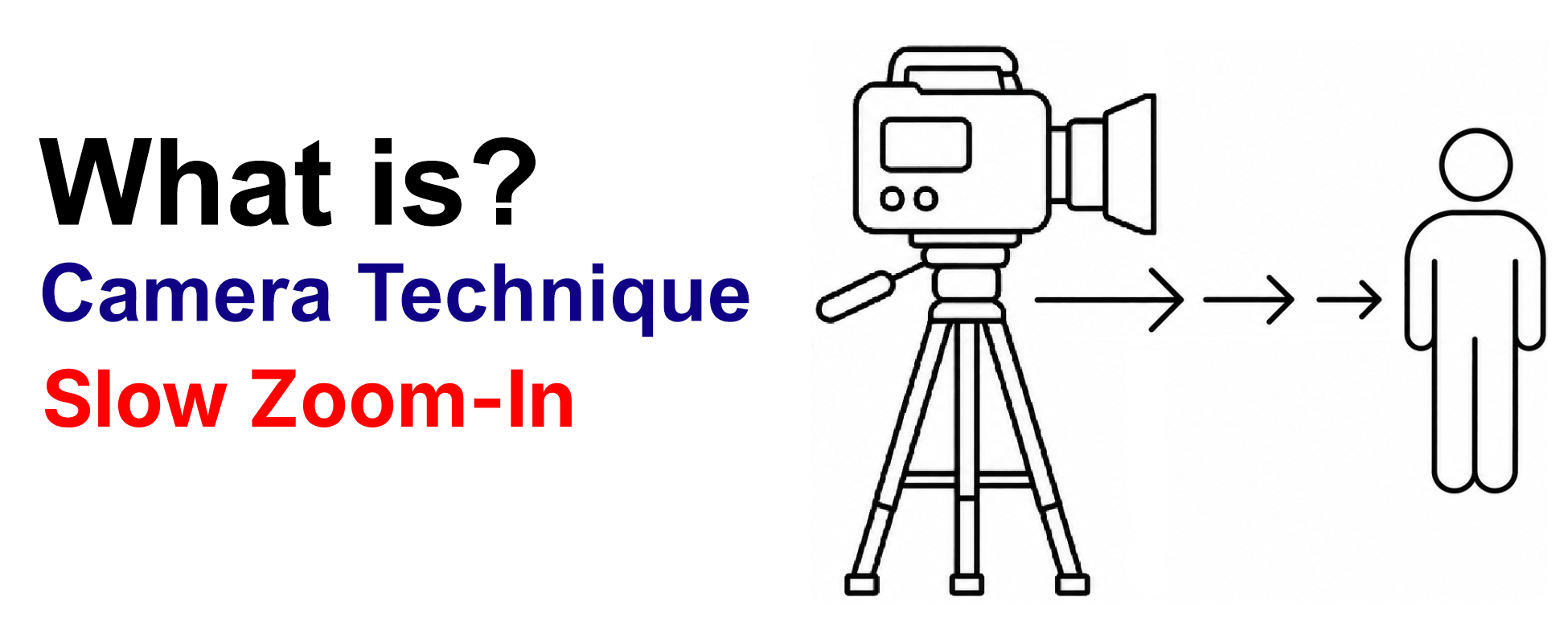
A slow zoom-in is an optical adjustment of the lens that gradually magnifies a portion of the frame, making the subject appear larger while keeping the camera itself stationary. This subtle movement directs the viewer's attention with deliberate patience, often creating a sense of introspection, discovery, or mounting pressure. Directors choose a slow zoom-in when they want to isolate a character's emotional state or draw focus to a crucial detail without the physical intrusion of a dolly push.
Example Prompt
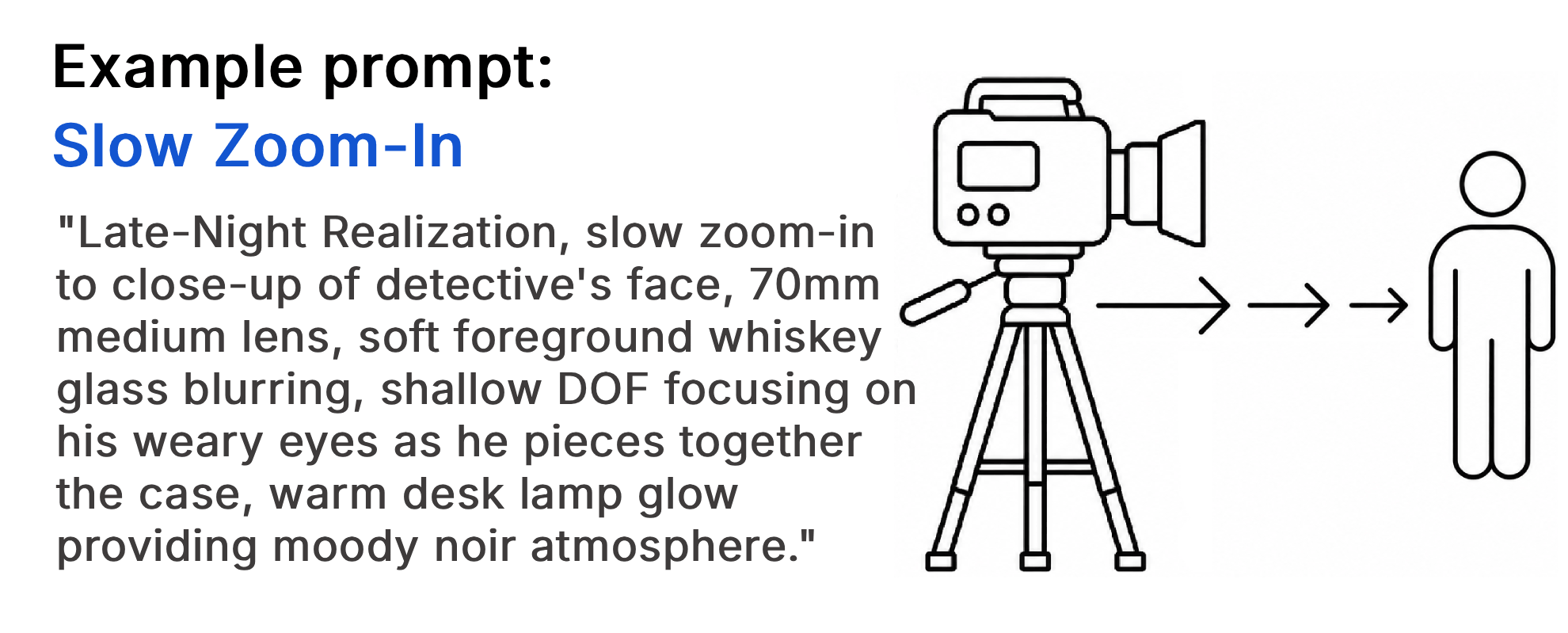
"Late-Night Realization, slow zoom-in to close-up of detective's face, 70mm medium lens, soft foreground whiskey glass blurring, shallow DOF focusing on his weary eyes as he pieces together the case, warm desk lamp glow providing moody noir atmosphere."
Example Video
When to use the Slow Zoom-In technique?
The slow zoom-in technique works best when a scene calls for quiet introspection or gradual emphasis on a small but crucial detail, such as a character piecing something together or a moment of private realization. It is also useful when a physical camera move would be impractical or too intrusive, letting the lens alone carry the emotional weight. Avoid this technique when a scene needs the depth and perspective shift of an actual camera move, where a push-in or tracking shot will feel more immersive.
- A private moment of reflection is unfolding
- Attention should build on one crucial detail
- A character is piecing something together
- Focus should shift without announcing itself
- The setup calls for a simple, minimal move
Pros and Cons of the Slow Zoom-In
| Pros | Cons |
|---|---|
| Simple to execute since the camera itself never has to move | Flattens depth and perspective compared to a physical push-in |
| Directs focus subtly without drawing attention to the technique | Can look artificial or "flat" if overused or done too quickly |
| Well suited to quiet, introspective, or detail-focused moments | Less effective at conveying physical presence or immersion |
Recommended book
Learn more about AI video editing
Learn more about AI video editing by reading the book How to Make AI Videos by Gyula Rabai. In this book you can find very important information about: Camera Movement, Lighting, Colors, Composition, Consistency, Character emotion, Character motion, Video style, Action Control and Sound design This information will make your videos more professional, and more engaging.
Get your copy here:
https://videcool.com/p_3707-how-to-make-ai-videos-by-gyula-rabai-book.html
Conclusion
The slow zoom-in is a powerful tool for filmmakers and prompt engineers who want to draw focus inward without ever moving the camera. By magnifying the frame gradually, it lets a detail or expression carry the full emotional weight of a scene with minimal technical intrusion. It is not the right choice for every scene, but when quiet introspection or deliberate emphasis are the goal, few techniques communicate them as effectively. Used thoughtfully alongside physical camera movements like the push-in, it becomes a versatile addition to any AI video generation toolkit.