
AI Video Editing - Camera Movement - Tracking Backward
A tracking backward is one of the most exposing camera movements available in AI video generation, retreating from its subject while staying locked onto them, so the surrounding environment grows and the subject appears smaller and more vulnerable within the frame. This page explains what the technique is, when to use it, and how it compares to other camera movements, along with a ready-to-use example prompt.
What is the "Tracking Backward" camera technique?
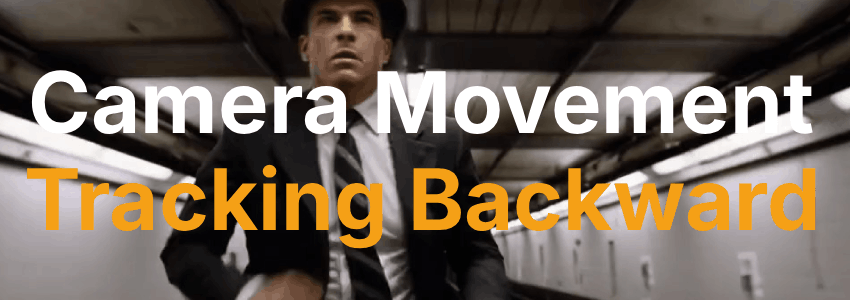
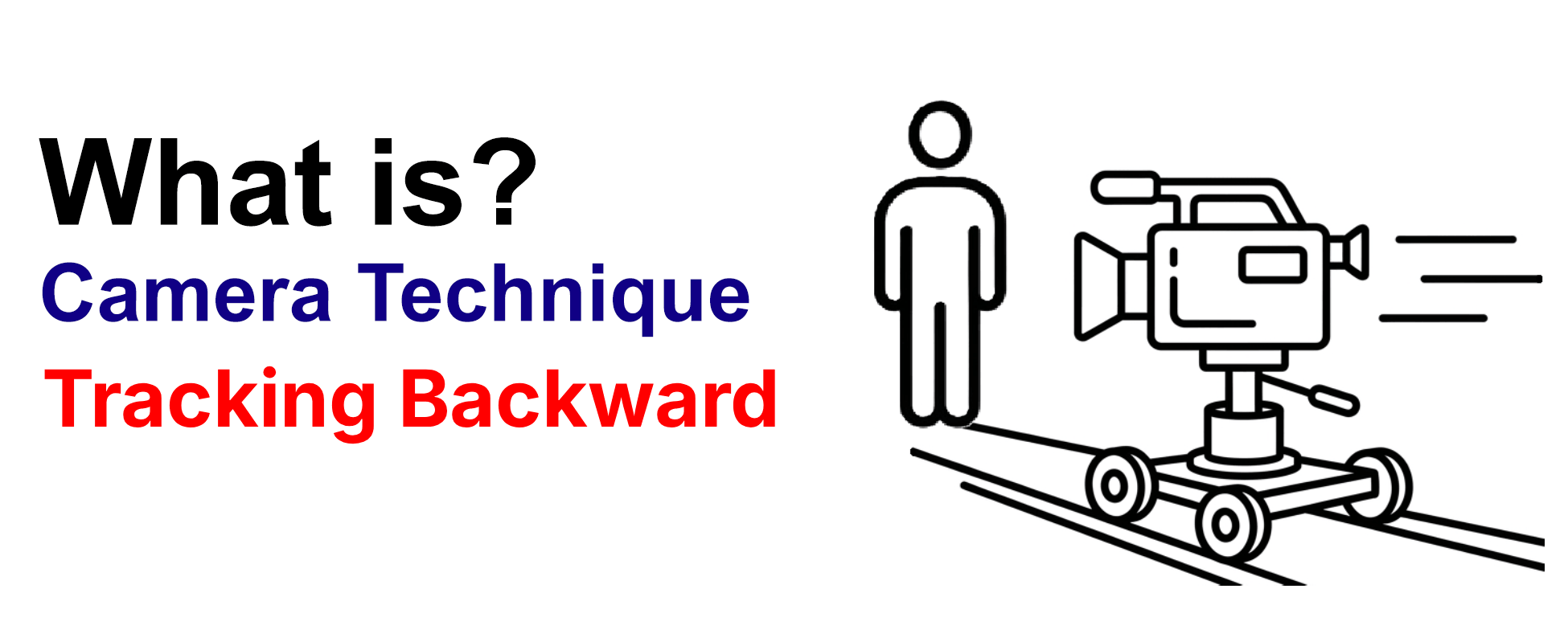
A tracking backward is a camera movement where the rig physically moves away from the subject while maintaining focus, often on tracks, a dolly, or a gimbal, to reveal more of the environment as the subject appears to shrink within the frame. This motion creates a sense of retreat, loss, or exposure, as the background expands and the subject's isolation becomes more apparent. Directors use a tracking backward to emphasize a character's vulnerability, to reveal contextual details gradually, or to create a feeling of pursuit where the subject is being left behind or watched from a distance.
Example Prompt
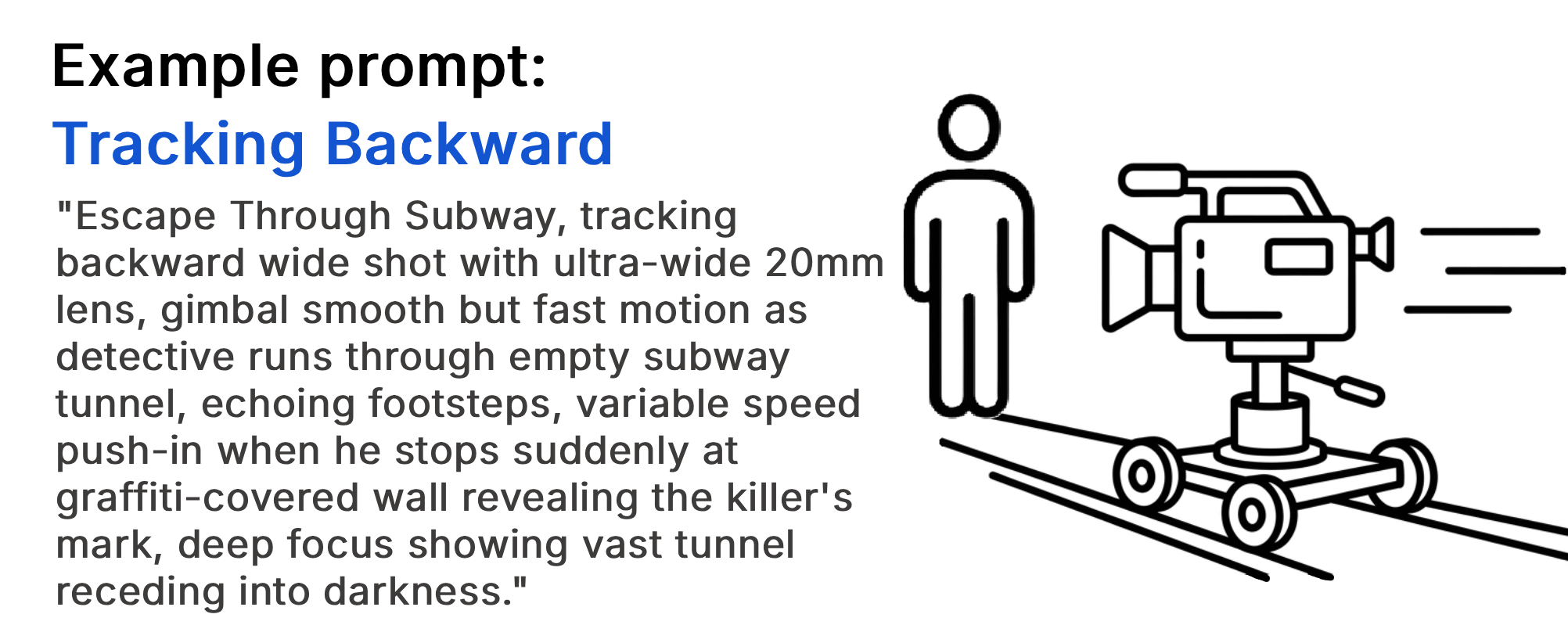
"Escape Through Subway, tracking backward wide shot with ultra-wide 20mm lens, gimbal smooth but fast motion as detective runs through empty subway tunnel, echoing footsteps, variable speed push-in when he stops suddenly at graffiti-covered wall revealing the killer's mark, deep focus showing vast tunnel receding into darkness."
Example Video
When to use the Tracking Backward technique?
The tracking backward technique works best when a scene calls for a sense of pursuit, retreat, or growing vulnerability, such as a character fleeing toward the camera or being watched from a receding distance. It is also effective for gradually revealing the scale of an environment around a subject, letting the audience feel their isolation as the frame widens. Avoid this technique for scenes that need to stay close and intimate, where holding a tighter shot will better preserve the emotional connection to the character.
- The scene involves a chase or pursuit
- The subject is being watched from afar
- Vulnerability builds as the frame widens
- Scale builds gradually around the subject
- A widening frame should feel isolating
Pros and Cons of the Tracking Backward
| Pros | Cons |
|---|---|
| Effectively conveys pursuit, retreat, or mounting vulnerability | Requires tracks, a dolly, or a gimbal moving in sync with the subject |
| Gradually reveals environmental context and scale | Can lose emotional intimacy as the subject shrinks in frame |
| Strong choice for chase sequences and moments of exposure | Difficult to keep the subject sharply framed while moving backward |
Recommended book

Learn more about AI video editing
Learn more about AI video editing by reading the book How to Make AI Videos by Gyula Rabai. In this book you can find very important information about: Camera Movement, Lighting, Colors, Composition, Consistency, Character emotion, Character motion, Video style, Action Control and Sound design This information will make your videos more professional, and more engaging.
Get your copy here:
https://videcool.com/p_3707-how-to-make-ai-videos-by-gyula-rabai-book.html
Conclusion
The tracking backward is a powerful tool for filmmakers and prompt engineers who want to turn distance itself into a storytelling device. By retreating from the subject while staying locked onto them, it builds a mounting sense of vulnerability or pursuit as the surrounding world grows larger around them. It is not the right choice for every scene, but when retreat, exposure, or pursuit are the goal, few techniques communicate them as effectively. Used thoughtfully alongside closer, more intimate camera movements, it becomes a versatile addition to any AI video generation toolkit.