
AI Video Editing - Character Motion - Idle
Idle is one of the most understated yet powerful character motion techniques available in AI video generation, where a character remains still but alive, breathing and shifting weight with subtle micro-movements that convey presence, tension, and anticipation. This technique proves that stillness can be as expressive as action, making it ideal for stakeout scenes, moments of reflection, and suspenseful pauses where every tiny motion carries narrative weight. This page explains what the technique is, when to use it, and how it compares to more dynamic movements, along with a ready-to-use example prompt.
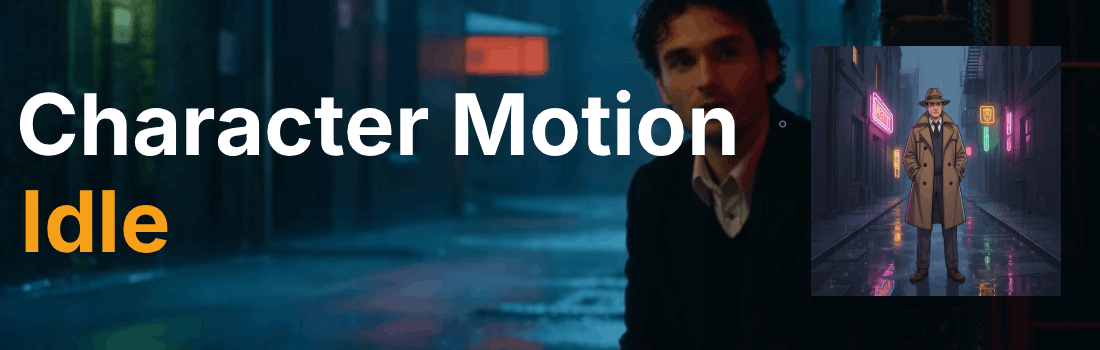
What is the "Idle" character motion technique?
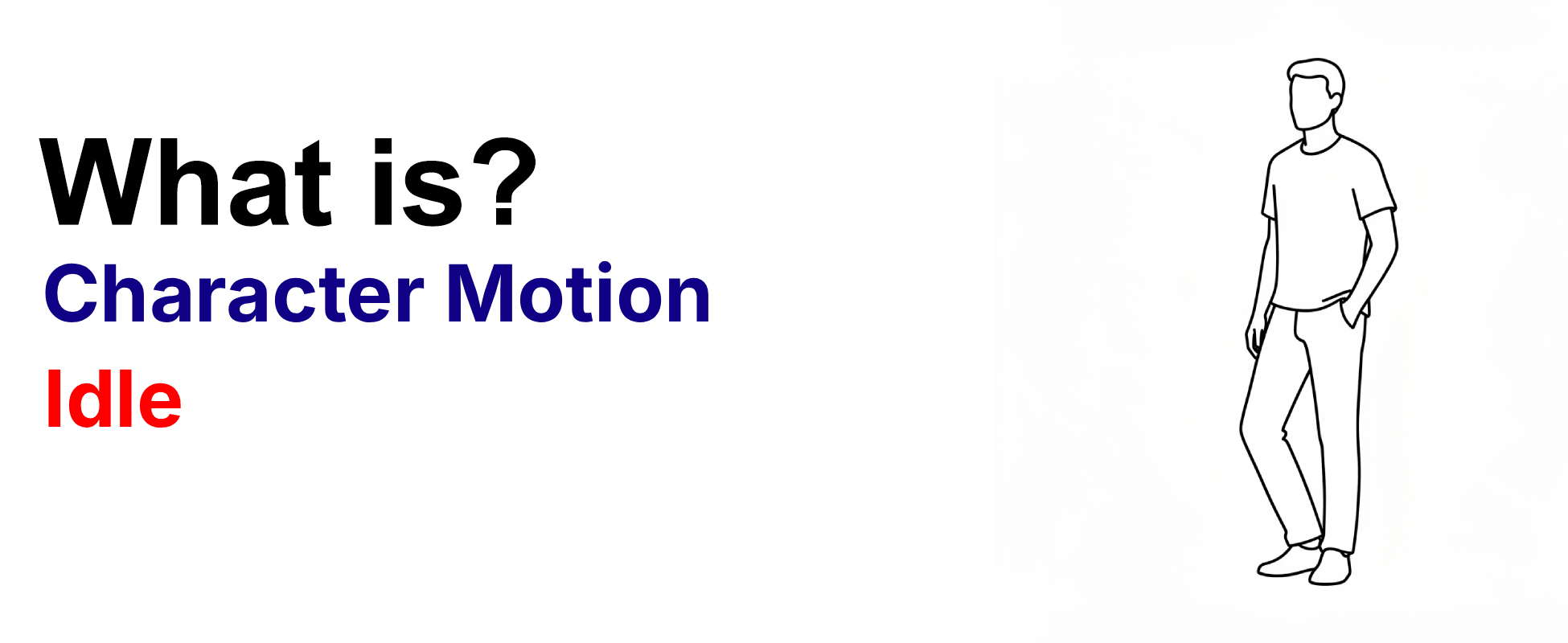
Idling is a character motion state where the character remains still but not frozen, exhibiting subtle breathing, micro-sways, and weight shifts that convey life and anticipation without major movement. This quiet presence builds tension by suggesting the character is waiting, observing, or processing, with every tiny motion carrying narrative weight. In AI video generation, the idle technique uses keywords like "idle" combined with body-part specifics such as "chest rise 4%" or "shoulders slight slump 5 cm" to direct the model's attention to the micro-movements that make a character feel alive. Directors use idle for stakeout scenes, moments of reflection, or suspenseful pauses where stillness itself becomes a storytelling tool.
Example Prompt
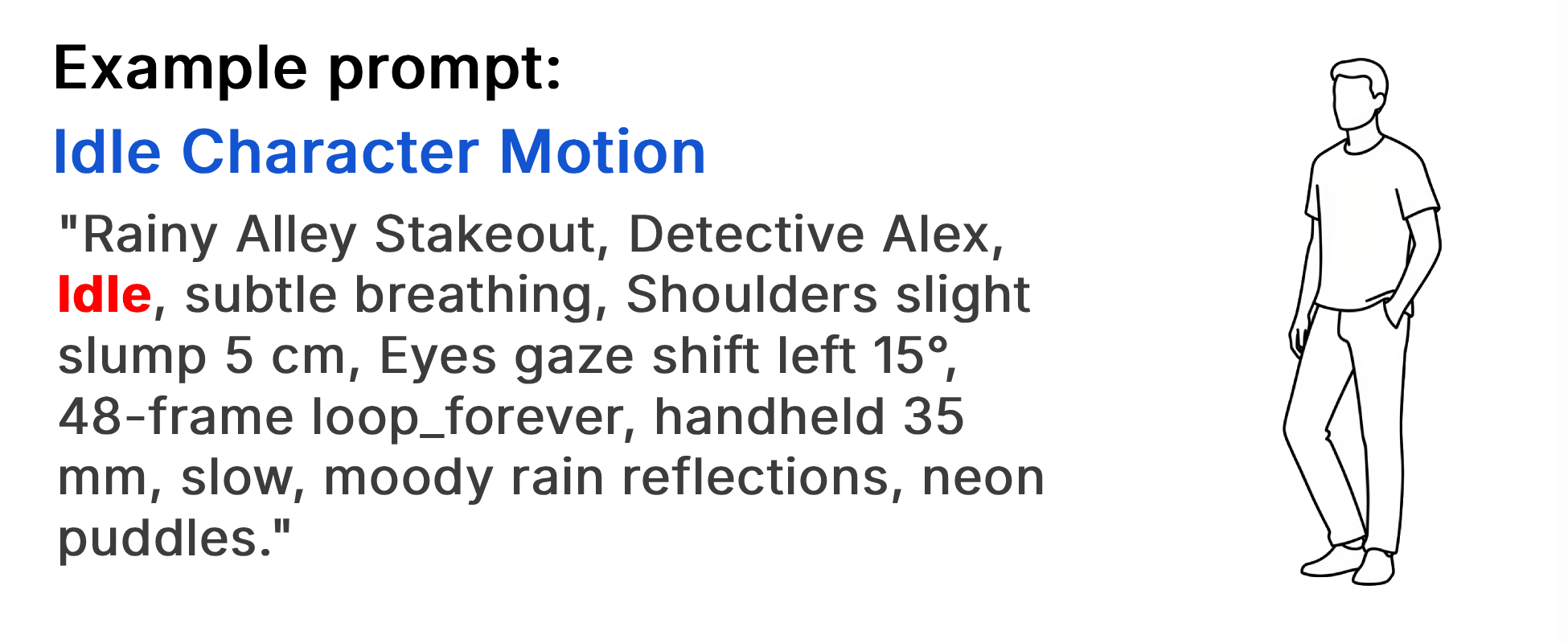
"Rainy Alley Stakeout, Detective Alex, Idle, subtle breathing, Shoulders slight slump 5 cm, Eyes gaze shift left 15°, 48-frame loop_forever, handheld 35 mm, slow, moody rain reflections, neon puddles."
Example Video
When to use the Idle technique?
The idle technique works best when a scene calls for tension through stillness, quiet observation, or a moment of suspended anticipation, such as stakeout scenes, a character processing bad news, or a suspenseful pause before action breaks loose. It is also well suited to scenes where the character is waiting, listening, or watching, as the subtle breathing and weight shifts signal alertness without movement. Avoid this technique for scenes that require dynamic action or rapid movement, where a walk, run, or gesture will better convey the energy and urgency of the moment.
- Scene needs tension through stillness
- Character is waiting, watching, or listening
- A suspenseful pause precedes action
- Subtle breathing and micro-movements convey alertness
- Stillness itself is the storytelling tool
Pros and Cons of the Idle
| Pros | Cons |
|---|---|
| Creates tension and anticipation through controlled stillness | Can feel static or boring if held too long without narrative context |
| Conveys life and presence without major movement, adding realism | Requires precise body-part keywords to avoid a frozen, lifeless look |
| Ideal for stakeout, surveillance, and reflective emotional scenes | Subtle micro-movements may be lost at low resolutions or small frame sizes |
Recommended book
Learn more about AI video editing
Learn more about AI video editing by reading the book How to Make AI Videos by Gyula Rabai. In this book you can find very important information about: Camera Movement, Lighting, Colors, Composition, Consistency, Character emotion, Character motion, Video style, Action Control and Sound design This information will make your videos more professional, and more engaging.
Get your copy here:
https://videcool.com/p_3707-how-to-make-ai-videos-by-gyula-rabai-book.html
Conclusion
The idle technique is a powerful tool for filmmakers and prompt engineers who want to convey tension, presence, and anticipation through stillness rather than action. By directing the AI model to generate subtle breathing, micro-sways, and weight shifts, it transforms a motionless character into a living, breathing presence that draws the viewer in. It is not the right choice for every scene, but when suspense, observation, or quiet reflection are the goal, few techniques communicate them as effectively. Used thoughtfully alongside more dynamic character motions, it becomes a versatile addition to any AI video generation toolkit.