
AI Video Editing - Character Motion - Run
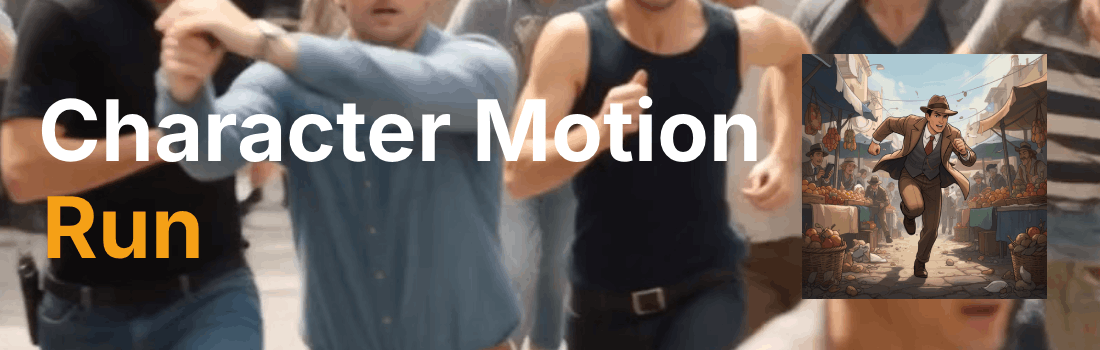
Running is one of the most dynamic character motions available in AI video generation, transforming a still frame into a burst of kinetic energy that propels the narrative forward with urgency and adrenaline. Whether it is a desperate chase through crowded streets or a determined sprint across an open field, the run motion communicates speed, danger, and determination in every frame. This page explains what the run motion is, when to use it, and how it compares to other character motions, along with a ready-to-use example prompt.
What is the "Run" character motion?
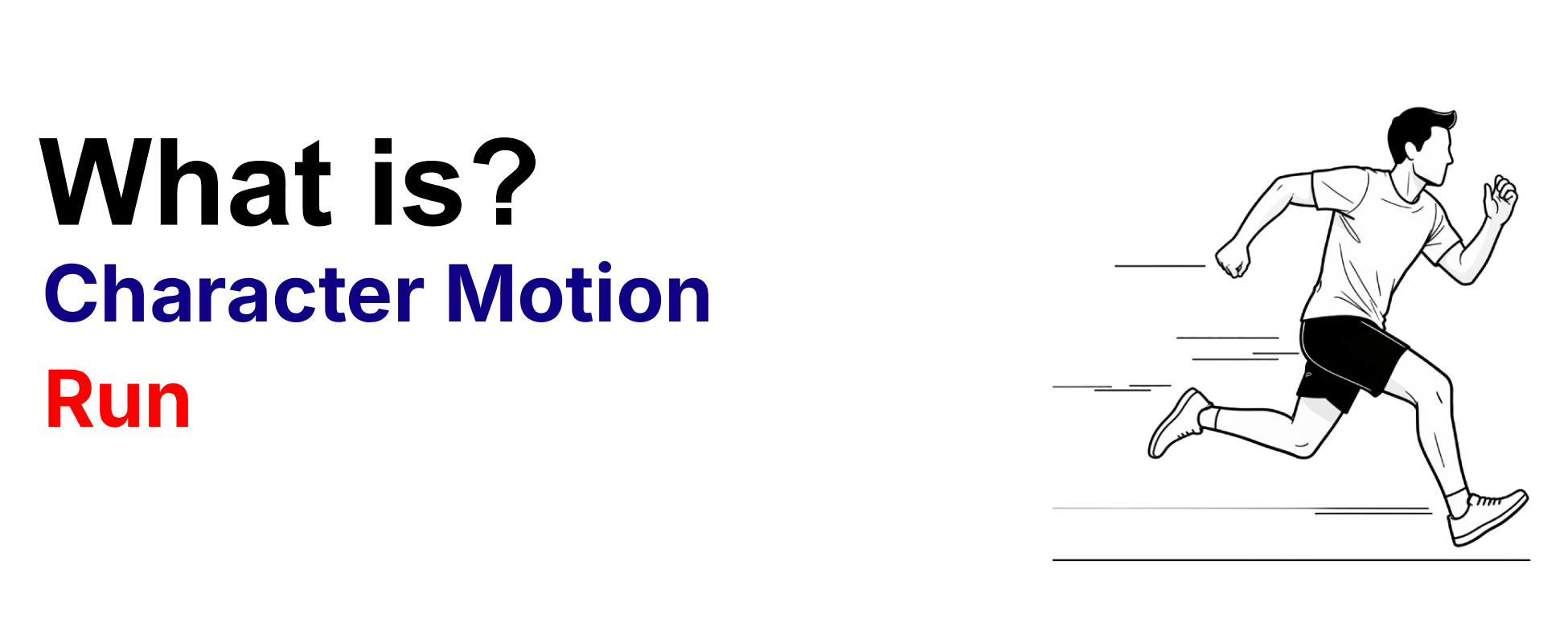
Running is a full-body character motion characterized by an exaggerated stride, arms pumping, and a faster gait cycle—typically 12 frames at 3 m/s—that communicates urgency, danger, or determination. Unlike a walk, which conveys steady presence, or an idle, which signals stillness, the run injects raw kinetic energy into every frame, making the audience feel the character's urgency as if it were their own. Directors and prompt engineers use the run for chase sequences, escapes, or moments of intense action where speed becomes a storytelling element in itself. Combined with intensity modifiers like "fast" or "slow," and emotion keywords like "desperate" or "confident," the run transforms from a simple physical action into a deeply expressive performance that drives the narrative forward.
Example Prompt
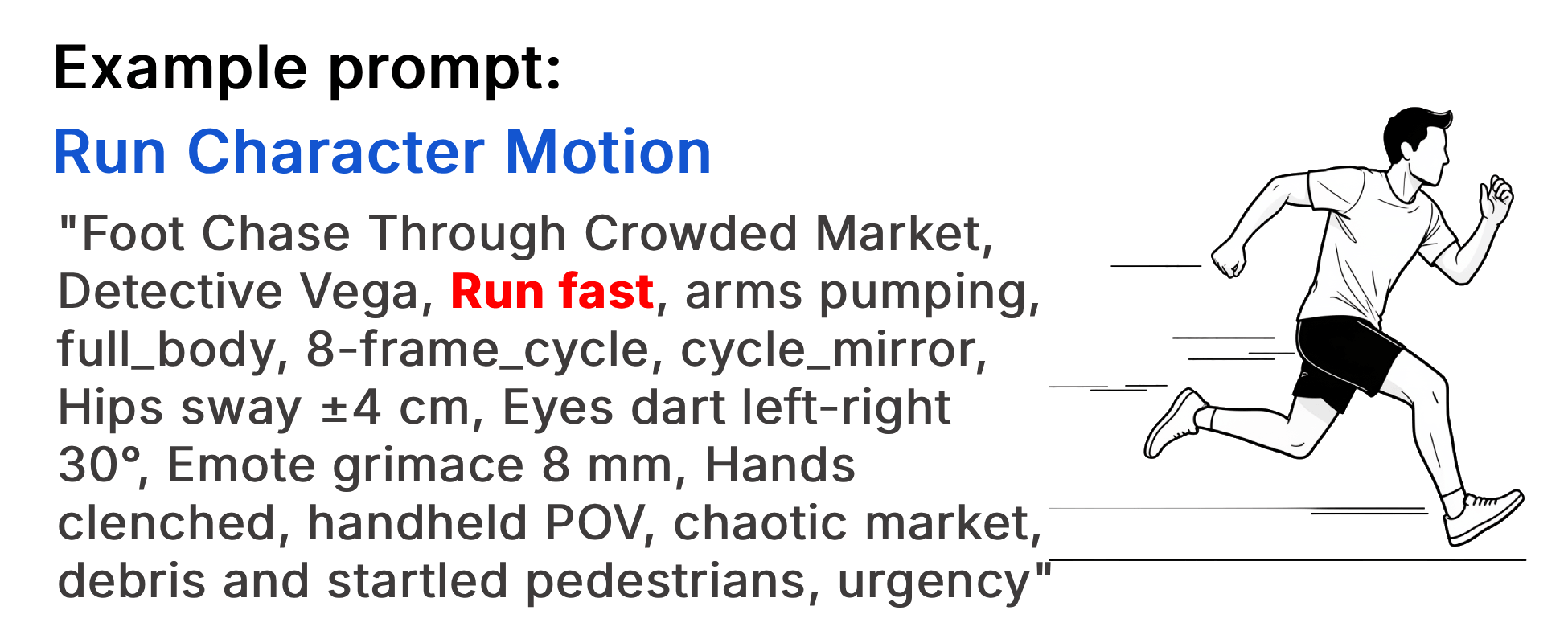
"Foot Chase Through Crowded Market, Detective Vega, Run fast, arms pumping, full_body, 8-frame_cycle, cycle_mirror, Hips sway ±4 cm, Eyes dart left-right 30°, Emote grimace 8 mm, Hands clenched, handheld POV, chaotic market, debris and startled pedestrians, urgency"
Example Video
When to use the Run character motion?
The run character motion works best when a scene calls for urgency, danger, or relentless forward momentum, such as chase sequences, escapes, or moments where a character must reach a destination against the clock. It is also effective for conveying emotional intensity—pairing a run with emotion modifiers like "desperate" or "determined" adds layers of storytelling that a neutral gait cannot. Avoid using the run for calm, contemplative, or dialogue-heavy scenes, where a walk or idle motion will better preserve the mood and allow the audience to absorb the moment.
- Scene needs urgency or danger
- Character is in pursuit or escaping
- Emotional intensity drives the action forward
- Speed is a storytelling element
- Chase or action sequence demands kinetic energy
Pros and Cons of the Run Character Motion
| Pros | Cons |
|---|---|
| Injects kinetic energy and urgency into every frame | Can overwhelm calm or dialogue-heavy scenes |
| Pairs powerfully with emotion modifiers for layered performances | Harder to maintain clean framing and consistent detail at high speed |
| Drives narrative momentum, making every second feel charged with purpose | Extended running sequences may cause viewer fatigue without variation |
Recommended book
Learn more about AI video editing
Learn more about AI video editing by reading the book How to Make AI Videos by Gyula Rabai. In this book you can find very important information about: Camera Movement, Lighting, Colors, Composition, Consistency, Character emotion, Character motion, Video style, Action Control and Sound design This information will make your videos more professional, and more engaging.
Get your copy here:
https://videcool.com/p_3707-how-to-make-ai-videos-by-gyula-rabai-book.html
Conclusion
The run is a powerful character motion for filmmakers and prompt engineers who want to inject raw energy and urgency into a scene. By combining an exaggerated stride with intensity modifiers and emotion keywords, it transforms a simple physical action into a deeply expressive performance that drives the narrative forward. It is not the right choice for every scene, but when chase, escape, or relentless momentum are the goal, few motions communicate them as effectively. Used thoughtfully alongside slower character motions like walks and idles, it becomes a versatile addition to any AI video generation toolkit.