
AI Video Editing - Character Motion - Emote
Emoting is one of the most expressive character motion techniques available in AI video generation, allowing a character's inner emotional state to surface through subtle facial micro-movements such as an eyebrow raise, a grimace, or a wide-eyed stare. This technique conveys feeling without dialogue or full-body action, making it essential for close-up shots, reaction beats, and moments where the face tells the story. This page explains what the technique is, when to use it, and how it compares to broader motion approaches, along with a ready-to-use example prompt.
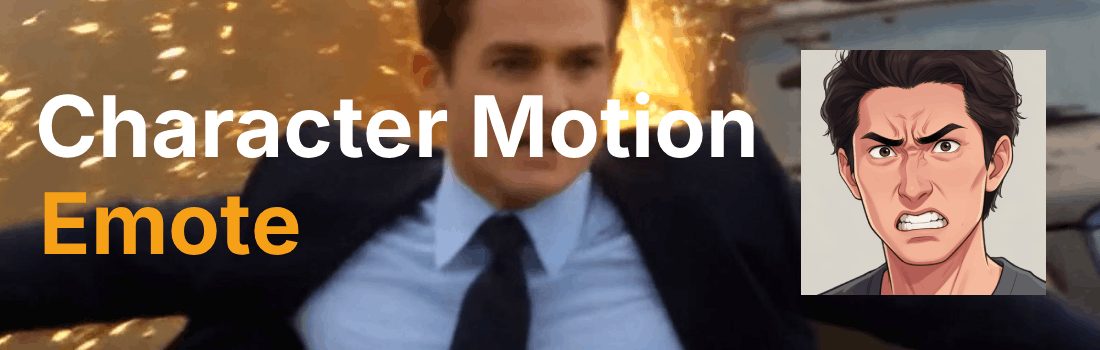
What is the "Emote" character motion technique?
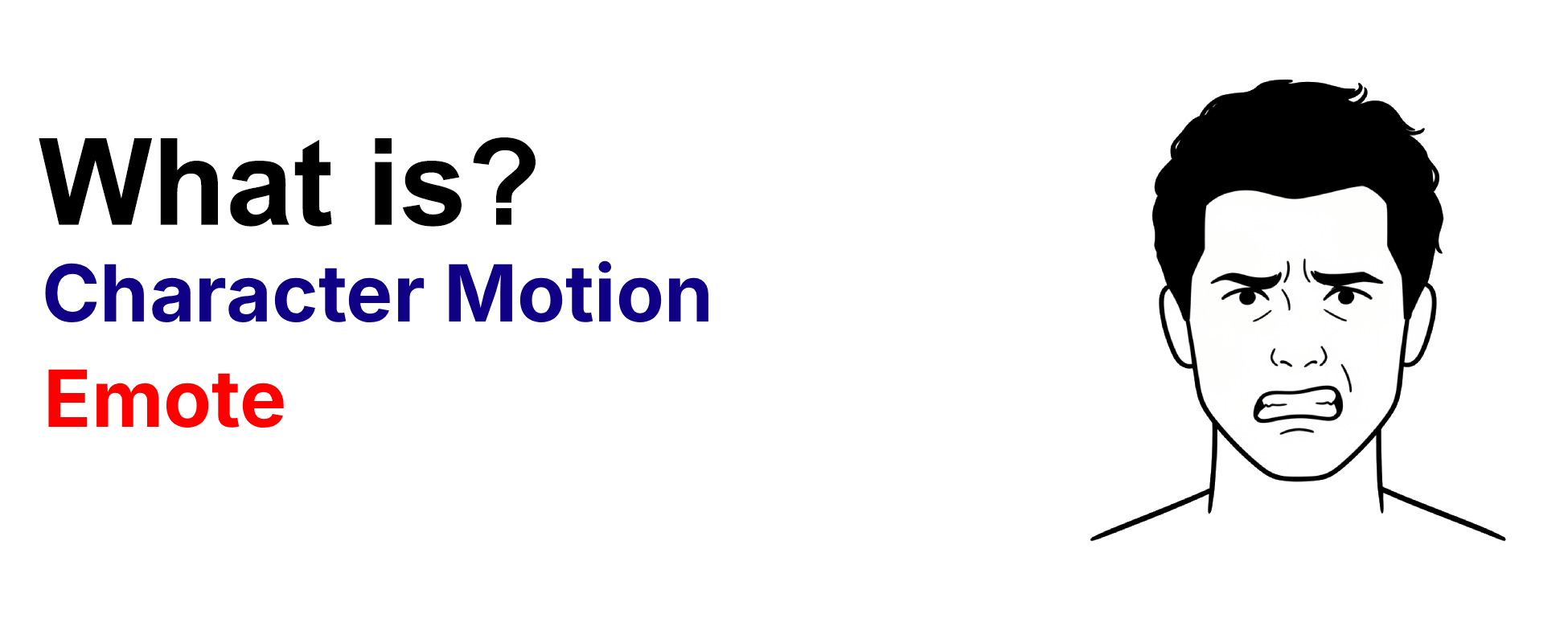
Emoting is a facial micro-motion tied directly to a character's emotional state, such as raising an eyebrow 8 millimeters in surprise or dropping a grimace 10 millimeters in pain, that conveys feeling without dialogue or full-body movement. This targeted facial animation allows the audience to read a character's internal experience through subtle shifts in expression that feel authentic and lived-in. Directors use emote to punctuate emotional beats, reveal a character's hidden feelings, or add psychological depth to action sequences where facial reactions tell a story as powerful as the physical motion itself. In AI prompting, the emote keyword signals the model to focus rendering precision on the face, producing micro-expressions that anchor the viewer's emotional connection to the character.
Example Prompt
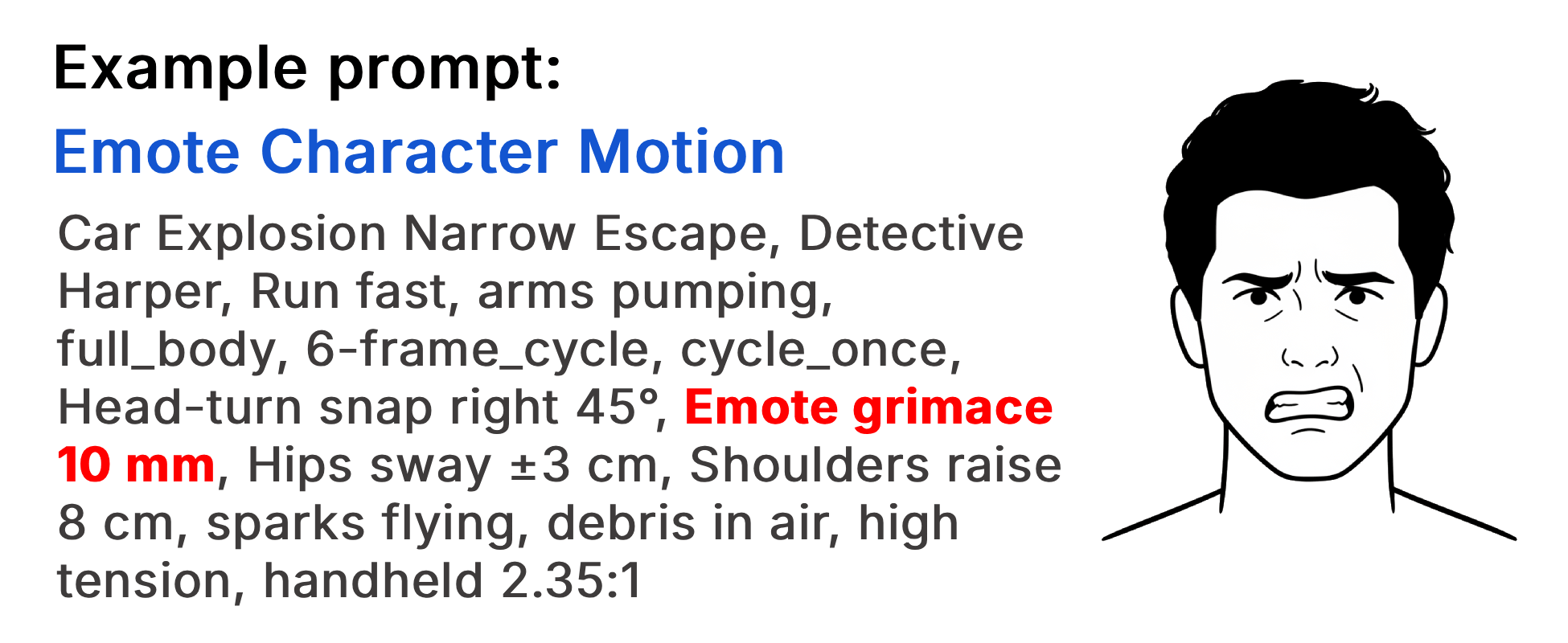
Car Explosion Narrow Escape, Detective Harper, Run fast,
arms pumping, full_body, 6-frame_cycle, cycle_once,
Head-turn snap right 45°, Emote grimace 10 mm, Hips
sway ±3 cm, Shoulders raise 8 cm, sparks flying, debris
in air, high tension, handheld 2.35:1
Harper sprints from danger; every motion conveys
desperation and the stakes of the explosion.
Example Video
When to use the Emote technique?
The emote technique works best when a scene calls for emotional revelation, psychological depth, or a reaction beat that words alone cannot convey. It is ideal for close-up and medium shots where the face dominates the frame, and for moments when a character's true feelings conflict with their outward actions, such as a grimace during a brave stand or a subtle eyebrow raise of doubt during a confident speech. Emoting also strengthens action sequences by adding a layer of facial storytelling to physical motion. Pairing emote with emotion modifiers such as "hesitant," "furious," or "surprised" further sharpens the AI model's output, turning a generic expression into a specific, story-driven performance. Avoid this technique for wide shots or fast-paced scenes where the face is too small or too fleeting for micro-expressions to register.
- The scene needs an emotional reaction beat
- A close-up or medium shot highlights the face
- The character's inner feeling contradicts their outer action
- Psychological depth should anchor an action sequence
- Subtle expression matters more than full-body movement
Pros and Cons of the Emote technique
| Pros | Cons |
|---|---|
| Conveys complex emotion without dialogue, adding depth to any shot | Micro-expressions may be lost in wide shots or fast camera movements |
| Creates a powerful emotional connection between the viewer and the character | Requires precise prompt wording; vague emotion keywords can produce inconsistent results |
| Layers naturally with other motion types such as walk, run, or gesture for richer performances | Overusing emote in every shot can feel melodramatic or visually repetitive |
Recommended book

Learn more about AI video editing
Learn more about AI video editing by reading the book How to Make AI Videos by Gyula Rabai. In this book you can find very important information about: Camera Movement, Lighting, Colors, Composition, Consistency, Character emotion, Character motion, Video style, Action Control and Sound design This information will make your videos more professional, and more engaging.
Get your copy here:
https://videcool.com/p_3707-how-to-make-ai-videos-by-gyula-rabai-book.html
Conclusion
The emote technique is a powerful tool for filmmakers and prompt engineers who want to bring emotional depth and psychological nuance to their AI-generated characters. By focusing on facial micro-movements tied to specific emotions, it allows the audience to read a character's inner world through subtle shifts in expression that feel authentic and human. It is not the right choice for every shot, but when emotional revelation, reaction beats, or layered performances are the goal, few techniques communicate them as effectively. Used thoughtfully alongside broader character motion types such as walk, run, and gesture, emote becomes a versatile addition to any AI video generation toolkit.