
AI Video Editing - Character Motion - Idle
Idle is one of the most subtle yet powerful character motion techniques available in AI video generation, using minimal movement, breathing, weight shifts, and micro-gestures, to convey presence, tension, and emotional depth without a single step. This page explains what the technique is, when to use it, and how it compares to more dynamic movements, along with a ready-to-use example prompt.
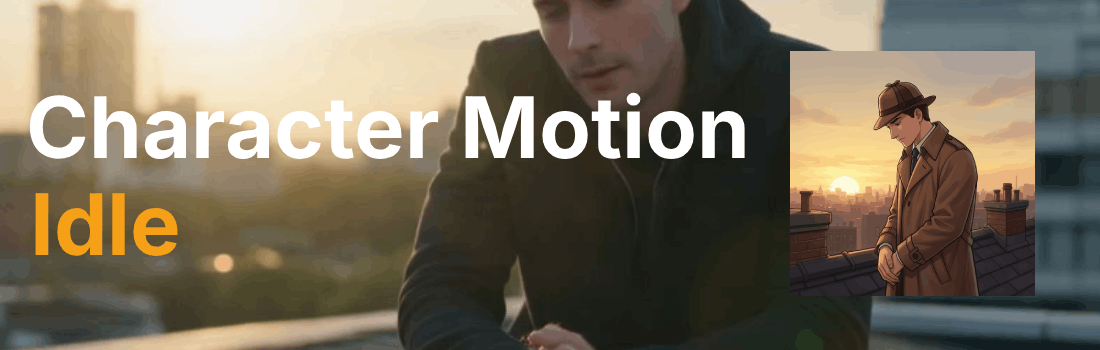
What is the "Idle" character motion technique?
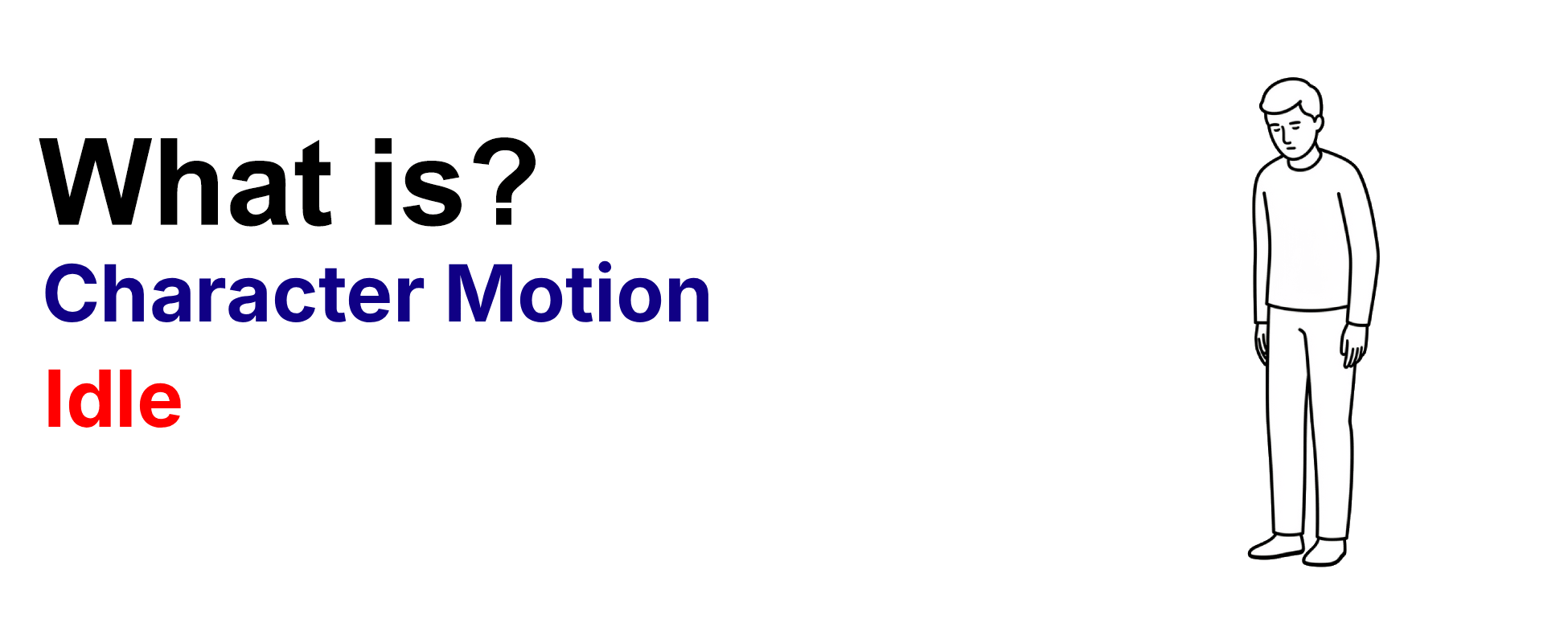
Idling is a character motion state where the character remains still but not frozen, exhibiting subtle breathing, micro-sways, and weight shifts that convey life and anticipation without major movement. This quiet presence builds tension by suggesting the character is waiting, observing, or processing, with every tiny motion carrying narrative weight. Unlike a freeze, which halts all motion for dramatic effect, idle keeps the character alive through barely perceptible micro-movements — a chest rising with each breath, shoulders settling under invisible weight, or eyes shifting as thoughts turn inward. Directors use idle for stakeout scenes, moments of reflection, or suspenseful pauses where stillness itself becomes a storytelling tool. In AI video generation, the idle keyword instructs the model to render these subtle, continuous micro-motions rather than locking the character into a static pose, ensuring that even the quietest moments feel human and alive.
Example Prompt
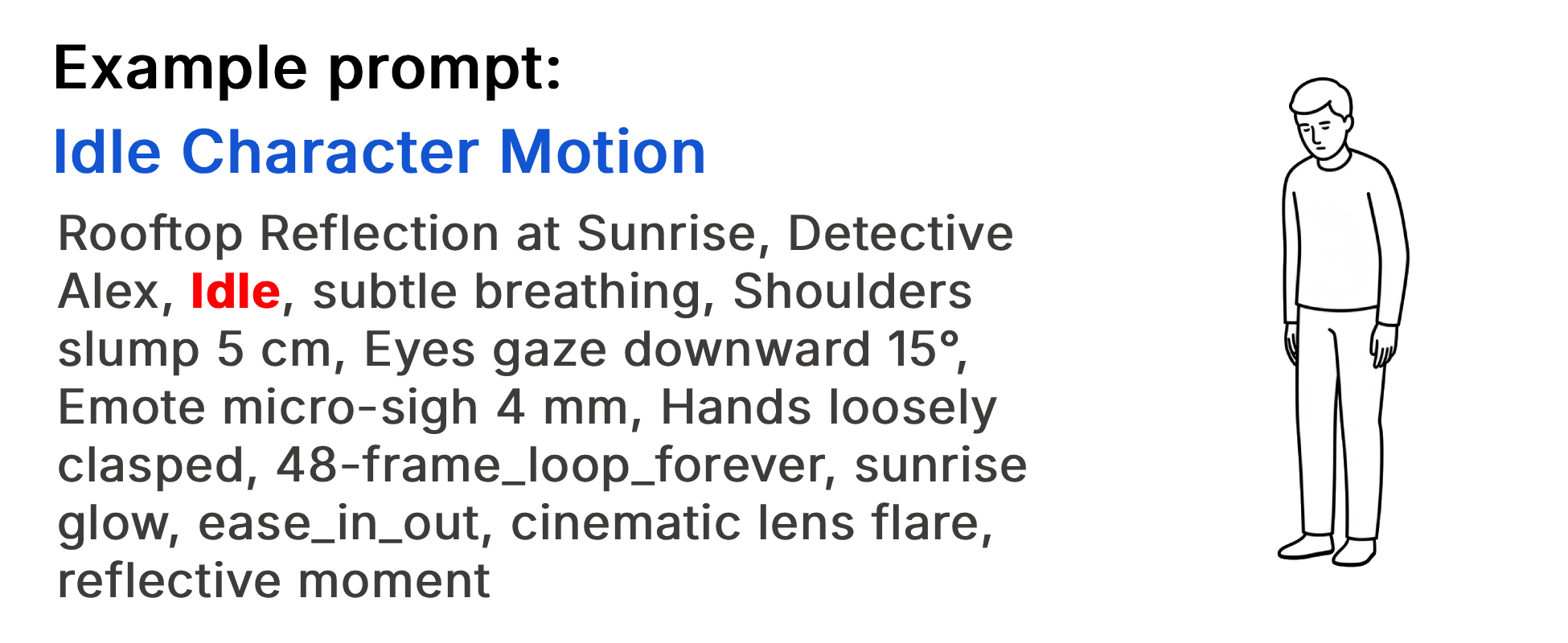
Rooftop Reflection at Sunrise, Detective Alex, Idle, subtle breathing,
Shoulders slump 5 cm, Eyes gaze downward 15°, Emote micro-sigh 4 mm,
Hands loosely clasped, 48-frame_loop_forever, sunrise glow, ease_in_out,
cinematic lens flare, reflective moment
A contemplative shot as Alex processes a loss or decision, letting
stillness and micro-motion carry emotional weight.
Example Video
When to use the Idle technique?
The idle technique works best when a scene calls for quiet tension, emotional stillness, or a sense of anticipation, such as a character waiting in ambush, processing grief, or observing from the shadows. It is also ideal for moments of reflection where the absence of movement speaks louder than action, letting the audience read the character's inner state through micro-expressions and barely visible breathing. Avoid this technique for high-energy sequences where dynamic motion, walking, running, or gesturing, is needed to convey urgency, aggression, or forward momentum.
- Scene needs quiet tension or anticipation
- Character is waiting, observing, or processing
- Emotional stillness carries more weight than action
- A reflective or contemplative moment is central to the scene
- Subtle micro-motion should convey inner state
Pros and Cons of the Idle
| Pros | Cons |
|---|---|
| Conveys deep emotion and tension through minimal, lifelike micro-motion | Can feel static or uneventful if held too long without narrative context |
| Creates a powerful contrast when paired with high-energy motion sequences | Requires precise prompt description to avoid a frozen, lifeless appearance |
| Grounds the character in realism, making even stillness feel alive and human | Subtle movements may be lost at low resolutions or small output sizes |
Recommended book
Learn more about AI video editing
Learn more about AI video editing by reading the book How to Make AI Videos by Gyula Rabai. In this book you can find very important information about: Camera Movement, Lighting, Colors, Composition, Consistency, Character emotion, Character motion, Video style, Action Control and Sound design This information will make your videos more professional, and more engaging.
Get your copy here:
https://videcool.com/p_3707-how-to-make-ai-videos-by-gyula-rabai-book.html
Conclusion
The idle technique is a powerful tool for filmmakers and prompt engineers who want to fill a quiet moment with emotional depth and tension. By embracing stillness instead of motion, it invites the audience to lean in and read the character's inner world through the smallest of gestures — a breath, a glance, a shift of weight. It is not the right choice for every scene, but when reflection, suspense, or anticipation are the goal, few techniques communicate them as effectively. Used thoughtfully alongside more dynamic character motions, it becomes a versatile addition to any AI video generation toolkit.