
AI Video Editing - Character Motion - Eyes
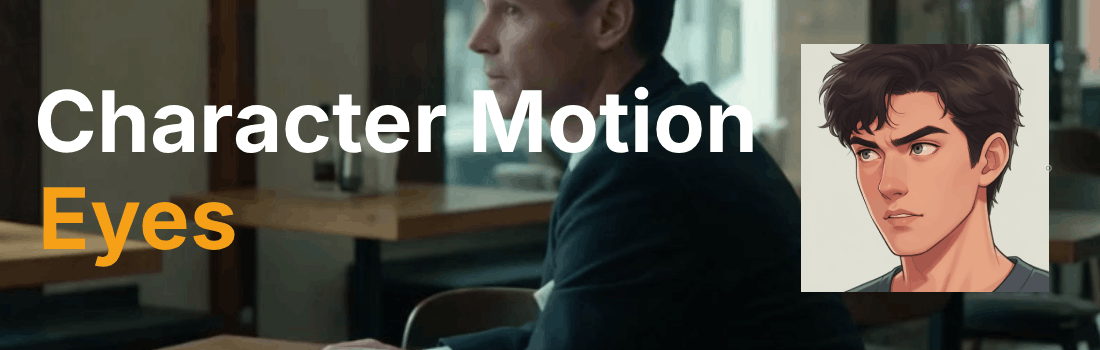
Eyes are one of the most powerful body-part motion controls in AI video generation, directing gaze shifts, blink rates, and line of sight to convey attention, suspicion, or emotional state without moving the rest of the body. The audience instinctively follows where a character looks, making eye movement a silent narrator that reveals focus, builds suspense, and signals recognition. This page explains what the eyes motion technique is, when to use it, and how it compares to other body-part motions, along with a ready-to-use example prompt.
What is the "Eyes" character motion technique?
Eyes are a body-part motion control that directs gaze shifts, blink rates, and line of sight to convey attention, suspicion, or emotional state without moving the rest of the body. This micro-motion is one of the most powerful storytelling tools available, as the audience instinctively follows where a character looks to understand what matters in a scene. Directors use eye movements to reveal a character's focus, build suspense through darting glances, or signal recognition and discovery in surveillance or interrogation scenes. In AI prompting, eyes are controlled with keywords such as gaze shift (0–30° range) and blink duration (typically 0.3 s), allowing you to pin precise eye behavior that anchors emotion and intent without a single word of dialogue.
Example Prompt
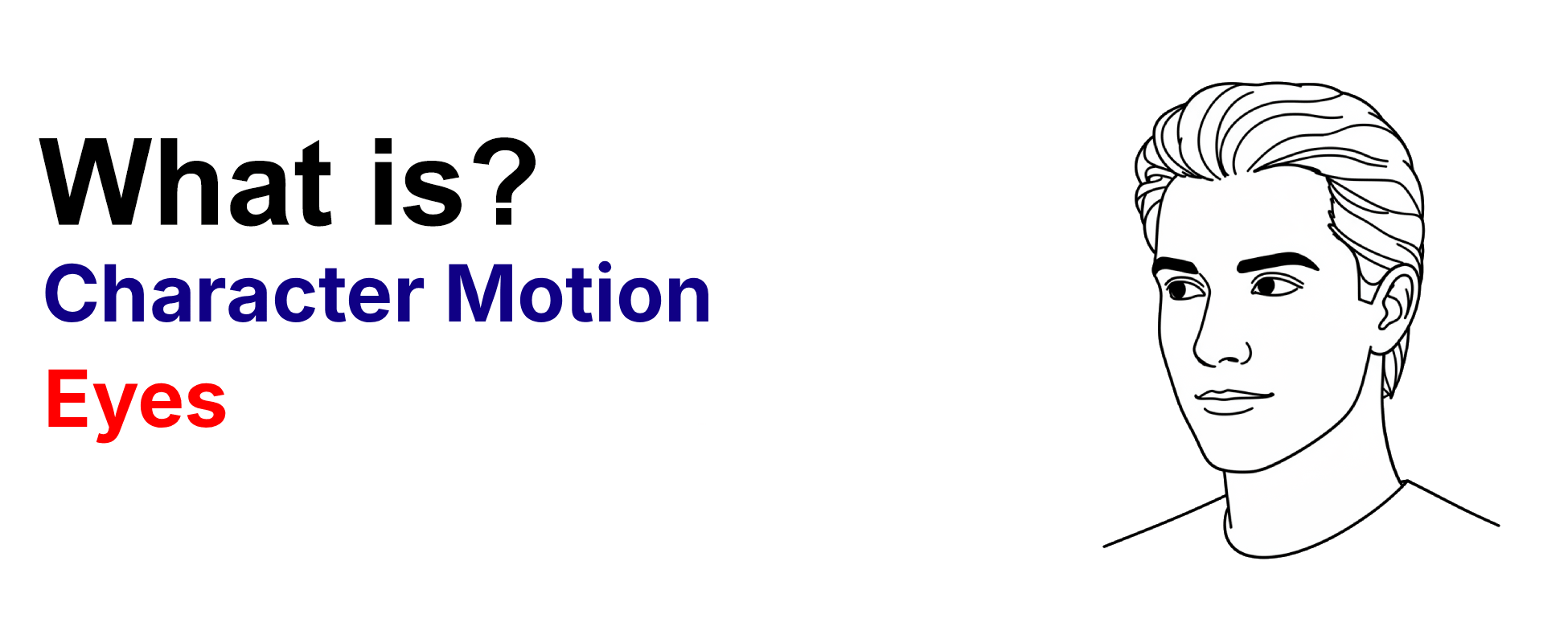
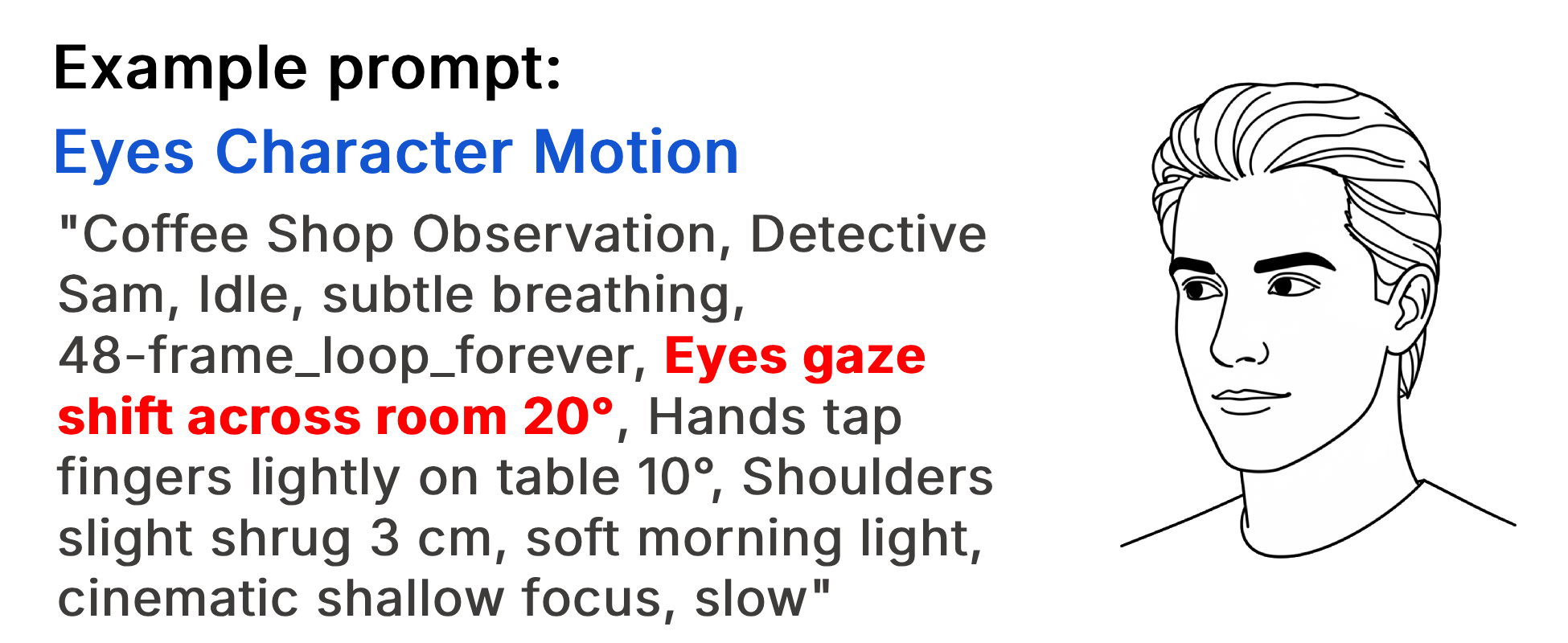
"Coffee Shop Observation, Detective Sam, Idle, subtle breathing, 48-frame_loop_forever, Eyes gaze shift across room 20°, Hands tap fingers lightly on table 10°, Shoulders slight shrug 3 cm, soft morning light, cinematic shallow focus, slow"
Example Video
When to use the Eyes motion technique?
The eyes motion technique works best when a scene calls for subtle, wordless storytelling, such as surveillance or observation sequences, interrogation moments, or any beat where a character's attention shifts without physical movement. It is also highly effective for building suspense through darting glances, signaling recognition or discovery, and conveying hidden emotion when dialogue is absent. Avoid this technique as a standalone when the scene demands broad physical action, since eye movement alone cannot carry high-energy sequences.
- A character needs to observe without being noticed
- Suspense builds through subtle attention shifts
- Recognition or discovery must be signaled silently
- Hidden emotion should leak through micro-expressions
- The scene requires focus on what the character sees, not what they do
Pros and Cons of the Eyes Motion
| Pros | Cons |
|---|---|
| Subtle yet powerful storytelling tool that communicates without dialogue | Can be too subtle to read if not combined with other motion cues |
| Audience instinctively follows eye direction, making it a natural attention guide | Limited range of motion (0–30° gaze shift) constrains expressiveness |
| Pairs seamlessly with idle, walk, and gesture motions for layered performances | May require high-resolution output for gaze shifts to be clearly visible |
Recommended book
Learn more about AI video editing
Learn more about AI video editing by reading the book How to Make AI Videos by Gyula Rabai. In this book you can find very important information about: Camera Movement, Lighting, Colors, Composition, Consistency, Character emotion, Character motion, Video style, Action Control and Sound design This information will make your videos more professional, and more engaging.
Get your copy here:
https://videcool.com/p_3707-how-to-make-ai-videos-by-gyula-rabai-book.html
Conclusion
The eyes motion technique is a powerful tool for filmmakers and prompt engineers who want to convey attention, suspicion, or emotion through the most instinctively followed element on screen: where a character looks. By directing gaze shifts and blink rates with precision, you can build suspense, signal recognition, and add narrative depth without a single line of dialogue. It is not the right choice for every scene, but when subtle observation, hidden emotion, or silent focus are the goal, few techniques communicate them as effectively. Used thoughtfully alongside other body-part motions and character actions, it becomes a versatile addition to any AI video generation toolkit.