
AI Video Editing - Sound Design - Dialogue
Dialogue is the narrative anchor of sound design in AI video generation, delivering spoken words that provide clarity, character intimacy, and emotional directness. Whether it is an external conversation between characters or an internal monologue revealing hidden thoughts, dialogue ensures the audience can follow the story through the character's own voice. This page explains what dialogue is as a sound type, when to use it, and how it compares to other sonic anchors, along with a ready-to-use example prompt.
What is "Dialogue" as a sound type?
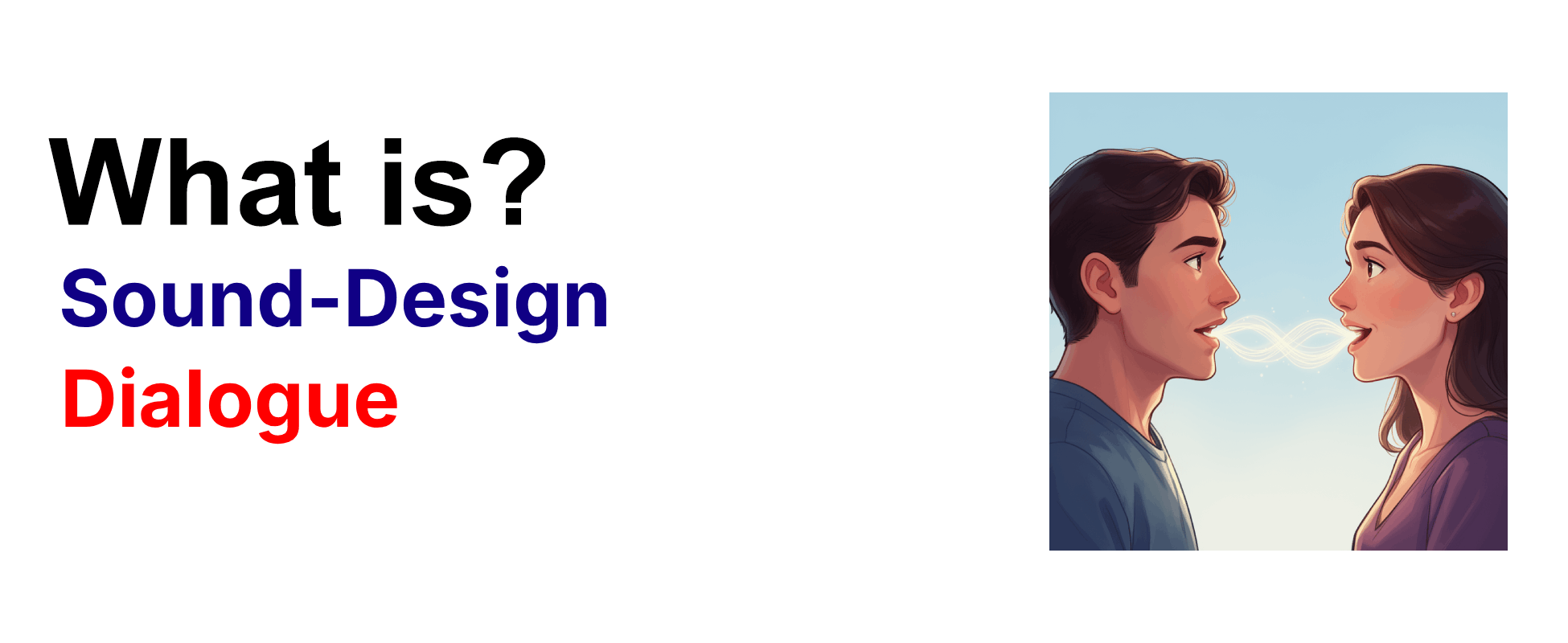
Dialogue is a primary sound type that delivers spoken words, whether external conversation or internal monologue, serving as a narrative anchor that provides clarity, character intimacy, and emotional directness. This sonic anchor typically sits centered in the mix at a present volume of around -12 LUFS, with subtle reverb to match the environment, ensuring the audience can clearly follow the story through the character's voice. Directors use dialogue to convey plot, reveal character psychology, and create intimate connections between the audience and the characters, making every word carry narrative weight. In AI sound design, the dialogue keyword instructs the model to prioritize speech clarity and placement, keeping the voice front and center while other sound layers support from behind.
Example Prompt
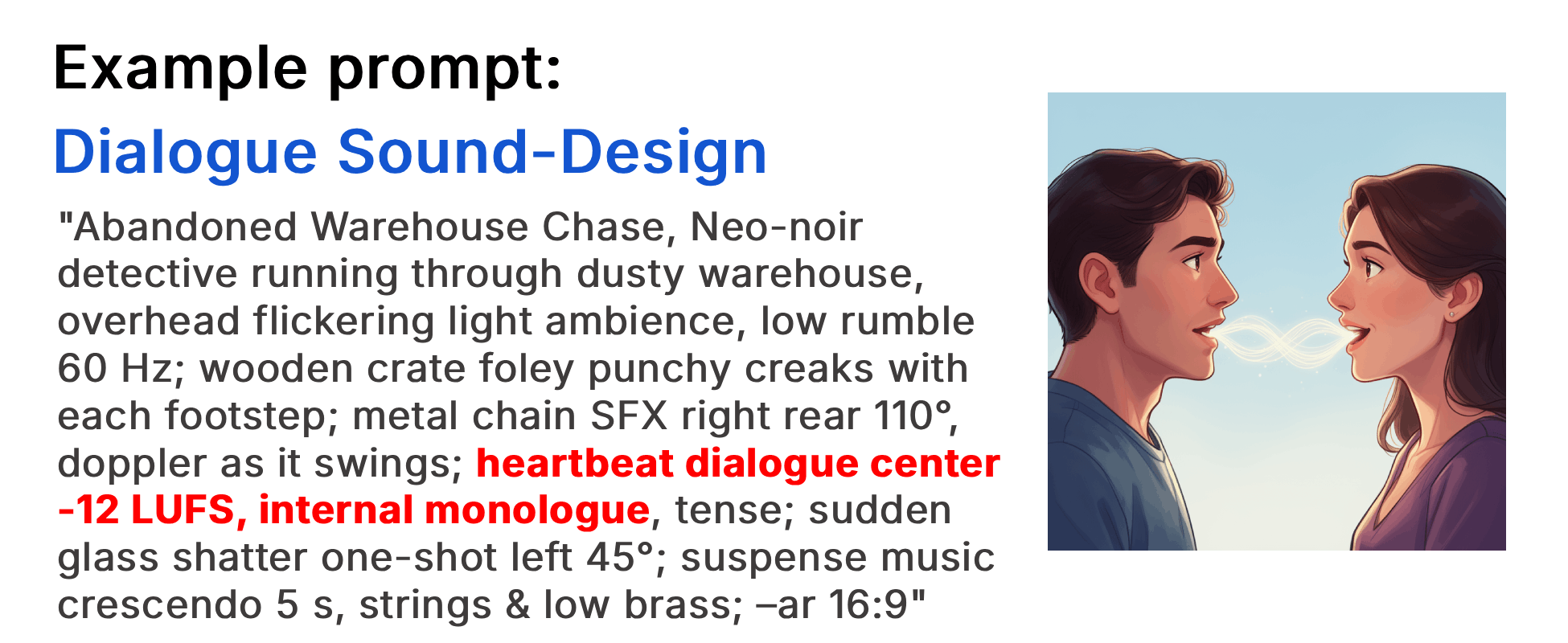
"Abandoned Warehouse Chase, Neo-noir detective running through dusty warehouse, overhead flickering light ambience, low rumble 60 Hz; wooden crate foley punchy creaks with each footstep; metal chain SFX right rear 110°, doppler as it swings; heartbeat dialogue center -12 LUFS, internal monologue, tense; sudden glass shatter one-shot left 45°; suspense music crescendo 5 s, strings & low brass; –ar 16:9"
Example Video
When to use the Dialogue sound type?
Dialogue works best when a scene depends on character expression, narrative clarity, or emotional intimacy, such as one-on-one conversations, internal monologues, or moments where a character's voice must cut through environmental sound to reach the audience. It is also essential when the story cannot be told through visuals alone and the viewer needs to hear intent, emotion, or information directly from a character. Avoid relying on dialogue when the scene's power lies in silence, atmosphere, or purely visual storytelling, where ambience, music, or foley can carry the moment more effectively.
- The scene requires character expression or narrative clarity
- An internal monologue reveals a character's hidden thoughts
- The audience needs to hear intent or emotion directly
- A conversation drives the story forward
- Spoken words must cut through environmental sound
Pros and Cons of Dialogue
| Pros | Cons |
|---|---|
| Provides narrative clarity and drives the story forward | Can overwhelm other sound layers if not properly mixed |
| Creates intimate emotional connection between audience and characters | Restrictive for scenes where silence or atmosphere would be more powerful |
| Centers the audience's attention on character psychology and intent | Requires careful LUFS balancing to sit correctly above ambience and music |
Recommended book

Learn more about AI video editing
Learn more about AI video editing by reading the book How to Make AI Videos by Gyula Rabai. In this book you can find very important information about: Camera Movement, Lighting, Colors, Composition, Consistency, Character emotion, Character motion, Video style, Action Control and Sound design This information will make your videos more professional, and more engaging.
Get your copy here:
https://videcool.com/p_3707-how-to-make-ai-videos-by-gyula-rabai-book.html
Conclusion
Dialogue is the most direct sound type available to filmmakers and prompt engineers, anchoring the audience in the character's voice and intent. By placing spoken words at the center of the mix with appropriate volume and spatial positioning, it ensures the story is heard clearly above all other sonic elements. It is not the right choice for every scene, but when narrative clarity, emotional intimacy, or character revelation are the goal, few sonic anchors communicate them as effectively. Used thoughtfully alongside ambience, foley, music, and silence, dialogue becomes an indispensable part of any AI video sound design toolkit.