
AI Video Editing - Sound-Design - Sound-Effect (SFX)
Sound-effect (SFX) is one of the most impactful tools in AI sound design, using specific, isolated sounds to sharpen the impact of an action or surprise. From a gunshot to a glass shatter, these sonic punctuation marks direct the audience's attention to key moments and add visceral realism to every scene. This page explains what the technique is, when to use it, and how it compares to other sound types, along with a ready-to-use example prompt.
What is the "Sound-Effect (SFX)" sound type?
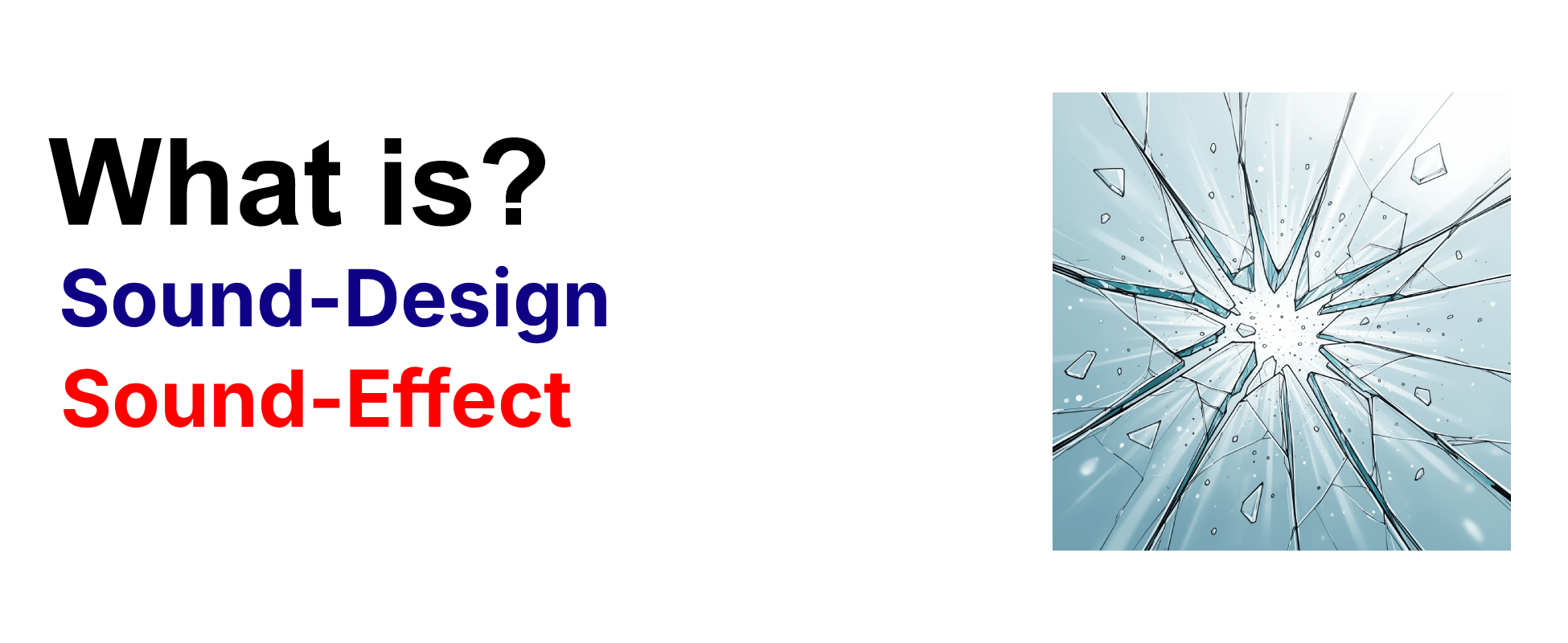
Sound-effect (SFX) is a primary sound type that serves as a story beat or punctuation mark, using specific, often isolated sounds like a gunshot, glass shatter, or metallic whoosh to sharpen the impact of an action or surprise. These sonic punctuation marks are designed to be impactful, sometimes with a sharp attack and short decay, and they direct the audience's attention to a key moment in the action. Directors use sound-effects to emphasize story beats, add realism to actions, and create sudden emotional jolts that make the audience feel the weight of every blow, crash, or revelation.
Example Prompt
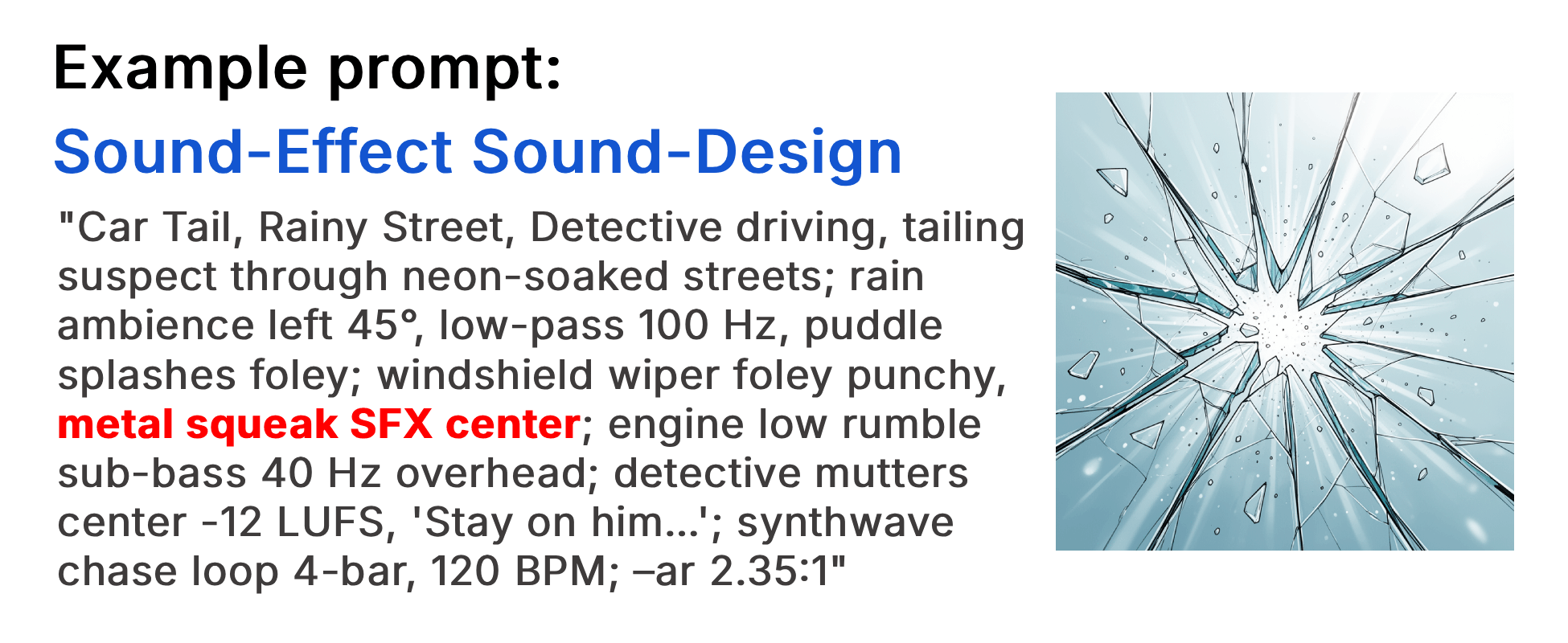
"Car Tail, Rainy Street, Detective driving, tailing suspect through neon-soaked streets; rain ambience left 45°, low-pass 100 Hz, puddle splashes foley; windshield wiper foley punchy, metal squeak SFX center; engine low rumble sub-bass 40 Hz overhead; detective mutters center -12 LUFS, 'Stay on him…'; synthwave chase loop 4-bar, 120 BPM; –ar 2.35:1"
Example Video
When to use the Sound-Effect (SFX) technique?
The sound-effect (SFX) technique works best when a scene calls for sharp, punctuating moments that demand the audience's immediate attention, such as gunshots, explosions, door slams, or the shatter of breaking glass. It is also highly effective for adding realism to on-screen actions, grounding a scene with tactile detail that makes every movement feel authentic. Use SFX when you need to emphasize a story beat, create a sudden emotional jolt, or draw focus to a specific element within the frame. Avoid overusing sound-effects in scenes where ambience or silence would better serve the mood, as too many sharp sounds can overwhelm the listener and dilute the impact of each individual effect.
- A scene needs a sharp, punctuating story beat
- An on-screen action requires realistic sound reinforcement
- A sudden emotional jolt should grab the audience's attention
- A specific element in the frame needs to be highlighted
- The moment calls for impact rather than sustained ambience
Pros and Cons of the Sound-Effect (SFX)
| Pros | Cons |
|---|---|
| Sharpens the impact of key actions with precise, isolated sounds | Overuse can overwhelm the listener and dilute individual effect impact |
| Adds tactile realism that grounds the scene in authenticity | Requires careful mixing to avoid clashing with dialogue or music |
| Directs audience attention to specific story beats and emotional moments | Can feel artificial if the SFX does not match the visual context convincingly |
Recommended book
Learn more about AI video editing
Learn more about AI video editing by reading the book How to Make AI Videos by Gyula Rabai. In this book you can find very important information about: Camera Movement, Lighting, Colors, Composition, Consistency, Character emotion, Character motion, Video style, Action Control and Sound design This information will make your videos more professional, and more engaging.
Get your copy here:
https://videcool.com/p_3707-how-to-make-ai-videos-by-gyula-rabai-book.html
Conclusion
The sound-effect (SFX) is a powerful tool for filmmakers and prompt engineers who want to punctuate their scenes with visceral, attention-grabbing moments. By placing sharp, isolated sounds at key story beats, it transforms ordinary actions into memorable cinematic punctuation that the audience feels in their gut. It is not the right choice for every moment, but when impact, realism, or a sudden emotional jolt are the goal, few sound types communicate them as effectively. Used thoughtfully alongside ambience, music, and dialogue, it becomes a versatile addition to any AI sound design toolkit.