
AI Video Editing - Sound-Design - Music
Music is one of the most powerful sonic anchors available in AI video generation, serving as the emotional driver that shapes how an audience feels before a single word of dialogue is spoken. From a subtle piano loop to a thunderous orchestral crescendo, music sets the mood, signals genre, and paces the narrative without ever appearing on screen. This page explains what the music sound type is, when to use it, and how it compares to other sonic anchors, along with a ready-to-use example prompt.
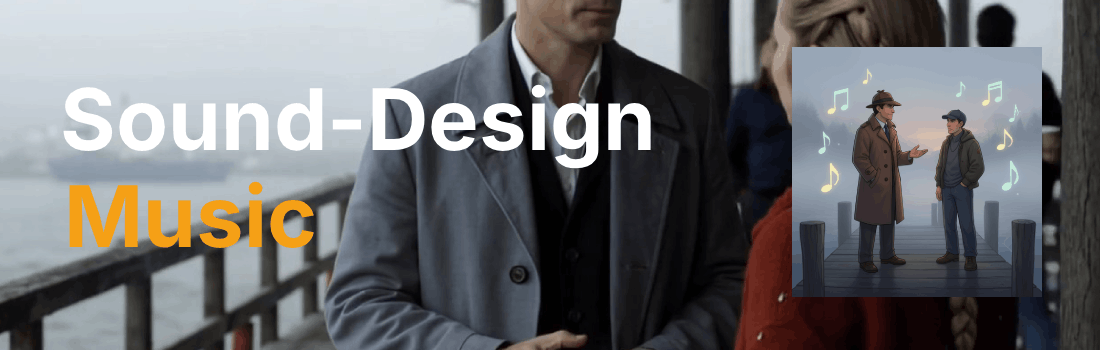
What is Music?
Music is a primary sound type that serves as the emotional driver of a scene, using melody, harmony, rhythm, and genre cues to guide the audience's feelings and expectations without the need for dialogue. This sonic anchor can range from a subtle piano loop to a full orchestral crescendo, with tempo, key, and instrumentation signaling whether the mood is tense, romantic, triumphant, or melancholic. Directors use music to amplify the emotional impact of a scene, cue the audience to how they should feel, and create a rhythmic structure that supports the pacing of the narrative.
Example Prompt
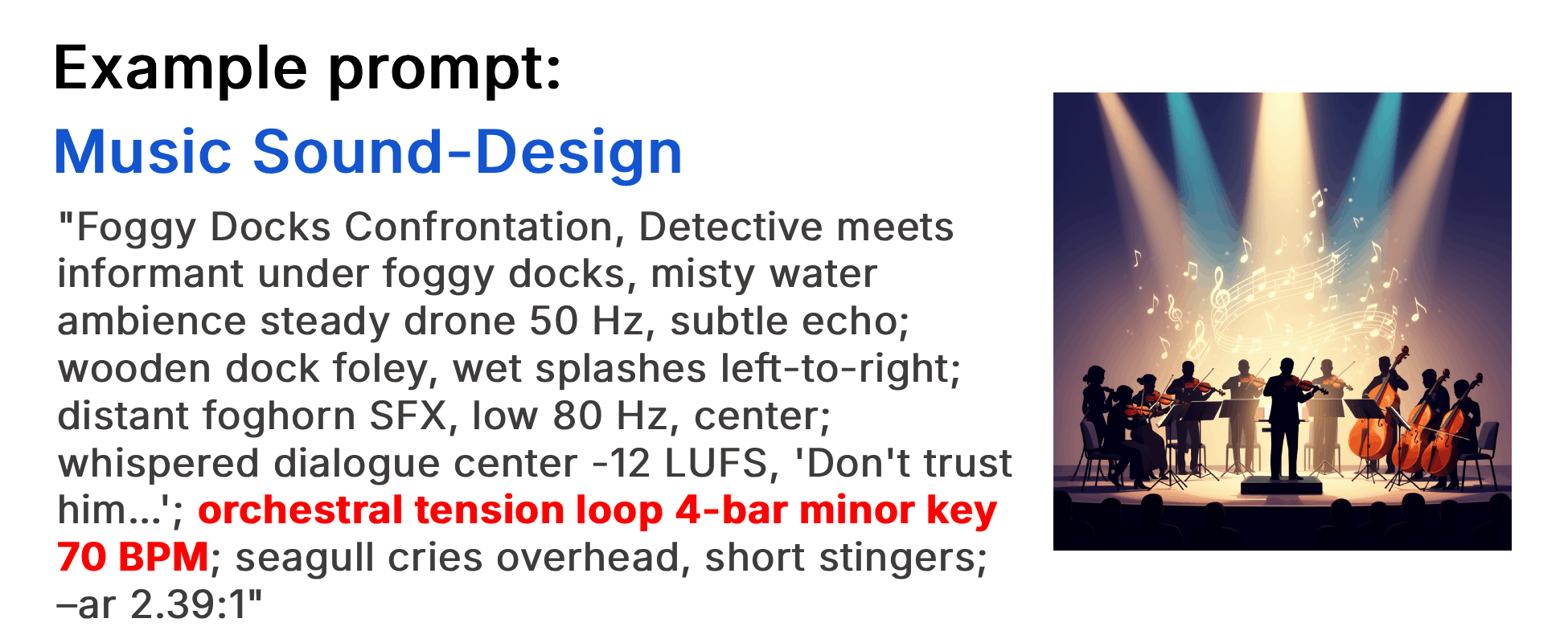
"Foggy Docks Confrontation, Detective meets informant under foggy docks, misty water ambience steady drone 50 Hz, subtle echo; wooden dock foley, wet splashes left-to-right; distant foghorn SFX, low 80 Hz, center; whispered dialogue center -12 LUFS, 'Don't trust him…'; orchestral tension loop 4-bar minor key 70 BPM; seagull cries overhead, short stingers; –ar 2.39:1"
Example Video
When to use Music?
Music works best when a scene needs an emotional foundation that visuals and dialogue alone cannot provide, such as establishing mood, building tension toward a climax, or signaling genre to the audience. It is also effective for pacing, using tempo and rhythm to control how fast or slow a sequence feels, and for creating continuity between shots through recurring motifs or loops. Avoid using music when silence would be more powerful, such as moments of shock, intimacy, or deliberate negative space where the absence of sound speaks louder than any score.
- The scene needs an emotional foundation or mood shift
- Genre cues must be established quickly
- Tension should build toward a climax or reveal
- Pacing and rhythm need to support the narrative flow
- Continuity between shots requires a recurring musical motif
Pros and Cons of Music
| Pros | Cons |
|---|---|
| Instantly sets mood and signals genre without dialogue | Can overpower dialogue or foley if not mixed at the right LUFS level |
| Controls pacing and rhythm, guiding the audience through the narrative | Risk of emotional manipulation if the music clashes with the scene's tone |
| Creates continuity and cohesion across cuts with recurring motifs | Overuse can make scenes feel generic or melodramatic |
Recommended book

Learn more about AI video editing
Learn more about AI video editing by reading the book How to Make AI Videos by Gyula Rabai. In this book you can find very important information about: Camera Movement, Lighting, Colors, Composition, Consistency, Character emotion, Character motion, Video style, Action Control and Sound design This information will make your videos more professional, and more engaging.
Get your copy here:
https://videcool.com/p_3707-how-to-make-ai-videos-by-gyula-rabai-book.html
Conclusion
Music is a cornerstone of AI video sound design, providing the emotional architecture that holds a scene together. By choosing the right tempo, key, instrumentation, and genre palette, you can guide the audience's feelings and pacing without a single line of dialogue. It is not the right choice for every moment — silence and ambience can be equally powerful — but when mood, tension, or genre need to be established quickly and effectively, music delivers with unmatched precision. Used thoughtfully alongside other sonic anchors like foley, ambience, and dialogue, it becomes an indispensable part of any AI video generation toolkit.