
AI Video Editing - Sound Design - One-Shot Timing
One-shot timing is one of the most precise sound design techniques available in AI video generation, anchoring a single, isolated sound effect to an exact timestamp so it lands at the perfect narrative beat. This page explains what the technique is, when to use it, and how it compares to other sound design approaches, along with a ready-to-use example prompt.
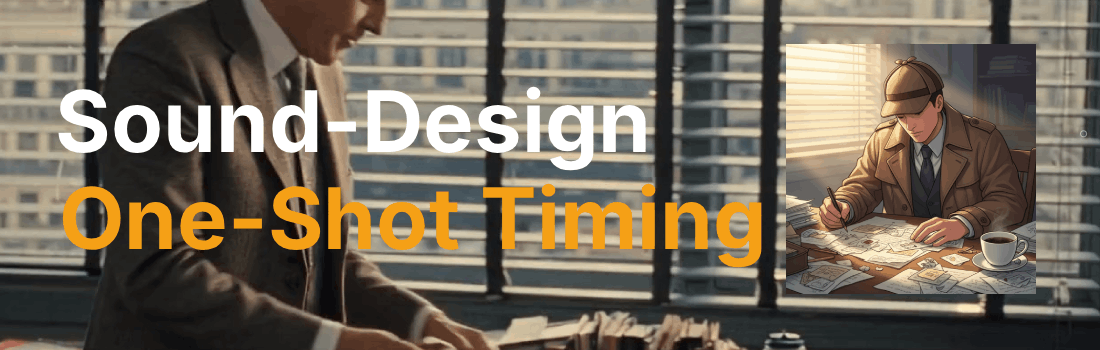
What is "One-Shot Timing"?
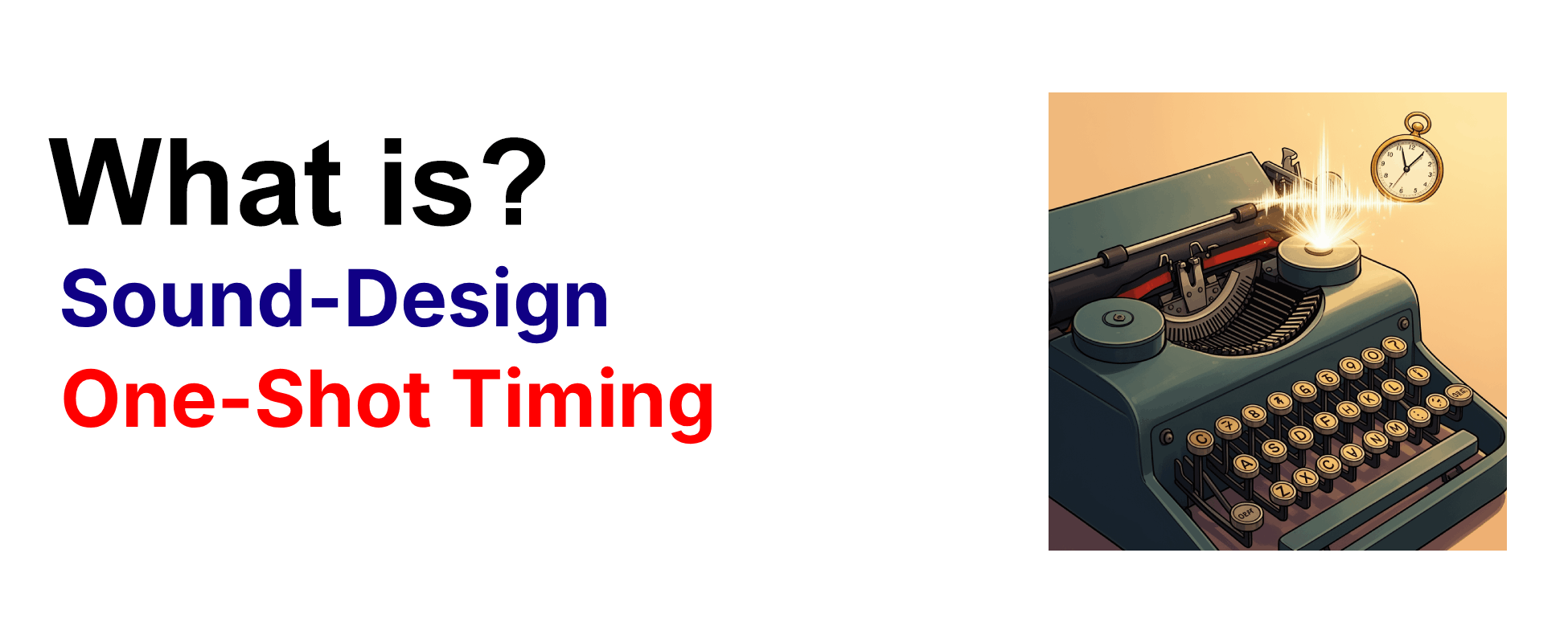
One-shot timing is a sound design technique that anchors a single, non-repeating sound effect to a precise timestamp within a scene, ensuring it fires exactly when a specific action or realization occurs. Unlike loops, which repeat continuously to build rhythm, or ambience, which sits as a constant background bed, a one-shot exists for a single, deliberate moment, such as a typewriter ding, a door click, or a sudden gasp. Directors use one-shot timing to punctuate key beats with precision, syncing a sound directly to a visual cue like a character's realization or a prop's movement.
Example Prompt
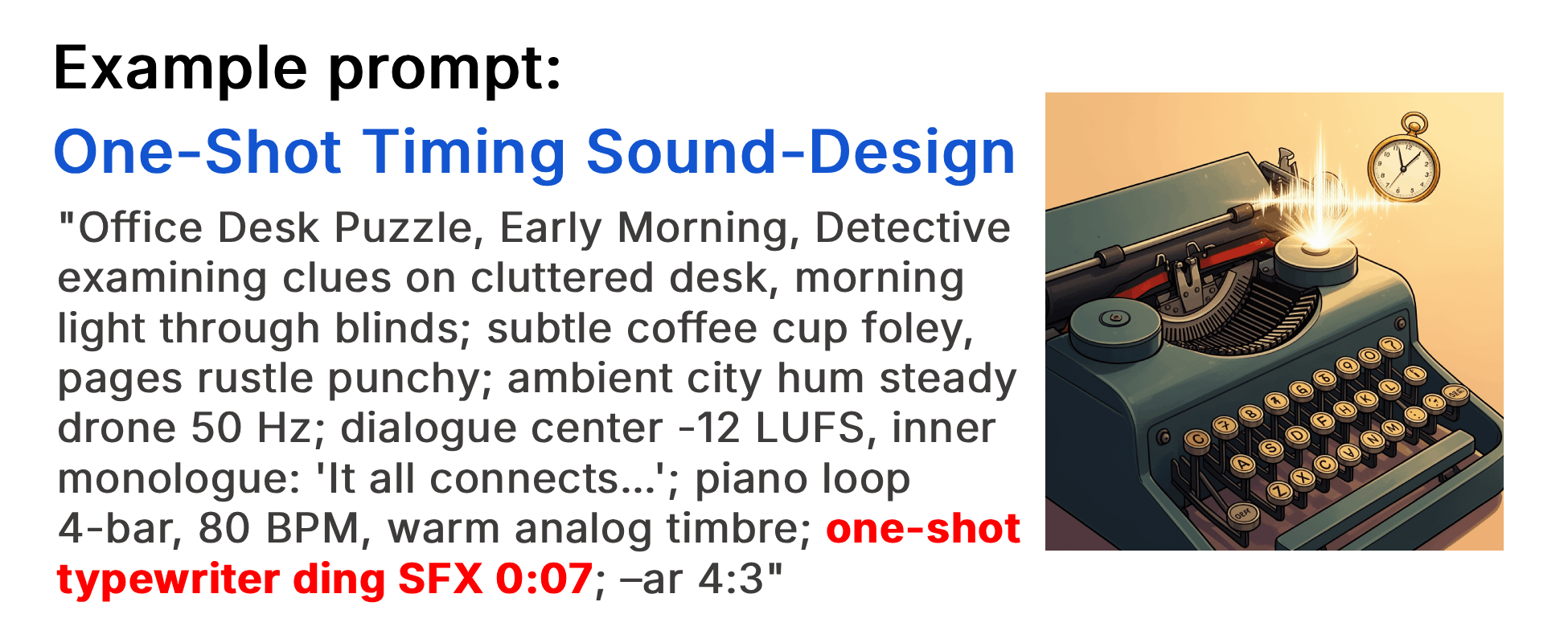
"Office Desk Puzzle, Early Morning, Detective examining clues on cluttered desk, morning light through blinds; subtle coffee cup foley, pages rustle punchy; ambient city hum steady drone 50 Hz; dialogue center -12 LUFS, inner monologue: 'It all connects…'; piano loop 4-bar, 80 BPM, warm analog timbre; one-shot typewriter ding SFX 0:07; –ar 4:3"
Example Video
When to use One-Shot Timing?
One-shot timing works best when a scene needs a single sound to land at an exact, narratively significant moment, such as a realization, a prop interaction, or a subtle punctuation beat that would lose its impact if looped or left untimed. It is especially effective in quieter scenes where a lone sound, precisely placed, can carry disproportionate emotional or narrative weight, like a clock chime marking a deadline or a ding signaling a breakthrough. Avoid this technique for sounds that need to sustain or repeat across a scene, such as ambience or rhythmic music, where a loop or steady drone will better serve the moment.
- A single sound must land at an exact narrative beat
- A character's realization needs precise sonic punctuation
- A prop interaction should trigger a specific, timed sound
- The moment calls for surgical precision rather than a loop
- A quiet scene benefits from one deliberate, well-timed sound
Pros and Cons of One-Shot Timing
| Pros | Cons |
|---|---|
| Gives frame-accurate control over when a single sound lands | Not suitable for sounds that need to loop or sustain across a scene |
| Punctuates key narrative beats with precision and clarity | Requires precise timestamp specification to sync correctly with the visual |
| Adds disproportionate emotional weight to quiet, deliberate moments | Overuse of multiple one-shots can clutter a scene and dilute individual impact |
Recommended book
Learn more about AI video editing
Learn more about AI video editing by reading the book How to Make AI Videos by Gyula Rabai. In this book you can find very important information about: Camera Movement, Lighting, Colors, Composition, Consistency, Character emotion, Character motion, Video style, Action Control and Sound design This information will make your videos more professional, and more engaging.
Get your copy here:
https://videcool.com/p_3707-how-to-make-ai-videos-by-gyula-rabai-book.html
Conclusion
One-shot timing is a powerful tool for filmmakers and prompt engineers who want precise control over when a single sound lands within a scene. By anchoring an isolated sound effect to an exact timestamp, it ensures that key narrative beats, like a realization or a prop interaction, are punctuated with surgical clarity rather than left to chance. It is not the right choice for every sound in a mix, but when precision timing and narrative punctuation are the goal, few techniques deliver them as effectively. Used thoughtfully alongside ambience, music, and dialogue, one-shot timing becomes a versatile addition to any AI video sound design toolkit.